






Definition & Purpose of the Tattoo Apprentice Employment Contract
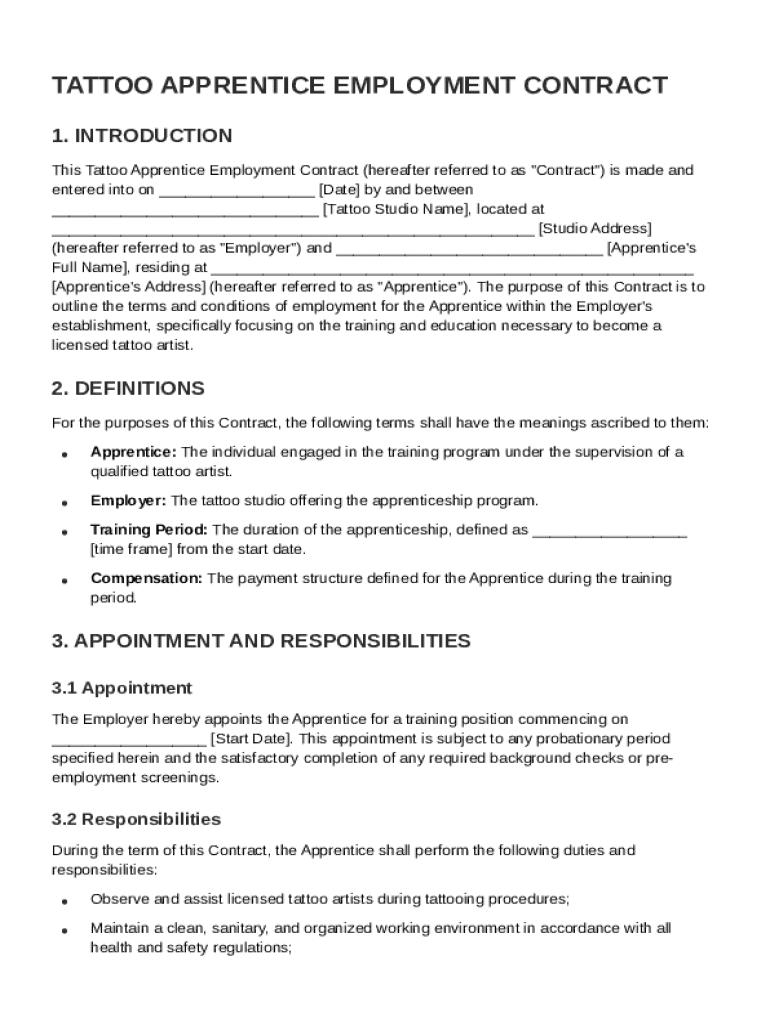
The Tattoo Apprentice Employment Contract is a formal agreement that outlines the employment terms for an apprentice at a tattoo studio. It structures the relationship between the apprentice and the employer, detailing the rights and responsibilities of both parties. This contract is essential in setting clear expectations for the training period, compensation, conduct, and other critical aspects of the apprenticeship. By defining the employment framework, it protects both the studio and the apprentice from potential disputes, ensuring transparency and legal compliance.
Key Components
- Responsibilities: Clearly defines the apprentice’s roles and expected contributions to the studio.
- Training Period: Specifies the duration and nature of the training, including skills to be developed.
- Compensation Structure: Outlines how and when the apprentice will be paid, including any bonuses or board benefits.
- Professional Conduct: Sets expectations for behavior, dress code, and interaction with clients and colleagues.
How to Use the Tattoo Apprentice Employment Contract Template
Using the Tattoo Apprentice Employment Contract Template effectively requires understanding its structure and customizing it to fit specific needs. This step-by-step process facilitates the creation of a legally sound and tailored agreement suitable for any tattoo studio.
Steps for Customization
- Identify Key Parties: Begin by identifying the apprentice and studio details, such as names and contact information.
- Modify Responsibilities: Adjust the responsibilities section to reflect the specific tasks the apprentice will undertake.
- Set Training and Evaluation Criteria: Define the training period and how the apprentice's progress will be evaluated.
- Adjust Compensation Details: Ensure the payment terms align with both the studio's budget and legal wage requirements.
- Incorporate Studio Policies: Include specific studio policies and professional conduct expectations.
Importance of Customization
Customization ensures the contract addresses the unique elements of the specific apprenticeship, providing clarity for both parties.
Key Elements of the Tattoo Apprentice Employment Contract
Each section of the contract serves a distinct purpose, contributing to a comprehensive agreement that aligns with both state law and industry standards.
Critical Sections
- Termination Clause: Details grounds and procedures for ending the apprenticeship.
- Confidentiality Agreement: Protects sensitive studio information from being disclosed.
- Governing Law: Specifies which state laws will be applicable in case of disputes.
Contractual Protections
Incorporating these elements mitigates legal risks, protects intellectual property, and ensures compliance with employment laws.
Steps to Complete the Tattoo Apprentice Employment Contract Template
Completing the template involves meticulous attention to detail, ensuring that the final document is both legally binding and tailored to the studio’s operational needs.
Detailed Process
- Review All Sections: Thoroughly read the template to understand each element.
- Gather Information: Collect all necessary details, including apprentice information and studio policies.
- Fill Out Template: Populate the template with accurate data, adjusting sections to suit specific requirements.
- Legal Review: Consider having the completed contract reviewed by a legal professional to ensure compliance with local laws.
- Final Signing: Both parties should read through the contract before signing to confirm mutual agreement and understanding.
Advantages of a Structured Process
Ensures all necessary information is captured effectively, minimizing the potential for misunderstandings or legal issues.
Who Typically Uses the Tattoo Apprentice Employment Contract Template
This template is widely used across various levels of the tattoo industry to formalize and secure the apprentice-studio relationship.


Target Users
- Tattoo Studios: Small to large tattoo businesses looking to bring on new apprentices.
- Apprentices: Individuals seeking formal training and entry into the industry.
- Legal Advisors: Lawyers who assist in drafting or reviewing the contract for legal accuracy.
Industry Benefits
Standardizing the apprenticeship process enhances training quality, protects studio interests, and ensures apprentices receive the proper skills and guidance.
Legal Use of the Tattoo Apprentice Employment Contract Template
Understanding the legal implications of the contract is vital to its effective implementation, ensuring it upholds both state and federal regulations.
Legal Considerations
- Compliance with Labor Laws: Must align with laws governing apprenticeship and employment.
- Enforceability: Ensure all terms within the contract are enforceable under applicable law.
Consultation with Legal Professionals
Recommended to consult with a lawyer during the drafting process to confirm that the contract is legally sound and provides sufficient protection to the studio.
State-Specific Rules for the Tattoo Apprentice Employment Contract Template
Apprenticeships, like many professional agreements, may be subject to variations in state laws. Understanding these can be crucial in forming a valid agreement.
Important Variations
- Minimum Compensation: States may have different minimum wage laws impacting apprenticeship stipends.
- Regulations on Training Durations: Abide by state-mandated limits and requirements for apprenticeships.
Checklist for State Compliance
Develop a checklist to ensure all contract elements align with state-specific requirements, including any licensing or regulatory guidelines specific to tattooing.
Examples of Using the Tattoo Apprentice Employment Contract Template
Providing real-world examples of contract implementation can offer valuable insights into its practical benefits.
Case Studies
- Studio Expansion: A medium-sized studio utilized the template to bring on several apprentices as part of a strategic growth initiative, resulting in increased capacity and service offerings.
- Skill Building: An apprentice used the contract to define a clear pathway of skill acquisition, resulting in rapid professional advancement and employment.
Lessons Learned
Highlighting lessons from these examples can provide guidance on best practices, potential pitfalls, and how to maximize the contract’s utility.