






Definition and Meaning
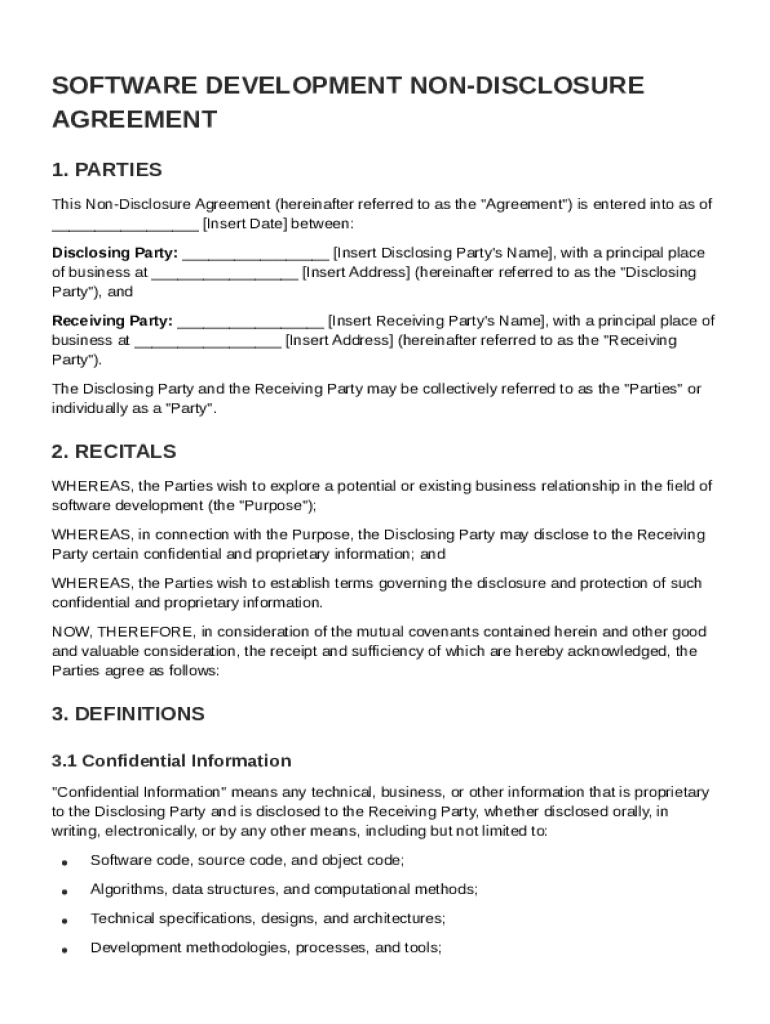
A Software Development Non-Disclosure Agreement (NDA) is a legal contract between a disclosing party, typically the party sharing confidential information, and a receiving party that promises to keep such information secret. Common in business relationships centered around software development, these agreements are crucial in safeguarding proprietary technology, trade secrets, and other sensitive information. By clearly defining what constitutes confidential information, such as code, algorithms, and business strategies, an NDA minimizes the risk of intellectual property theft or unauthorized dissemination.
Key Elements of the Software Development NDA Template
A comprehensive NDA template for software development includes several vital components:
- Confidential Information: This specifies the scope of the information considered confidential, including everything from source code to business plans.
- Obligations of the Receiving Party: Outlines the responsibilities of the receiving party in maintaining the secrecy of the disclosed information.
- Exclusions from Confidentiality: Certain information may be excluded if it is already publicly available or was independently developed without access to the disclosed information.
- Term of Agreement: Specifies the duration for which the confidentiality obligations are in effect, often continuing even after the relationship ends.
- Remedies for Breach: Identifies the legal actions available if the receiving party fails to uphold confidentiality.
How to Use the Software Development NDA Template
Using the NDA template involves a series of steps that ensure the document is tailored to the specific needs of the parties involved:
- Identify the Parties: Clearly list the disclosing and receiving parties, including full legal names and contact information.
- Detail the Confidential Information: Be specific about what information will be protected under the agreement.
- Set Terms: Agree on the duration of the confidentiality obligations and any specific terms relevant to the business relationship.
- Review Legal Requirements: Ensure that the NDA complies with relevant laws and regulations to maintain enforceability.
- Signature and Execution: Both parties must sign the agreement, which can be executed electronically via platforms like DocHub.
Steps to Complete the Software Development NDA Template
Completing the NDA template is a straightforward process that involves verifying that all information is correct and appropriately detailed:
- Download the Template: Access the NDA template via a trusted source like DocHub to ensure it meets standard legal requirements.
- Fill in Party Information: Enter the full names and contact details of the involved parties for clarity.
- Define Confidential Information Clearly: Specify what is considered confidential to avoid any ambiguity.
- Assign Responsibilities: It's crucial to clearly outline what each party is obligated to do under the agreement.
- Sign and Date the Document: Use DocHub for digital signatures, ensuring legality and ease for all parties involved.
- Distribute the Executed Agreement: Ensure both parties retain a signed copy for their records.
Legal Use of the Software Development NDA Template
An NDA must conform to enforceable legal standards to protect confidential information effectively:
- Adherence to Laws: Ensure the NDA complies with U.S. laws, particularly those governing contract and intellectual property law.
- Jurisdiction Clauses: Include provisions that specify which state's laws govern the NDA.
- Enforcement Provisions: Detail how disputes will be resolved, potentially through arbitration or litigation.
- No Licenses Granted: Clarify that disclosing confidential information does not grant implicit rights or licenses to the receiving party.
Who Typically Uses the Software Development NDA Template
Several parties in the software development field rely on NDAs:
- Software Developers: Freelancers and companies developing software rely on NDAs to protect their proprietary code.
- Startups: New enterprises with innovative technology often need NDAs when discussing potential collaborations or funding.
- Technology Companies: Larger tech firms may require NDAs when partnering with vendors or contractors handling sensitive information.


Important Terms Related to Software Development NDA
When working with NDAs, understanding associated terminology is crucial:
- Trade Secret: A type of confidential information protected from unauthorized use or disclosure.
- Licensing Agreement: Unlike an NDA, this allows the receiving party to use the protected technology under agreed terms.
- Intellectual Property (IP): Creations of the mind, such as inventions and software, that a company owns and seeks to protect.
State-Specific Rules for the Software Development NDA Template
While NDAs are generally governed by federal law, particular state regulations also play a role, impacting how NDAs must be written or enforced:
- California: Has unique laws regarding the enforceability of non-compete clauses often included in NDAs.
- New York: Requires clear definitions and reasonable timeframes for confidentiality obligations.
- Texas: Enacts specific criteria for proving a breach of confidentiality and enforces NDAs strictly.
By focusing on these aspects, the Software Development NDA Template facilitates clear and precise protection of sensitive information, ensuring that all parties involved are aware of their rights and obligations.