
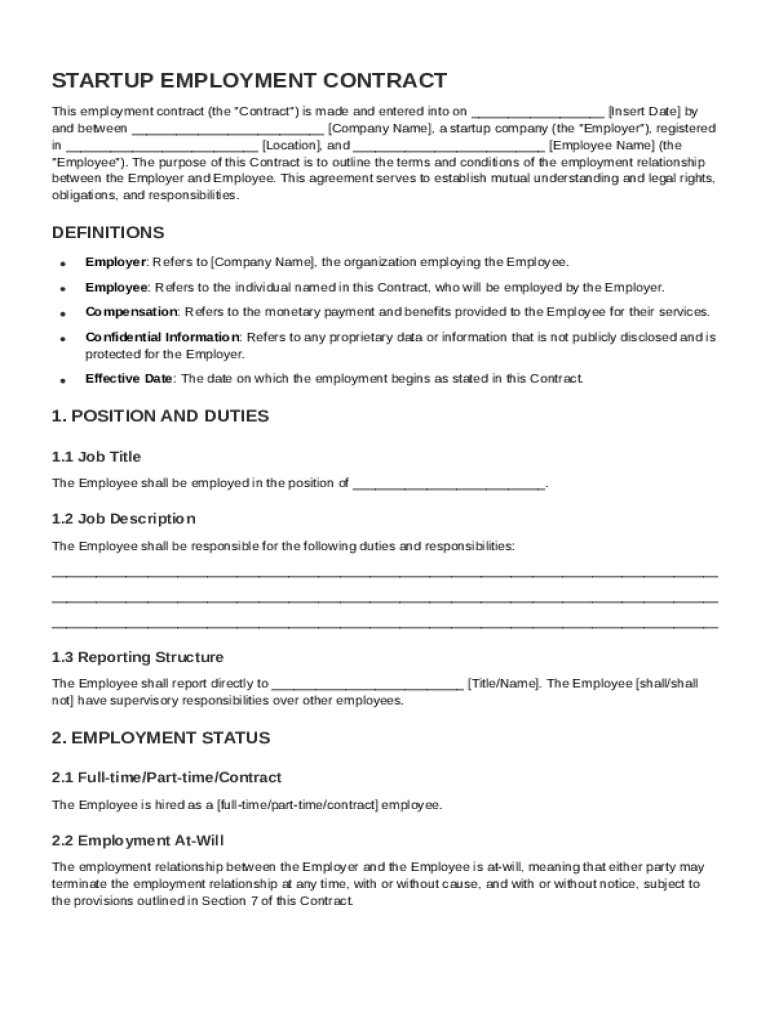







Definition & Meaning
A Startup Employment Contract Template is a comprehensive legal document that establishes the employment terms and conditions between a startup company and an individual employee. This contract serves as the foundation for understanding the mutual rights and responsibilities of both the employer and the employee. Typically, it includes information on roles, duties, compensation, and procedures should the employment be terminated. Essential for ensuring clarity in the employment relationship, this template helps mitigate legal risks by defining expectations and protecting intellectual property.
Key Roles and Responsibilities
- Employee Duties: Outlines specific job roles and responsibilities. Employees should understand their exact duties to avoid misunderstandings.
- Employer Obligations: Details what the employer will provide, including work environment, remuneration, and support. This section is crucial to set expectations right from the start.
Compensation Structure
- Salary Details: Includes base salary, payment schedule, and any bonuses or commissions. Understanding the compensation structure helps employees and employers align on financial expectations.
- Benefits: Covers health insurance, retirement plans, and other benefits. This part ensures employees are well-informed about their comprehensive compensation package.
Key Elements of the Startup Employment Contract Template
A Startup Employment Contract Template typically includes several critical elements designed to protect both the startup and the employee. These elements ensure that each party has a clear understanding of their respective rights and obligations.
Confidentiality Obligations
- Non-Disclosure Agreements (NDAs): These agreements protect sensitive company information. They are crucial for maintaining competitive advantage and securing intellectual property.
- Data Protection: Outlines measures to protect employee and company data. Ensuring compliance with data protection laws is increasingly vital in today’s digital age.
Intellectual Property Rights
- Inventions and Creations: Specifies ownership of any inventions or work products developed by the employee during their tenure with the startup. Clearly delineating these rights helps avoid future disputes.
Termination Procedures
- Termination Clauses: Define conditions under which the contract may be terminated, including notice periods and severance terms. Understanding these clauses helps prevent legal conflicts in case the employment relationship ends.
Steps to Complete the Startup Employment Contract Template
Filling out a Startup Employment Contract Template involves a series of specified steps that ensure all relevant information is captured accurately and legally.
- Gather Necessary Information: Collect essential details about the employee and the startup company. This includes legal names, addresses, and any unique identifiers.
- Define Employment Terms: Clearly articulate job roles, responsibilities, salary, and benefits. These should align with prior discussions to ensure mutual agreement.
- Address Legal Considerations: Incorporate clauses such as non-disclosure, non-compete, and intellectual property rights. This step is vital for legal compliance and protection.
- Review and Finalize: Both parties should thoroughly review the contract to ensure accuracy and completeness. Consider seeking legal advice to verify compliance with applicable laws.
- Sign and Store: Once reviewed, the contract should be signed by both parties and securely stored. Usage of electronic signatures via platforms like DocHub can streamline this process and maintain a record of authenticity.
Legal Use of the Startup Employment Contract Template
The legal application of a Startup Employment Contract Template is crucial in protecting the interests of both startup employers and their employees. This template supports legal compliance and serves as a safeguard against employment disputes.
Employment Law Compliance
- Federal and State Regulations: The template should align with both federal and state employment laws. This involves ensuring compliance with minimum wage laws, overtime rules, and other employment standards.
- Anti-Discrimination Policies: Incorporate clauses that comply with anti-discrimination laws. This includes protections related to gender, race, disability, and more.
Dispute Resolution
- Arbitration Clauses: Many contracts include clauses requiring arbitration instead of litigation. This can be a faster, less expensive way to resolve disputes.
- Governing Law: Specifies which jurisdiction's laws will govern the contract. This is particularly important for startups operating across different states.
How to Use the Startup Employment Contract Template
Effectively utilizing the Startup Employment Contract Template ensures that both the startup and the employee are on the same page regarding employment terms. The process begins with understanding the template's purpose and continues through its formalization into a binding agreement.
Drafting the Contract
- Customization: Customize the template according to specific employee roles and startup needs. Avoid using a generic form that doesn't suit the unique workplace.
- Review by Legal Counsel: Having an attorney review the contract can help mitigate risks and ensure compliance with all relevant laws and regulations.
Completion and Execution
- Interactive Features: Use digital tools like DocHub to populate fields with relevant data and obtain signatures seamlessly.
- Communication: Clearly communicate with the employee to ensure all aspects of the contract are understood and agreed upon before signing.
Important Terms Related to Startup Employment Contract Template
Understanding the terms used in a Startup Employment Contract Template is critical for both employers and employees. This section covers key terminologies that frequently appear in employment contracts.
Employment Status
- At-Will Employment: Most U.S. employment agreements are at-will, meaning either party can terminate the relationship at any time, without cause.
- Probationary Periods: This is a trial period at the start of employment to assess an employee’s suitability for the role.
Compensation and Benefits
- Base Salary: A fixed annual amount, paid in regular intervals, representing the core compensation for the role.
- Equity Options: Some startups offer stock options as part of compensation. Understanding vesting schedules and stock value is essential.
State-Specific Rules for the Startup Employment Contract Template
While the Startup Employment Contract Template provides a solid foundation for employment terms, it's important to incorporate variations based on state-specific rules and regulations.
Varied Employment Laws
- California: Known for its robust labor laws, California requires detailed employee rights and wage statements in employment contracts.
- Texas: Allows flexibility in drafting non-compete clauses, but they must be reasonable in scope and duration.
Worker Protections
- New York: Requires strict adherence to state-specific wage theft laws, mandating clear communication of pay rates and hours worked.
- Illinois: Has specific requirements for overtime pay and worker classification, particularly in the tech industry.
Examples of Using the Startup Employment Contract Template
The practical application of the Startup Employment Contract Template varies based on the specific use case of a startup. Here, a few illustrative scenarios highlight its adaptability.
Early-Stage Startups
- Example 1: A software startup hires a developer and uses the template to clearly define IP rights, ensuring the company retains ownership of the code developed.
- Example 2: A small biotech firm drafts contracts that include confidentiality clauses to protect proprietary research.
Scalable Startups
- Example 3: As a tech startup scales, it uses the template to onboard multiple employees efficiently, ensuring consistent communication of roles and expectations.
- Example 4: A financial technology startup modifies the contract to include bonus metrics tied to performance indicators relevant to their sector.
By focusing on these areas, companies and individuals can maximize the utility and legal protection offered by the Startup Employment Contract Template.




