
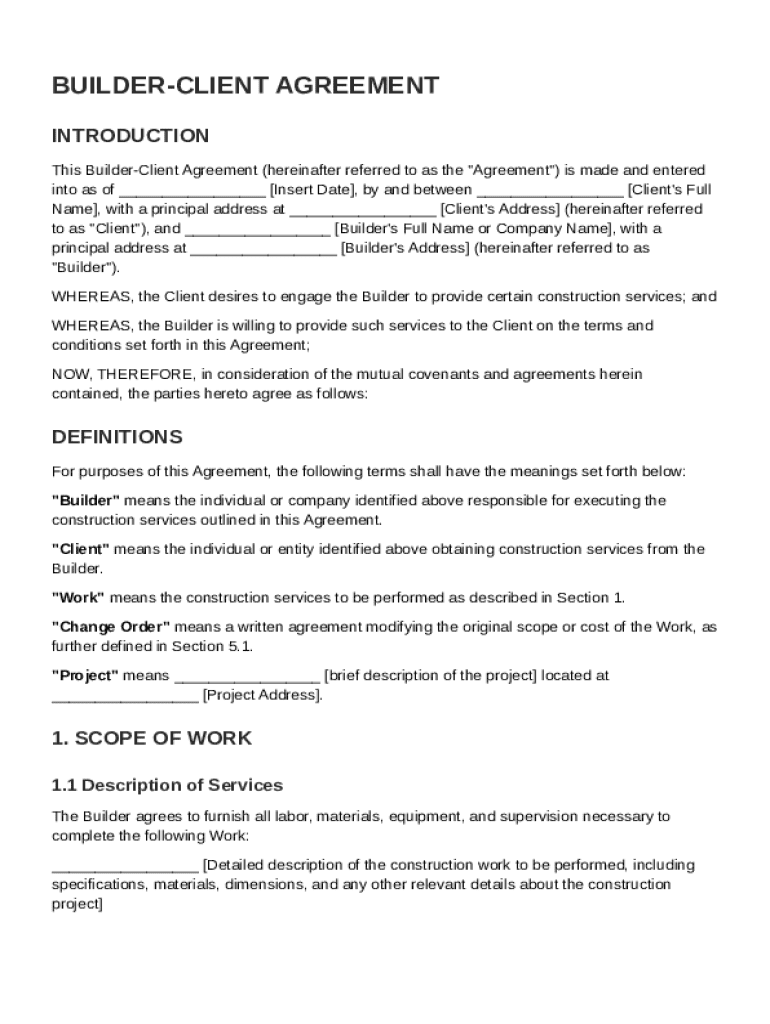







Key Elements of the Builder and Client Contract Template
The Builder and Client Contract Template serves as a comprehensive guide for structuring agreements between builders and clients. Key elements of this contract include:
- Scope of Work: Clearly outlines the tasks the builder will undertake, including detailed descriptions and timelines. This helps in avoiding misunderstandings regarding the responsibilities of the builder.
- Payment Structure: Specifies payment terms, such as the total cost, deposit requirements, and payment schedule. This section often includes conditions for withdrawal or modification by either party.
- Responsibilities of Both Parties: Details the obligations of both the builder and the client, ensuring each party understands their role in the contract. This might cover obtaining permits, site preparation, and adhering to project deadlines.
These elements ensure the contract comprehensively addresses all necessary aspects of the builder-client relationship, promoting transparency and accountability.
Legal Use of the Builder and Client Contract Template
The Builder and Client Contract Template must comply with applicable federal and state laws, ensuring its enforceability in legal situations.
- Contractual Validity: For the template to hold legal weight, it must include all essential elements of a contract, such as offer, acceptance, and consideration. Both parties must understand and agree to the terms.
- Compliance with Construction Laws: The contract should reference relevant construction laws and regulations, which vary by state. This could include specific licensing requirements or safety standards that need to be met.
- Dispute Resolution: Includes provisions for resolving conflicts, whether through mediation, arbitration, or litigation, following U.S. laws.
Ensuring legal compliance is paramount for protecting the rights and interests of both the builder and client.
Important Terms Related to the Builder and Client Contract Template
Several key terms frequently appear in Builder and Client Contract Templates, each contributing to the document's overall clarity and precision:
- Change Order: A formal amendment to the original contract terms, often involving adjustments to the scope of work, timelines, or project costs.
- Termination Clause: Defines the circumstances under which the contract can be ended prematurely by either party, typically involving notice periods and financial settlements.
- Force Majeure: Coverage for unforeseeable events that prevent contract fulfillment, such as natural disasters, allowing for extensions or temporary halts in work.
These terms empower both parties with the necessary knowledge to navigate contractual complexities effectively.
State-Specific Rules for the Builder and Client Contract Template
Construction contracts must adhere to diverse rules and regulations, which can vary significantly from one state to another:
- Licensing Requirements: Some states mandate specific licenses for builders, requiring clients to verify credentials before entering a contract.
- Lien Laws: Varying state laws regarding mechanics liens might affect how builders secure payment if a client fails to settle dues.
- Environmental Regulations: Differences in environmental laws can impact project planning, especially concerning waste management and energy use.
Understanding these state-specific variations can save both parties from legal and financial complications.
Steps to Complete the Builder and Client Contract Template
Using the Builder and Client Contract Template involves a precise series of steps:
- Initial Consultation: Both parties discuss project specifics and agree on draft terms.
- Drafting the Contract: Utilize the template to draft the contract, ensuring all key elements are addressed.
- Review: Each party should thoroughly review the contract, seeking legal advice if necessary.
- Negotiation: Address any concerns or amendments, ensuring mutual agreement on all terms.
- Finalization: Both parties sign the contract, making it legally binding.
- Record Keeping: Each party should retain a signed copy for their records.
Following these steps ensures a smooth process from contract initiation to execution.
Who Typically Uses the Builder and Client Contract Template
The Builder and Client Contract Template is widely used by various parties involved in construction projects:
- Individual Homeowners: Typically engaging with contractors for residential construction or renovation projects.
- Commercial Developers: Require detailed contracts for large-scale commercial building projects.
- Construction Firms: Utilize the template to streamline project-related agreements with multiple clients.
This template facilitates clear communication and legal security across different builder-client relationships.


Examples of Using the Builder and Client Contract Template
Numerous scenarios highlight the application of the Builder and Client Contract Template in real-world contexts:
- Residential Remodel: Enhancing a kitchen that requires clear terms on budget, materials, and completion dates.
- New Commercial Construction: An office building project involving complex timelines and materials management.
- Municipal Projects: Road or infrastructure work requiring compliance with specific public safety and timeline standards.
These examples showcase how contracts provide clarity and legal protection across diverse construction projects.
State-by-State Differences in the Builder and Client Contract Template
Differences in state laws significantly impact how these templates are structured:
- California: Strict licensing and environmental requirements shape contract terms and responsibilities.
- Texas: Lien laws and insurance requirements can affect how contracts address payment security.
- New York: Stringent regulations for building materials and zoning codes may necessitate additional contract clauses.
Understanding these differences is crucial for ensuring compliance and avoiding contractual disputes.




