







Definition and Purpose
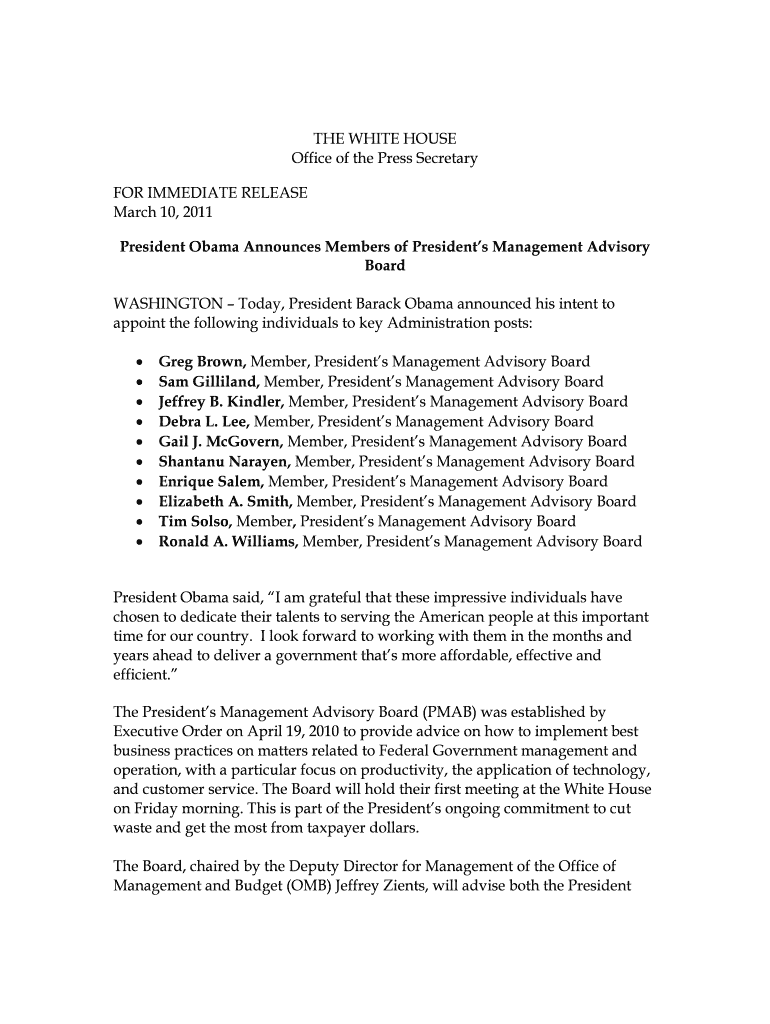
The "President Obama Announces Members of President's Management Advisory Board" refers to a strategic initiative that involves appointing top industry leaders to advise on improving the efficiency and efficacy of federal government operations. This board, driven by experts across various fields such as technology and healthcare, aims to infuse best practices from the private sector into government processes to enhance productivity and customer service. By leveraging the expertise of these industry leaders, the board seeks to foster innovative solutions and optimize management strategies within the public sector.
Steps to Complete the Appointment Process
-
Review of Candidates: Identify potential board members from different industry sectors, evaluating their expertise, leadership skills, and capacity to contribute to federal management enhancement.
-
Selection and Announcement: President Obama, along with other decision-makers, announces the selected members publicly, highlighting their qualifications and expected contributions.
-
Orientation and Induction: Newly appointed members undergo an orientation process to understand their roles, responsibilities, and the current management challenges the board will address.
-
Strategic Planning Sessions: Engage in initial planning meetings to outline objectives, set priorities, and assign specific focus areas to each member.
-
Implementation and Monitoring: Develop actionable plans and monitor the implementation of proposed management improvements, assessing their impact on federal operations.
Key Elements of the Advisory Board
-
Diverse Expertise: The board consists of leaders in technology, healthcare, media, and more, ensuring a broad perspective on management challenges.
-
Focus Areas: Key areas of focus include enhancing customer service within government agencies, increasing operational efficiencies, and implementing agile business practices.
-
Regular Assessment: The board regularly reviews progress and adjusts strategies to align with evolving government needs and technological advancements.
Why Appoint a Management Advisory Board?
-
Enhancing Efficiency: The primary motive is to improve operational efficiencies within federal management, reducing waste and optimizing resource use.
-
Innovative Solutions: By integrating private sector insights, the board introduces innovative approaches to traditional government processes, driving modernization.
-
Accountability and Transparency: With a structured advisory mechanism, the board fosters accountability and transparency in the administration's management decisions.
Legal Context and Compliance
-
Adherence to Federal Guidelines: The board functions in compliance with federal regulations governing advisory committees, ensuring all activities align with legal standards.
-
Transparency Requirements: Meetings and outcomes are documented and disclosed as per federal transparency and public accountability laws.
Eligibility and Selection Criteria
-
Professional Excellence: Candidates are typically industry leaders known for their contributions and excellence in management and innovation.
-
Diverse Backgrounds: Selection favors a diverse pool of candidates, ensuring representation across different sectors for a holistic advisory approach.
Who Typically Utilizes the Advisory Board's Recommendations?
-
Federal Agencies: Key beneficiaries include various federal agencies tasked with implementing recommended management practices.
-
Government Officials: Policymakers and officials use these recommendations to draft policies aimed at improving federal operations.
Examples of Successful Implementations
-
Technology Integration: The board's input has led to the successful integration of cutting-edge technology within governmental processes, enhancing service delivery.
-
Healthcare Improvements: Recommendations have led to streamlined processes in federal healthcare administration, reducing costs and improving patient outcomes.
Business Types Impacted by the Advisory Board
-
Public Sector Contractors: Companies providing services to the government may need to adapt to new operational standards based on the board's inputs.
-
Technology Firms: Emphasis on tech solutions often results in increased collaboration opportunities with government entities seeking to implement innovative practices.




