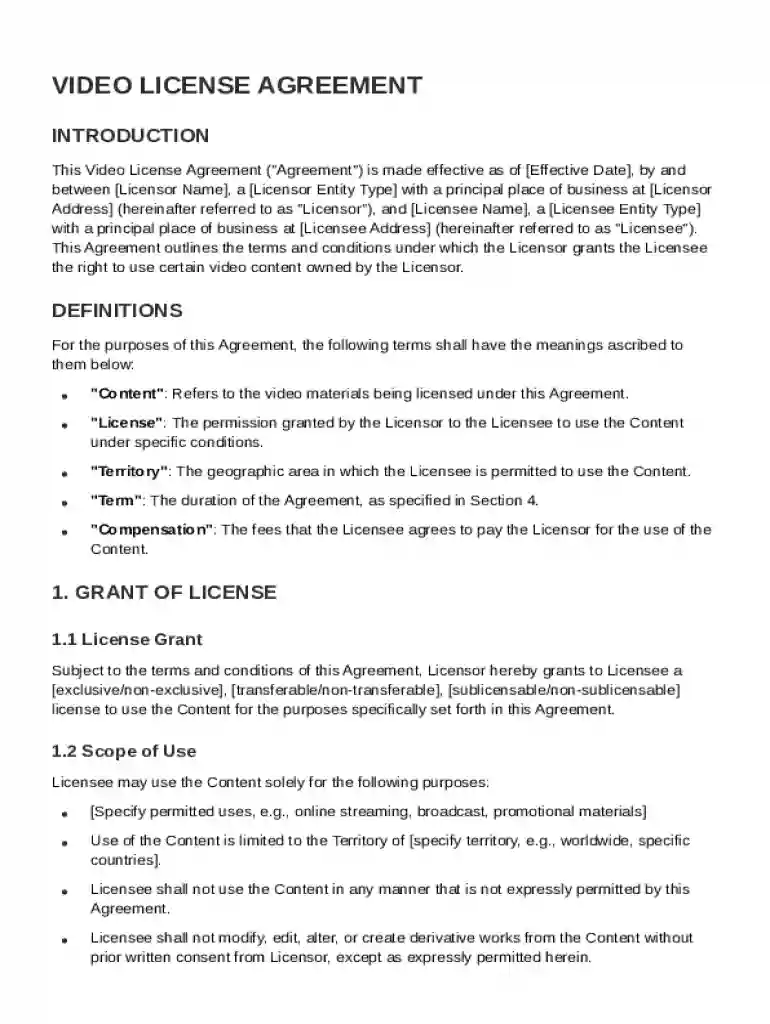
Definition & Meaning
A Video License Agreement Template is a legal document that outlines the permissions and conditions under which a Licensor grants a Licensee the right to use specific video content. This agreement is essential for establishing clear terms to avoid disputes and protect the interests of both parties involved. The template typically includes sections defining key terms, such as "Licensor," "Licensee," "Licensed Material," and "Term." Understanding these definitions is crucial for correctly interpreting the responsibilities and rights included in the agreement.
Key Terms Explained
- Licensor: The party who owns the rights to the video content and is granting the license.
- Licensee: The individual or entity receiving the rights to use the video content as specified in the agreement.
- Licensed Material: The specific video content covered under the agreement, which may include footage, audio-visual clips, or entire video assets.
- Term: The duration for which the Licensee is permitted to use the Licensed Material, ranging from a few months to several years.
Key Elements of the Video License Agreement Template
A comprehensive Video License Agreement Template includes several critical sections to ensure all aspects of the licensing deal are covered. These elements help in creating a robust legal framework that protects the interests of both parties.
Essential Sections
- Grant of License: Specifies the scope of rights granted to the Licensee, including usage, distribution, or public display rights.
- Compensation Structure: Details any fees or royalties the Licensee must pay to the Licensor in exchange for the license.
- Representations and Warranties: Assertions made by both the Licensor and Licensee regarding their authority, the legality of the content, and compliance with laws.
- Termination Conditions: Outlines scenarios in which the agreement can be dissolved prematurely, such as breach of terms or non-payment.
How to Use the Video License Agreement Template
Utilizing a Video License Agreement Template effectively requires following a series of steps to customize it according to specific needs.
Step-by-Step Customization
- Review Template Content: Begin by thoroughly reading each section of the template to understand its implications.
- Identify Key Details for Customization: Determine the specific details that need to be populated, such as names, addresses, compensation terms, and specific permissions.
- Modify Permissions and Restrictions: Adjust the scope of the license based on intended use, ensuring that any restrictions match the intended activities.
- Consult Legal Counsel: For tailored legal advice, consult a lawyer to review the customized agreement to ensure compliance with relevant laws and soundness of terms.
Legal Use of the Video License Agreement Template
Ensuring the Video License Agreement Template is legally sound is critical to its effectiveness. The document must adhere to U.S. law since the primary demographic is located in the United States.
Legal Considerations
- Governing Law: This clause specifies which state's laws will govern the interpretation and enforcement of the agreement, often chosen based on the location of the Licensor.
- Dispute Resolution: Outlines methods for resolving any disagreements, such as mediation, arbitration, or court proceedings, establishing a preemptive plan for conflict resolution.
- Confidentiality Obligations: Ensures sensitive information disclosed during the term of the agreement is protected from unauthorized disclosure.
Primary Users
- Videographers and Content Creators: To license their footage or finished projects to clients or distributors.
- Marketing and Advertisement Firms: When incorporating externally produced video content into their advertising campaigns.
- Educational Platforms: For using video clips in online courses or educational materials with permission from the content creators.
State-Specific Rules for the Video License Agreement Template
State laws can impact Video License Agreement Templates, introducing variations in legal requirements and enforcement.
Regional Variations
- California: Requires specific disclosures in contracts to comply with state laws about privacy and copyright.
- New York: May have additional regulations on digital media agreements, particularly concerning consumer rights and data protection.
- Texas: Emphasizes transparency in advertising contracts, which may extend to video licensing when used in promotional contexts.
Steps to Complete the Video License Agreement Template
Completing the Video License Agreement Template involves several deliberate actions to ensure it is correctly filled out and enforceable.
Detailed Procedure
- Gather Necessary Information: Collect all required data, including contact details, video content specifics, and payment terms.
- Fill Out Each Section: Carefully enter information into each section of the template, ensuring accuracy and clarity.
- Review for Errors: Double-check all entries for typographical errors or inconsistencies that might affect the document’s legality.
- Signatures and Dating: Secure signatures from both parties and include the date of execution to validate the document.
Important Terms Related to Video License Agreement Template
Understanding essential legal terms and concepts linked to the Video License Agreement Template is vital for effective use.
Commonly Used Terminology
- Exclusive vs. Non-Exclusive License: Determines whether the Licensee holds sole rights to use the video or if the Licensor may grant similar licenses to other parties.
- Indemnification Clauses: Legal guarantees between parties that involve covering losses or damages arising from specific acts or failures to act.
- Miscellaneous Provisions: Include final clauses such as amendment procedures, whole agreement acknowledgments, and severability clauses.
Providing an in-depth examination of a Video License Agreement Template allows users to understand and implement it effectively within a legal framework, ensuring both the protection of content and clarity of user rights and responsibilities.