






Definition & Meaning
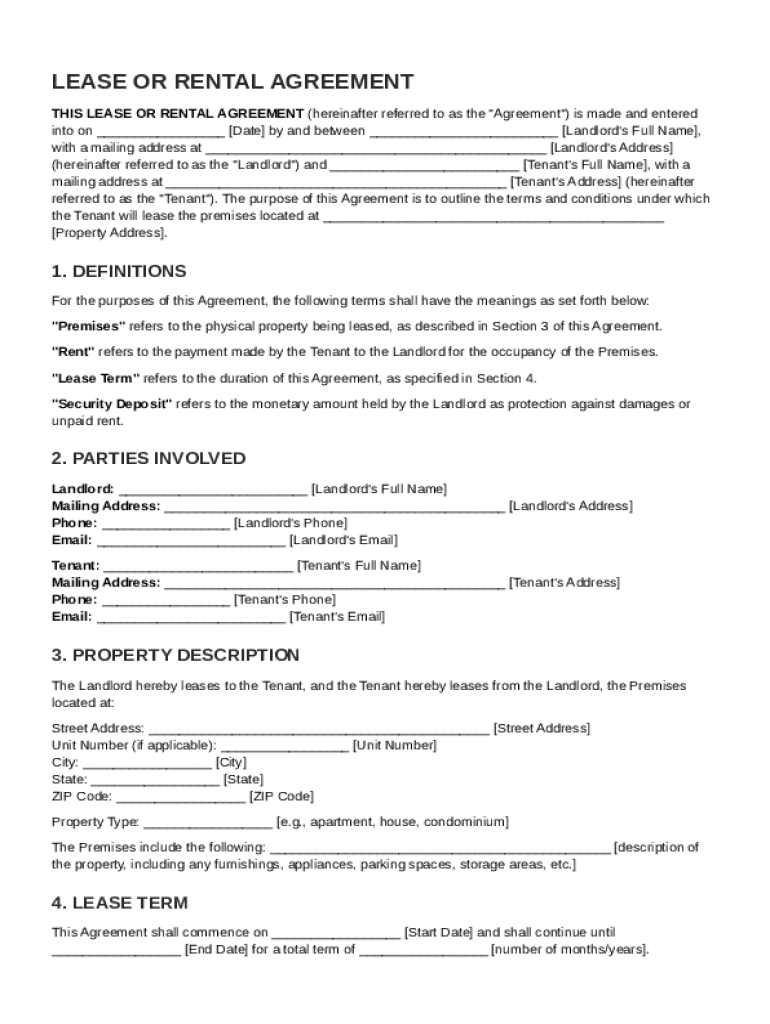
A Lease or Rental Agreement Template is a standardized document used to outline the terms and conditions under which a landlord rents out a property to a tenant. This template serves as a legally binding contract and provides a clear framework for both parties, defining their rights and responsibilities throughout the lease term. It typically includes details such as the duration of the lease, the amount of rent, and other vital agreements like maintenance duties and use of property restrictions.
Key Components
- Parties Involved: Clearly identifies the landlord and tenant.
- Property Description: Provides specifics about the property being rented.
- Lease Term: Specifies the start and end dates of the lease.
- Rent Details: Outlines the rental amount, due dates, and acceptable payment methods.
Important Terms Related to Lease Or Rental Agreement Template
Understanding certain legal and property-related terms is essential when dealing with a Lease or Rental Agreement Template. Familiarity with these terms ensures that both the landlord and tenant are on the same page regarding their obligations and rights.
Common Terms Explained
- Security Deposit: An amount paid by the tenant at the start of the lease to cover potential damages or unpaid rent.
- Utilities: Refers to the services required to make the property habitable, such as electricity, water, and gas, and who is responsible for paying these bills.
- Maintenance: Details the responsibilities of both tenant and landlord in terms of property upkeep and who handles repairs.
Key Elements of the Lease Or Rental Agreement Template
The Lease or Rental Agreement Template is a foundational document in the relationship between a landlord and a tenant. It encompasses crucial elements that dictate the framework of the rental agreement.
Core Elements
- Payment Terms: Includes rent amount, payment deadlines, and applicable penalties for late payments.
- Termination Process: Details conditions under which the lease can be terminated by either party.
- Dispute Resolution: Outlines methods for resolving conflicts that may arise during the lease period.
- Additional Provisions: Covers clauses like smoking and pet policies, alterations to property, and subleasing conditions.
Steps to Complete the Lease Or Rental Agreement Template
Completing a Lease or Rental Agreement Template requires attention to detail and an understanding of each section's importance. Following a structured approach ensures that all critical aspects are adequately addressed.
- Fill in Party Details: Begin by entering the full legal names and contact information of the landlord and tenant.
- Describe the Property: Detail the address and specific details of the rental property.
- Outline Financial Terms: State the rent amount, security deposit, and any other related financial terms.
- Set Lease Duration: Clearly define the start and end dates of the agreement.
- Detail Responsibilities: Enumerate tenant and landlord duties, specifically regarding maintenance and utility payments.
- Discuss Termination and Renewal: Specify the conditions under which the lease can be renewed or terminated prematurely.
Who Typically Uses the Lease Or Rental Agreement Template
The Lease or Rental Agreement Template is widely used by different parties in the real estate sector, each fulfilling distinct roles and purposes tied to property leasing arrangements.


Common Users
- Landlords: Use it to ensure tenants understand their obligations and to protect the property legally.
- Tenants: Utilize it to understand their rights and the terms of occupancy.
- Property Managers: Manage tenant-landlord relationships and ensure compliance with lease terms.
- Real Estate Agents: Facilitate agreements between landlords and prospective tenants.

State-specific Rules for the Lease Or Rental Agreement Template
Each state in the United States may have its own regulations governing rental agreements. It is crucial to ensure the template aligns with state laws to avoid legal pitfalls.
Examples of State Differences
- Security Deposit Limits: Some states cap the amount a landlord can charge for a security deposit.
- Notice Periods for Termination: Varying state laws dictate the required notice period before a lease can be terminated.
- Rent Control: Specific jurisdictions may have regulations limiting rent increases.
State-by-State Differences
Rent and lease agreements can vary significantly depending on the state due to differing real estate laws and regulatory requirements. It is important to tailor the template to match state-specific provisions.
Examples of Variations
- Lease Formatting: Some states might require specific clauses or disclosures.
- Tenant Rights: Tenant protection laws, like eviction notice terms or habitability standards, can differ substantially.
- Security Deposits: States regulate handling, limits, and timelines for returning deposits.
Legal Use of the Lease Or Rental Agreement Template
The Lease or Rental Agreement Template must be employed in a way that adheres strictly to applicable legal standards. Ensuring its proper usage protects both landlords and tenants from potential legal disputes.
Legal Considerations
- Compliance with Fair Housing Laws: Ensure the agreement doesn't discriminate based on race, color, national origin, religion, sex, familial status, or disability.
- Enforceability: Include terms that are legally binding and enforceable under federal and state laws.
- Modification Clauses: Clearly outline how and when changes to the agreement can be made.
How to Use the Lease Or Rental Agreement Template
Using the Lease or Rental Agreement Template effectively involves understanding its components and correctly applying them within the context of the rental arrangement.
Practical Steps
- Customize the Template: Adjust terms to fit the specific rental situation and ensure state law compliance.
- Review and Amend: Both parties should thoroughly review and amend clauses to reflect agreed terms.
- Signature Process: Both landlord and tenant need to sign the document to confirm their agreement to the terms.
- Distribute Copies: Ensure both parties receive a final signed copy for their records.