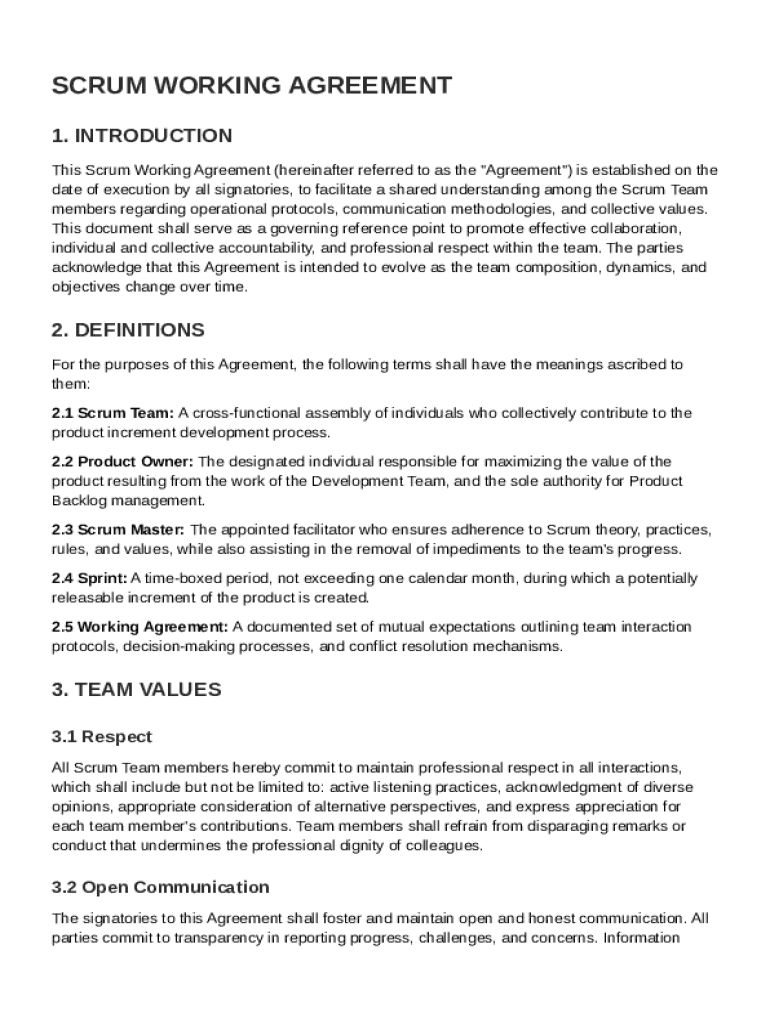







Definition and Meaning
The Scrum Working Agreement Template serves as a foundational document for Scrum teams, detailing the rules, communication methods, and collaborative processes that guide team interactions. It incorporates shared values such as respect, open communication, and accountability, ensuring that every member is on the same page regarding their roles and responsibilities. This template is designed to be dynamic, evolving with the team's needs and objectives. It enables the establishment of clear expectations, fostering an environment of mutual understanding and effective collaboration.
How to Use the Scrum Working Agreement Template
To effectively use the Scrum Working Agreement Template, teams should convene to discuss and agree upon each section of the template. The process includes:
- Initiating the Agreement: Gather all team members and present the purpose of the agreement.
- Defining Communication Protocols: Identify preferred communication channels and define acceptable response times.
- Establishing Working Hours: Agree on standard working hours, taking into account different time zones if applicable.
- Setting Meeting Structures: Determine the frequency, timing, and structure of regular meetings, such as daily stand-ups and sprint reviews.
- Decision-Making Processes: Outline how decisions will be made, whether through consensus, majority vote, or a designated decision-maker.
- Conflict Resolution Strategies: Develop a procedure for addressing conflicts, ensuring issues are resolved in a timely and respectful manner.
- Document Signatures: Once all components are discussed and agreed upon, team members should sign the document to symbolize their commitment.
By following these steps, teams can create a robust working agreement that enhances team performance and cohesion.
Key Elements of the Scrum Working Agreement Template
The Scrum Working Agreement Template comprises several key elements that facilitate effective team operations:
- Operational Protocols: Guidelines on how tasks are to be executed and documented.
- Communication Methods: Agreed channels and tools for effective information exchange.
- Meeting Cadence: Schedule and format of regular meetings, ensuring alignment and progress tracking.
- Decision-Making Frameworks: Procedures for making team decisions, promoting inclusivity and transparency.
- Conflict Resolution Plans: Predefined strategies for managing and resolving disputes.
- Continuous Improvement Practices: Mechanisms for ongoing evaluation and refinement of team processes.
These elements collectively create a comprehensive framework that supports team efficiency and adaptability.
Steps to Complete the Scrum Working Agreement Template
The completion of the Scrum Working Agreement Template involves several crucial steps:
- Preparation: Distribute the template to all team members prior to the initial meeting.
- Collaborative Discussion: Host a meeting to collaboratively fill out the template, ensuring every voice is heard.
- Customization: Tailor the template to the specific needs of the team, considering project specifics and individual working styles.
- Review and Iterate: Allow time for team members to review the agreement and propose modifications.
- Finalization: Incorporate suggested changes, reaching a consensus before finalizing the document.
- Implementation and Monitoring: Put the agreement into practice, and monitor its effectiveness, making adjustments as needed.
Following these steps ensures that the working agreement is not only comprehensive but also practical and applicable to the team's unique environment.
Examples of Using the Scrum Working Agreement Template
Utilizing the Scrum Working Agreement Template effectively can be illustrated with practical examples:
- Software Development Teams: Establishing clear coding standards, review processes, and version control protocols.
- Marketing Teams: Defining content approval workflows and scheduling regular brainstorming sessions for campaign ideas.
- Product Management Teams: Setting prioritization criteria for product backlogs and defining sprint goals collaboratively.
Each example demonstrates how the template can be adapted to fit the specific workflows and needs of different types of teams, enhancing productivity and team cohesion.
Who Typically Uses the Scrum Working Agreement Template
The Scrum Working Agreement Template is primarily used by teams operating within Agile frameworks, including:
- Software Development Teams: For organizing development cycles and managing backlogs.
- Product Management Teams: To align product goals with development capabilities.
- Cross-Functional Teams: Engaging various departments in joint ventures to unify processes and strategies.
These teams benefit from the structured approach provided by the template, leading to more efficient and harmonious teamwork across different business domains.


Who Issues the Form
In a Scrum environment, the responsibility for issuing the Scrum Working Agreement Template usually falls on:
- Scrum Masters: They facilitate the initial creation and continuous refinement of the agreement.
- Team Leads: When no Scrum Master is present, team leads may assume responsibility for issuing and maintaining the agreement.
By establishing a clear custodian for the form, teams can ensure that the working agreement is regularly reviewed and remains relevant to ongoing team dynamics.
Continuous Improvement Practices in Scrum
Central to the Scrum philosophy is the concept of continuous improvement, integrated into the working agreement through:
- Retrospectives: Regular meetings to assess team performance and identify areas for improvement.
- Feedback Loops: Establishing processes for receiving and acting on feedback from team members and stakeholders.
- Incremental Adjustments: Making small, continuous changes to improve team workflows and collaboration.
Incorporating these practices within the Scrum Working Agreement Template encourages teams to remain agile and responsive to change, fostering a culture of continuous learning and development.