






Definition and Meaning of the Architectural Contract Template
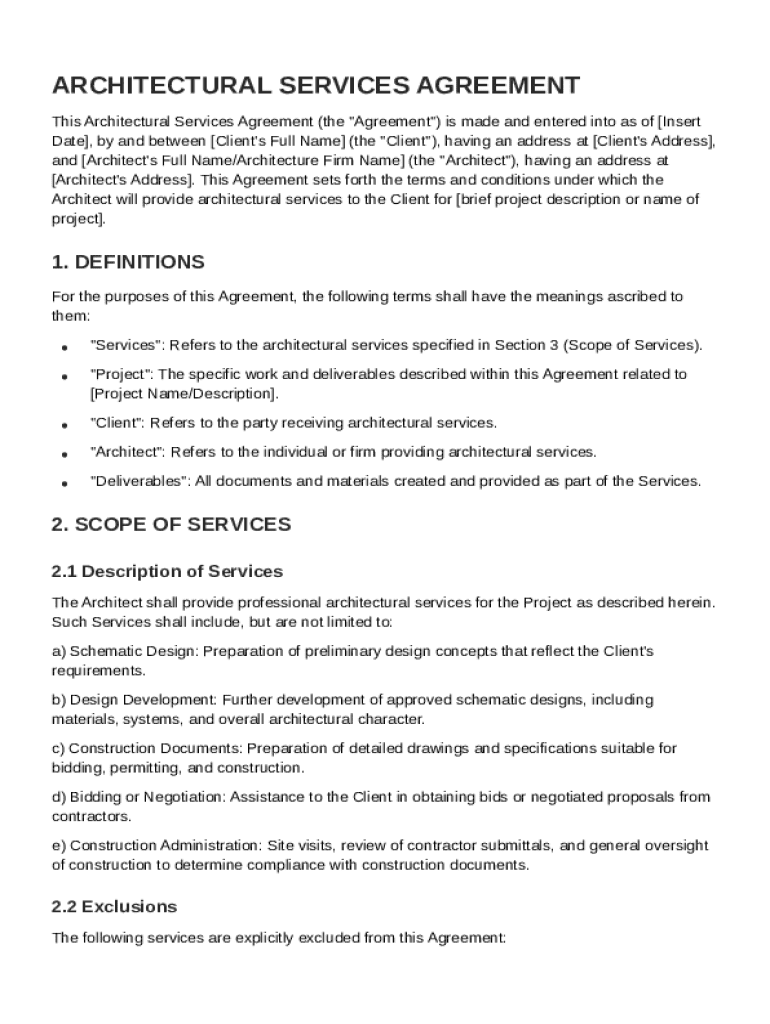
The "Architectural Contract Template" refers to a standardized document that defines the terms and conditions under which architectural services are provided. These contracts outline the roles and responsibilities of both the architect and the client, ensuring mutual understanding and clear expectations throughout a project. Key components of this template typically include a detailed scope of work, compensation agreements, project timeline, and legal provisions such as liabilities and indemnities. This template serves not only as a legal safeguard but also as a roadmap for the execution of architectural duties.
- Project Scope: Defines specific tasks and services to be performed by the architect, avoiding scope creep.
- Compensation Structure: Provides clear terms for payments, whether flat-rate, hourly, or milestone-based.
- Timeline: Sets deadlines and key milestones for project phases.
- Legal Provisions: Addresses dispute resolution, termination clauses, and liability issues.
Key Elements of the Architectural Contract Template
Understanding the critical elements of an Architectural Contract Template can facilitate better project management and avoid potential conflicts. These elements form the backbone of any architectural agreement and should be customized to fit the context of each project.
Project-Specific Clauses
- Scope of Services: A detailed description of all services provided by the architect, potentially including design, planning, and supervision.
- Payment Terms: Specify payment schedules and conditions for different project stages.
- Document Ownership: Outlines who retains rights to the created architectural designs.
Legal and Compliance Aspects
- Liability and Indemnity: Discusses the responsibility and legal protection for both parties in cases of disputes.
- Dispute Resolution: Mechanisms for resolving disagreements, possibly through mediation or arbitration.
Steps to Complete the Architectural Contract Template
Completing the Architectural Contract Template involves several crucial steps to accurately reflect the agreement between parties. These steps ensure that all necessary details are meticulously recorded, providing a comprehensive and enforceable document.
Collection of Required Information
- Identify Parties: Clearly state the names, roles, and contact information of both the client and the architect.
- Define Project Details: Outline the project goals, expected deliverables, and key performance criteria.
Drafting and Review Process
- Draft Contract: Use the template to input collected information and customize clauses according to project specifics.
- Legal Review: Engage legal professionals to review the draft to ensure compliance with applicable laws and regulations.
- Final Review with Client: Present the draft to the client for feedback and necessary amendments.
How to Use the Architectural Contract Template Effectively
Implementing the Architectural Contract Template in a real-world scenario requires an understanding of its components and strategic application in project management. This ensures that the contractual agreement is practical and enforceable.
- Customize Appropriately: Tailor the generic language within the template to adequately describe the project specifics.
- Clarify Terms and Conditions: Use clear language to outline responsibilities, compensations, and timelines.
- Verify Compliance: Ensure the contract aligns with both state and federal legal requirements.
Important Terms Related to the Architectural Contract Template
The Architectural Contract Template includes numerous specifics that must be understood and reviewed for clarity. Grasping the meaning of these terms will provide better insight into contractual obligations.
Commonly Used Terminology
- Deliverables: Specific items or outcomes that the architect agrees to provide.
- Amendment Clause: Guidelines for modifying the contract post-signature.
- Force Majeure: Conditions under which contract obligations may be suspended due to unforeseen circumstances.
Legal Use and Compliance with the Architectural Contract Template
Ensuring legal compliance is critical when employing an Architectural Contract Template in the United States. Familiarity with federal and state regulations ensures that the contract is not only legally binding but also enforceable.
Considerations for Legal Validity
- State-Specific Regulations: Each state may have unique legal requirements affecting architectural contracts.
- Statutory Compliance: Adhere to federal acts, such as the ESIGN Act, to authenticate signatures and dictate contract law.
Examples of Using the Architectural Contract Template
Several scenarios demonstrate the practical application of the Architectural Contract Template. By examining these use cases, stakeholders can better appreciate the template’s versatility.
- Residential Projects: An architect uses the contract to clearly define design expectations and payment modalities for a new housing development.
- Commercial Buildings: Outlines timelines and deliverables for office space renovations.
- Public Sector Contracts: Ensures compliance with municipal building codes and transparency in government-funded projects.
Who Typically Uses the Architectural Contract Template
Various industry players use the Architectural Contract Template, emphasizing its adaptability across different contexts and project sizes.


Stakeholders
- Individual Architects: For securing clear terms with private clients for small to medium-sized projects.
- Architectural Firms: Engage with corporate clients on large-scale projects, ensuring all legalities and expectations are covered.
- Construction Companies: Coordinate with architects to ensure all architectural designs meet construction feasibility.
Each of these blocks provides comprehensive information on different facets of the Architectural Contract Template, ensuring that users are equipped with the knowledge needed to effectively utilize the form in their respective practices.