01. Edit your form online
Type text, add images, blackout confidential details, add comments, highlights and more.

Type text, add images, blackout confidential details, add comments, highlights and more.

Draw your signature, type it, upload its image, or use your mobile device as a signature pad.

Send it via email, link, or fax. You can also download it, export it or print it out.
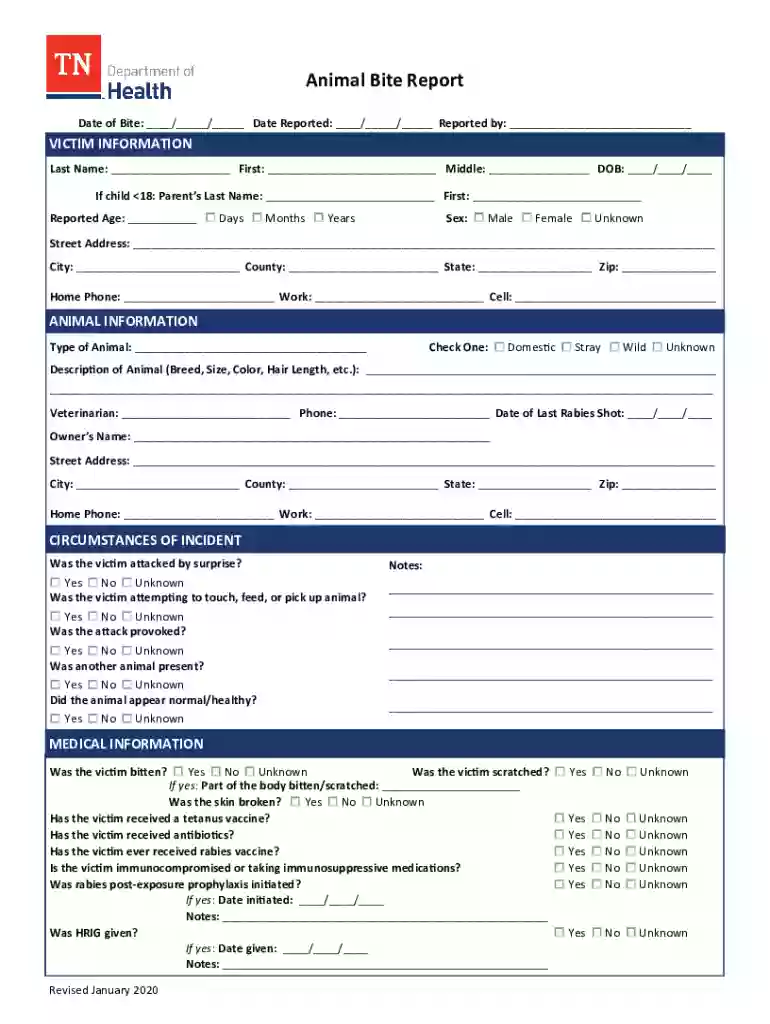
The Animal Bite Report utilized by the Tennessee State Government is a form designed to collect comprehensive data on incidents involving animal bites. This form serves as an essential tool for documenting information about the victim, the animal involved, and the circumstances of the incident. By gathering detailed reports, health departments can better manage public health concerns, track rabies exposure, and provide timely medical interventions.
Victim Information: This section collects personal details of the individual bitten, including name, age, and contact information. Accurate data helps in follow-up actions.
Animal Details: Information about the animal, such as species, ownership status, and vaccination history, is central for assessing rabies risk and ownership liability.
Incident Circumstances: Contextual data, such as the time, location, and circumstances leading to the bite, help authorities understand contributing factors and determine preventive measures.
To access the Animal Bite Report, individuals can contact local health departments or government offices. These entities can provide guidance on obtaining the form, whether by visiting in person, requesting a copy via mail, or downloading it from official state websites.
Website Portals: Many state health departments offer downloadable versions through their official websites. Look for public health or animal control sections.
Direct Downloads: Some local government sites may provide direct links to PDFs or online fillable forms, streamlining the access process.
Filling out the Animal Bite Report requires careful attention to detail to ensure all relevant information is captured for proper evaluation by health authorities.
Fill in Victim Details: Begin with accurate personal data, ensuring that each field is completed to prevent delays in processing.
Describe the Incident: Outline the events leading to the bite, noting any environmental factors or interactions with the animal prior to the incident.
Provide Animal Information: Include details about the animal, emphasizing vaccination status and possible ownership.
Submit the Form: Once completed, submit the form to the appropriate health department for evaluation. Ensure to follow specific submission guidelines provided by the local agencies.
Filing an Animal Bite Report serves several critical functions:
Public Health: Helps track and prevent rabies, a severe and often fatal condition if not promptly treated.
Medical Follow-Up: Ensures victims receive appropriate care, including tetanus or rabies shots, minimizing health risks post-incident.
Legal Documentation: Acts as a legal record, aiding in resolving disputes between parties involved and determining liabilities.
This form is primarily used by:
Victims: Individuals or caretakers report bites to protect personal health.
Healthcare Providers: Physicians and clinicians complete the form while treating bite wounds and provide detailed observations.
Animal Control Officers: Utilize reports to monitor and manage animal control measures effectively.
The correct use of the Animal Bite Report is governed by state regulations and is legally binding for ensuring compliance with public health and safety laws. Reporting such incidents is essential for public safety and may be required by state law, depending on the severity and circumstances of the bite.
Submission Deadlines: Prompt reporting post-bite is often mandated, with specific timelines for submission to mitigate health risks.
Confidentiality: Information collected is used according to privacy laws, ensuring that personal data is protected.
Accurate information is the backbone of a reliable Animal Bite Report.
Victim’s Medical Information: Document medical interventions received, such as cleaning, antibiotics, or rabies prophylaxis.
Animal Behavior: Notes on the animal's demeanor, history of aggression, and detail of the bite mark help in assessing future danger and necessary actions.
Given the regional focus, understanding local regulations is crucial. Tennessee requires specific details to comply with state health codes.
Rabies Protocols: Include specifics regarding mandatory quarantine measures for animals involved in unprovoked bites.
Animal Ownership Laws: Detail consequences for owners of animals involved in bites, including fines or restrictions.
Consider the following real-world applications:
Medical Cases: A child bitten by a stray dog could lead to community vaccination drives.
Legal Disputes: Documentation aids court cases involving negligence or lack of animal control by pet owners.
By understanding the comprehensive structure and utility of the Animal Bite Report, users can ensure proper execution and submission, contributing to public health safety and personal protection.
We've got more versions of the Animal Bite Report - Tennessee State Government - TN form. Select the right Animal Bite Report - Tennessee State Government - TN version from the list and start editing it straight away!
| Versions | Form popularity | Fillable & printable |
|---|---|---|
| 2020 | 4.9 Satisfied (53 Votes) |
At DocHub, your data security is our priority. We follow HIPAA, SOC2, GDPR, and other standards, so you can work on your documents with confidence.