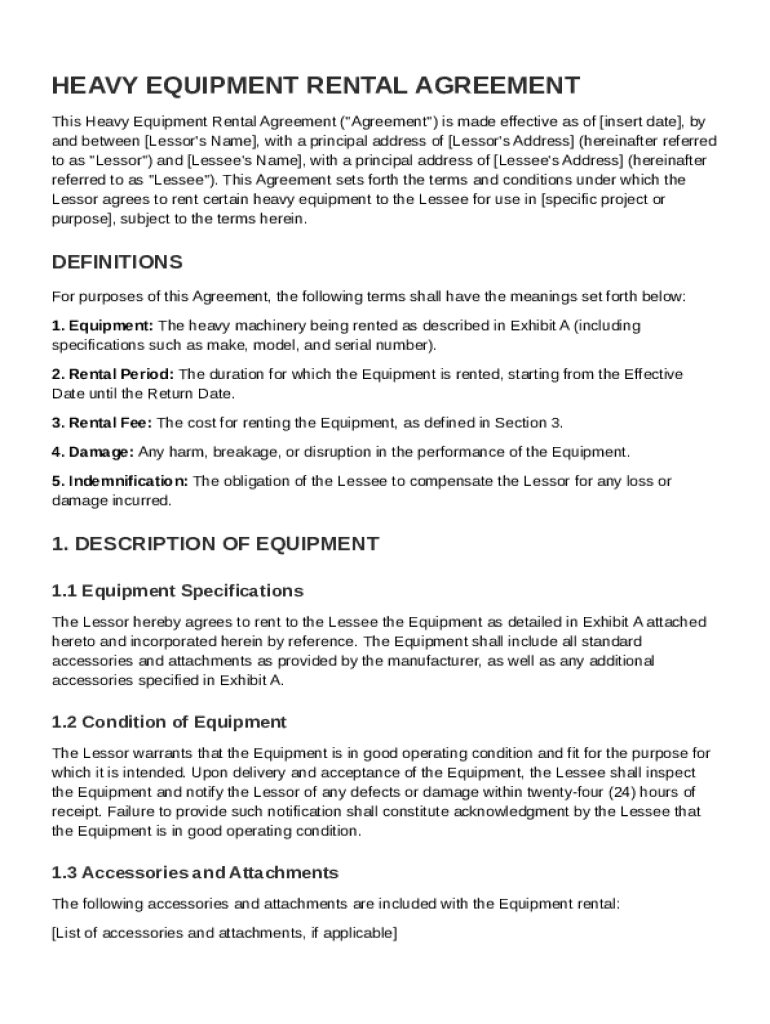







Definition & Importance of the Heavy Equipment Rental Contract Template
The Heavy Equipment Rental Contract Template is a crucial document that formalizes the rental of heavy machinery, defining the relationships and expectations between the lessor and the lessee. This contractual agreement outlines the specific terms and conditions that both parties must adhere to during the rental period. Definitions of essential terms are provided at the beginning to ensure clarity. The document also includes descriptions of the equipment being rented, which is vital to set clear expectations and responsibilities.
Special emphasis is placed on the necessity of this template, as it helps prevent misunderstandings by detailing the rental period, fees, and maintenance duties. It also indemnifies both parties against potential losses or damages, thereby minimizing legal disputes. As a legally binding contract, this template ensures that both parties fully understand their obligations regarding the equipment’s use, maintenance, and return, providing a safety net for all involved.
How to Use the Heavy Equipment Rental Contract Template
Utilizing the Heavy Equipment Rental Contract Template involves several straightforward steps to ensure all aspects of the rental agreement are properly addressed:
-
Customization: Begin by customizing the template to specify the details, including the names and addresses of the lessor and lessee, as well as detailed descriptions of the equipment.
-
Term Clarification: Clearly define the rental period and associated fees. Outline payment terms and due dates to prevent future disputes.
-
Maintenance Duties: Assign responsibility for maintenance tasks and clearly indicate who bears the financial burden for repairs during the rental period.
-
Risk Management: Include indemnification clauses to protect both parties from potential liabilities. Specify insurance requirements and ensure compliance with local laws.
-
Final Review: Have both parties review the contract for clarity and completeness before signing to confirm mutual agreement on all terms.
These steps ensure a seamless rental process while protecting the interests of both parties involved.
Key Elements of the Heavy Equipment Rental Contract Template
The Heavy Equipment Rental Contract Template comprises several critical elements designed to address all pertinent aspects of the rental agreement:
-
Parties Involved: This section identifies the lessor and lessee with full legal names and contact information.
-
Equipment Description: Detailed descriptions of the machinery, including make, model, and serial number, are included to avoid miscommunications.
-
Rental Period: Lists the start and end dates of the rental agreement, along with any renewal or extension terms.
-
Financial Terms: Specifies the rental fees, payment schedules, and any applicable late fees.
-
Maintenance and Repairs: Outlines responsibilities for maintenance and repairs, specifying who is responsible for costs incurred during the rental.
-
Insurance and Liability: Details requirements for insurance coverage and the limitations of liability for each party.
-
Indemnification and Damages: Covers scenarios in which the equipment may be damaged and indemnifies the lessor or lessee, depending on fault and terms set in the agreement.
Each element serves a specific purpose in ensuring a thorough understanding and adherence to agreement terms.
Legal Use & Compliance with the Heavy Equipment Rental Contract Template
Legally utilizing the Heavy Equipment Rental Contract Template requires awareness of federal and state-specific regulations to ensure compliance. The contract must adhere to the Uniform Commercial Code (UCC), which governs commercial transactions in the United States, to be enforceable. Both parties should ensure the document reflects any applicable state-specific regulations to prevent legal issues.
It is advisable to seek legal counsel to verify that all contract terms comply with regional laws and guidelines. The contract can incorporate clauses that stipulate the governing law, ensuring any disputes are resolved under the chosen jurisdiction. This careful attention to legal detail helps safeguard both parties and strengthens the contract’s enforceability.
Important Terms Related to the Heavy Equipment Rental Contract Template
Understanding key terms in the Heavy Equipment Rental Contract Template is essential for a comprehensive grasp of the agreement. Here are a few crucial terms:
-
Lessor: The party who owns the equipment and leases it out.
-
Lessee: The party renting the equipment.
-
Indemnification: A contractual obligation by one party to compensate the other for certain costs and damages.
-
Governing Law: The state law that applies to the contract and under which it is enforceable.
-
Default: Failure by the lessee to pay rent or perform any other lease obligations.
These terms are fundamental to the contract structure and understanding the mutual obligations and rights of the involved parties.
Steps to Complete the Heavy Equipment Rental Contract Template
Completing the Heavy Equipment Rental Contract Template involves a systematic approach to ensure precision and mutual understanding:
-
Fill in Basic Information: Enter the names, addresses, and contact details of both the lessor and lessee.
-
Detail Equipment Description: Insert comprehensive information about the equipment, ensuring all relevant specifications are noted.
-
Specify Financial Terms: Document the agreed-upon rental fees, payment due dates, and any penalties for late payment.
-
Outline Responsibilities: Clearly indicate maintenance and repair duties, assigning them to the appropriate party.
-
Include Insurance Information: Provide details on required insurance coverage for the equipment during the rental term.
-
Finalize with Signatures: Both parties must sign the document and, if desired, have a witness or notary to validate and strengthen the contract's legality.
This process ensures all necessary details are accounted for, thus minimizing potential disputes and misunderstanding during the rental period.
State-Specific Rules for the Heavy Equipment Rental Contract Template
While the Heavy Equipment Rental Contract Template can be used universally, each state may have specific requirements or customary practices that impact its enforceability:
-
California: Rental agreements in California often require additional language regarding environmental protection and liabilities.
-
New York: Agreements may need to specify particular insurance requirements due to state guidelines.
-
Texas: Rental contracts often include detailed information on property tax obligations related to leased equipment.
By aligning the contract with state-specific laws, users ensure compliance and protect against unintended legal complications.
Who Typically Uses the Heavy Equipment Rental Contract Template
The Heavy Equipment Rental Contract Template serves a wide array of users within the industry:
-
Construction Companies: Often rent equipment to manage project costs effectively without the need for large capital investments.
-
Agriculture Businesses: Utilizes rented machinery during peak seasons or specific projects to enhance productivity.
-
Mining Operations: Rents heavy equipment to handle specific tasks, reducing the need for permanent ownership of specialized machinery.
-
Event Organizers: May use the template when renting equipment needed for site preparation or logistics.
Understanding the diverse user base of this template helps tailor its provisions to meet various industry-specific needs, promoting its efficacy and utility.