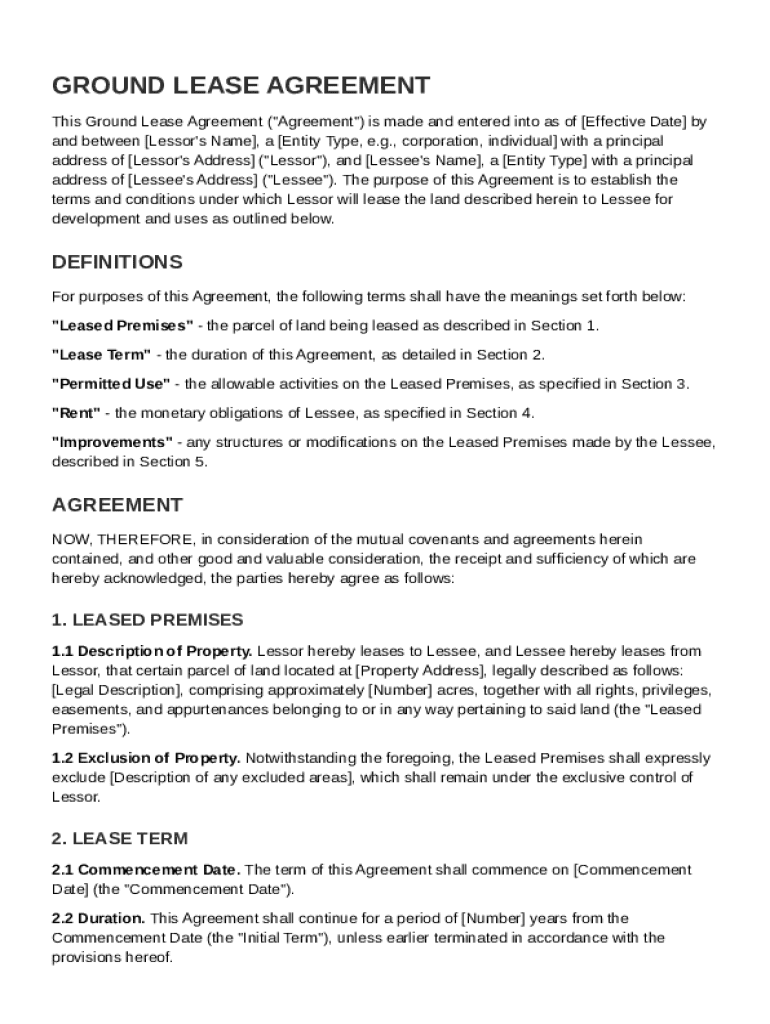







Definition and Meaning of the Ground Lease Agreement Template
A Ground Lease Agreement Template is a formal document used to outline the terms under which a landowner (lessor) leases out land to a tenant (lessee) specifically for development purposes. This contract typically provides comprehensive details such as the duration of the lease, permissible uses of the land, and the obligations of both parties. Understanding the meaning of a Ground Lease Agreement is essential, as it delineates the rights and responsibilities of both the landowner and the lessee, ensuring clear communication and expectations throughout the lease period. For example, such leases often have long-term durations that may span decades, allowing the lessee the time needed to construct and utilize buildings on the land.
How to Use the Ground Lease Agreement Template
Using a Ground Lease Agreement Template involves several steps to customize the content to the specific needs of both the lessor and the lessee. First, the parties involved must identify the land parcel that will be leased and describe its location accurately in the agreement. Next, parties must decide upon the lease term and permissible uses of the land. This would include what type of development or business activities can be carried out on the premises. Adjustments are then made to sections covering lease payments, maintenance responsibilities, and improvements made by the lessee. After all specific information has been incorporated, the agreement needs to be reviewed by both parties, often in consultation with legal professionals, to ensure compliance with state laws and mutual agreement.
Key Elements of the Ground Lease Agreement Template
The Ground Lease Agreement Template is composed of several critical elements that are essential for its effective implementation. These include:
- Lease Term: The duration for which the lease is valid, often spanning long periods such as 30 to 99 years, to accommodate developments.
- Rent Obligations: Details about the payment amount, frequency, and the method by which rent payments should be made by the lessee.
- Permitted Uses: Specifies the types of developments or activities allowed on the leased premises, such as commercial or residential buildings.
- Improvements: Conditions related to any constructions or modifications the lessee is permitted to make, and who bears the cost.
- Insurance and Liability: Requirements for liability insurance to protect against possible damages or accidents.
- Default and Termination Conditions: Outlines what constitutes a breach of contract and the possible consequences and resolutions.
- Miscellaneous Provisions: Additional terms or clauses that address specific needs or scenarios outside typical agreements.
Legal Use of the Ground Lease Agreement Template
The legal validity of a Ground Lease Agreement Template is paramount for ensuring the enforceability of its terms. This involves adhering to state laws and regulations that govern real estate and lease agreements. Real estate law firms and legal advisors are often consulted to confirm that the agreement meets all necessary legal requirements, such as proper signatures from all parties, notarization, and compliant documentation for record-keeping. Furthermore, compliance with zoning laws and obtaining appropriate permits for planned developments is crucial to avoid legal complications. For instance, if a lessee intends to build a commercial site, they must ensure the land is zoned accordingly.
State-Specific Rules for the Ground Lease Agreement Template
Each state in the U.S. has unique regulations affecting Ground Lease Agreements. These may include different statutes around lease termination, rent control, taxes, and land use restrictions. For example, states like California and New York may have specific requirements for environmental assessments before certain types of developments can proceed. To ensure an agreement is enforceable, it is often necessary to customize sections of the template to reflect local regulations. Engaging a local real estate attorney to review the agreement for compliance with state-specific laws is a prudent step, especially for leases intended for high-stakes commercial developments.
Steps to Complete the Ground Lease Agreement Template
- Identify Parties and Property: Clearly define the lessor, lessee, and the property being leased with accurate legal descriptions.
- Draft Lease Terms: Include duration, rent terms, payment schedules, and late fee policies.
- Specify Permitted Uses: Detail the allowable activities and any restricted uses of the premises.
- Detail Improvements: Outline permissible alterations, construction, responsibilities, and ownership of improvements.
- Assign Legal Obligations: Define responsibilities for maintenance, repairs, and tax liabilities.
- Include Insurance Requirements: Add clauses for necessary insurance coverages for protection of both parties.
- Review and Sign: Parties should review the entire document with legal counsel before signing, and then register or notarize the document as required by state law.
Why Use a Ground Lease Agreement Template
Opting for a Ground Lease Agreement Template streamlines the lease creation process by providing a structured format that incorporates all necessary legal components. This ensures that no critical sections are overlooked and saves time in drafting from scratch. Templates also facilitate consistency and clarity in presenting terms across similar lease arrangements. Moreover, using a legally vetted template can mitigate the risk of omissions that may lead to disputes or non-compliance. Templates also empower lessors and lessees to easily tailor agreements to specific requirements without compromising on legal standards.
Who Typically Uses the Ground Lease Agreement Template
Ground Lease Agreement Templates are commonly utilized by a variety of parties engaged in real estate development and investment. Primary users include:
- Real Estate Developers: Interested in using land for commercial or residential projects while maintaining land ownership.
- Corporations and Businesses: Seeking land for long-term use without the capital outlay for land purchase.
- Municipalities: Using leased land for public projects or partnerships with private developers for infrastructure projects.
- Educational Institutions: Expanding campuses or facilities on leased land, using such templates to formalize the terms.
These users leverage the flexibility of a Ground Lease, balancing capital efficiency with developmental goals while protecting their legal interests.