






Definition and Meaning of a Farm Rental Contract Template
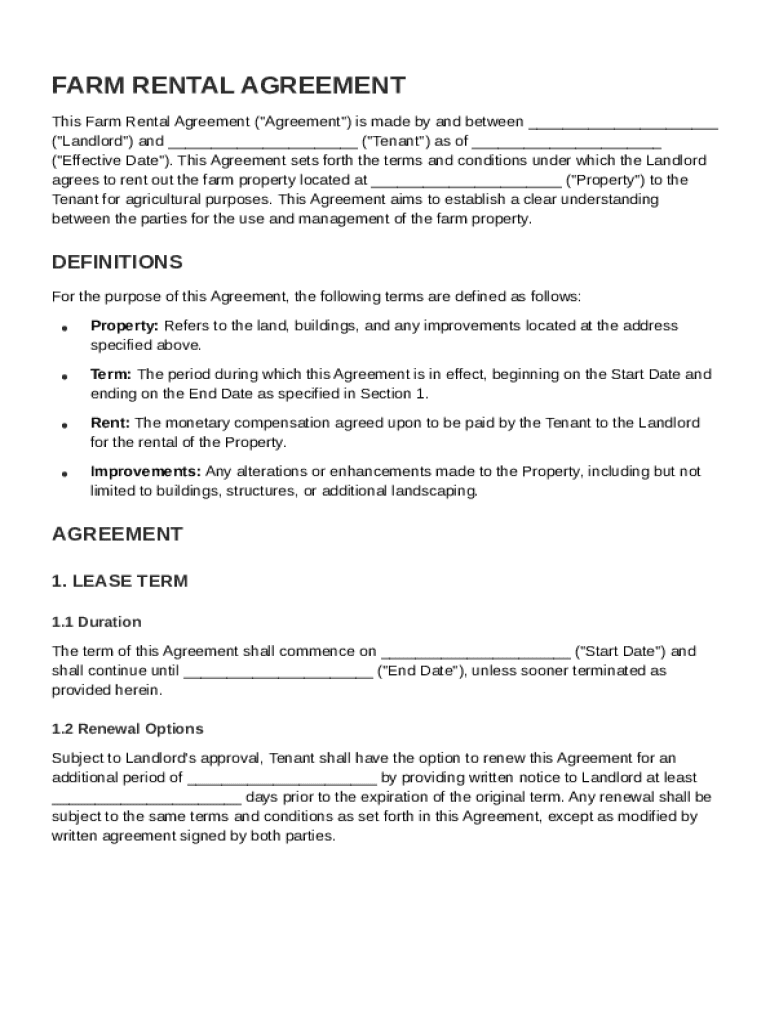
A Farm Rental Contract Template serves as a legally binding document that outlines the terms and conditions between a landlord and tenant for the rental of farm property. This template facilitates a clear understanding regarding the rights and obligations of both parties involved in the lease agreement. Key elements typically defined within the document include lease duration, rent terms, permitted uses of the property, and maintenance responsibilities. The template helps in setting expectations for both the landlord and tenant, minimizing potential conflicts by providing a comprehensive framework for the rental relationship.
Elements Typically Included
- Lease Duration: Defines the start and end date of the contract.
- Rent and Payment Terms: Specifies the amount, payment schedule, and acceptable payment methods.
- Permitted Use: Details the activities allowed on the property, often focusing on agricultural production.
- Maintenance Responsibilities: Outlines which party is responsible for specific maintenance tasks and upkeep.
Practical Scenarios
Farm rental contracts are particularly beneficial in cases where individuals are entering the agricultural sector and need structured agreements to showcase feasibility to investors. They are also used in partnerships where clarification of responsibilities can prevent disputes.
How to Use the Farm Rental Contract Template
Using a farm rental contract template ensures that all necessary legal aspects and mutual agreements are documented accurately. Begin by selecting a template that aligns with your specific agricultural needs and state requirements. Once selected, tailor the sections to reflect the terms agreed upon between the landlord and tenant.
Step-by-Step Guidance
- Review the Template: Understand all sections and gather relevant information.
- Customize for Specific Needs: Adjust rent, duration, and maintenance terms as needed.
- Add Specific Conditions: Include any unique stipulations, like crop share agreements.
- Consult Legally if Necessary: Ensure compliance with regional laws through legal consultation.
- Finalize with Signatures: Once all terms are agreeable and legally sound, both parties should sign the document.
Common Adjustments
Adaptations might be necessary for different property sizes or if integrating with advanced farming technologies which have specific requirements or use conditions.
Key Elements of the Farm Rental Contract Template
Understanding the core components of the farm rental contract template is essential for ensuring it meets the needs of the involved parties. Critical elements include the scope of land use, legal descriptions of the property, dispute resolution procedures, and insurance requirements.
Essential Components
- Scope of Use: Specifies permissible activities on the land.
- Property Description: Provides legal details identifying the farm property.
- Dispute Resolution: Outlines procedures to address disagreements, helping to avoid prolonged legal battles.
- Insurance Requirements: Details necessary insurance coverage for liability and property protection.
Examples and Variations
Commonly, variations include clauses addressing environmental conservation or provisions for emergency equipment storage, reflecting the multifaceted nature of modern farming operations.
Legal Considerations and Compliance
Adhering to legal guidelines is paramount when utilizing a farm rental contract template. Understanding federal and state-specific regulations ensures compliance and minimizes legal exposure.
Legal Use and Compliance
- Federal Regulations: Ensure alignment with national agricultural policies and anti-discrimination laws.
- State-Specific Requirements: Some states may impose additional stipulations concerning farm leases.
Potential Pitfalls
Misinterpretation of legal statutory requirements can result in invalid contracts, emphasizing the importance of legal review.
Steps to Complete the Farm Rental Contract Template
Completing a farm rental contract template requires attention to detail to ensure accuracy and legality. Each section must be filled out with precision, and adequate time should be allotted for addressing all legal terms.
Process Overview
- Gather Information: Compile data necessary for completing each section, including property details and tenant information.
- Complete Template Sections: Follow the structure of the template to input accurate details.
- Review and Amend: Revisit the document for thoroughness and correctness.
- Legal Consultation: Have a legal professional review the draft for compliance and protection.
- Sign and Witness: Secure signatures from all parties, possibly with a notary if required.
Common Errors to Avoid
Avoid common missteps such as leaving blank fields, misunderstanding sections, or neglecting to update local legal changes affecting farm leasing.
Important Legal Terms and Their Implications
Understanding the legal terminology used within the farm rental contract is critical for ensuring all parties are on the same page. Common terms include force majeure, indemnification, and subleasing rights.
Key Legal Terms
- Force Majeure: Addresses unforeseeable circumstances preventing obligations.
- Indemnification: Details compensation for damage or loss specified under the agreement.
- Subleasing Rights: Determines tenant's rights to lease portions of the farm to third parties.
Implications for Landlords and Tenants
Grasping these terms informs parties of their rights and obligations under various scenarios, preventing misunderstandings and disputes.
Examples of Using the Farm Rental Contract Template
Utilizing examples of farm rental contracts can provide practical insights into creating customized agreements. Case studies can exemplify real-world applications and the template's efficacy in establishing agricultural tenancy agreements.
Example Scenarios
- Family Farming Partnership: Illustrates how a template can formalize agreements among family members in shared ventures.
- Corporate Leasing: Demonstrates contract structure for agribusiness leasing plots for specific crop production.
Learning From Case Studies
An examination of these examples provides an educational foundation for tailoring contracts to suit unique situations and needs.
State-Specific Rules for Farm Rental Contracts
Recognizing that agricultural laws and leasing requirements vary by state is crucial for ensuring that farm rental agreements are fully compliant.
Variations by State
Each state might impose different cultural land use practices, environmental regulations, or tax conditions that affect rental contracts.
Customizing Your Template
Make necessary adjustments reflecting specific state laws and practices to tailor the agreement appropriately for the specific jurisdiction.
By following a structured and detailed approach to selecting and completing a farm rental contract template, landlords and tenants can foster a successful and legally compliant rental relationship.