






Definition & Purpose of the Amscot OMT Transfer Form V8 20171020
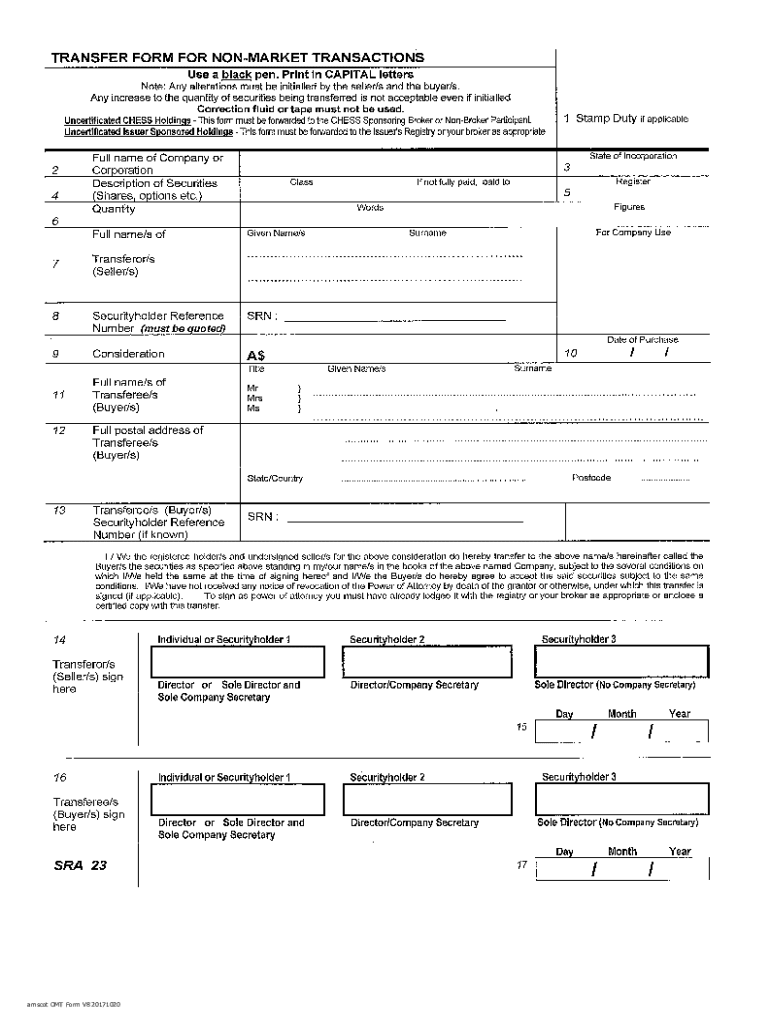
The Amscot OMT Transfer Form V8 20171020 is a specialized document used for transferring ownership of securities in non-market transactions. This form is vital for facilitating the legal transfer between parties, ensuring that all necessary legal and financial protocols are adhered to during the transaction process. It is commonly used in situations involving listed or unlisted companies where shares or securities need to be transferred without being sold on the open market.
Key Components
- Transferor and Transferee Information: Captures detailed information about the parties involved in the transaction.
- Securities Details: Outlines the type, quantity, and value of securities being transferred.
- Signatures: Requires authorization from both transferor and transferee to validate the process.
Steps to Complete the Amscot OMT Transfer Form V8 20171020
Completing the form accurately is essential to avoid delays or legal complications. Below is a step-by-step guide:
- Gather Required Information: Collect all necessary details about the securities, including the company's name and the quantity of securities to be transferred.
- Fill Out Transferor and Transferee Sections: Enter the personal and contact information as required.
- Detail Securities Information: Accurately describe the securities, including any certificate numbers or identification.
- Affix Required Signatures: Both parties must sign the document for it to be considered valid.
- Attach Supporting Documents: Include additional documents such as previous statements or ownership records.
- Review for Accuracy: Double-check all entries before submitting to avoid errors.
How to Obtain the Amscot OMT Transfer Form V8 20171020
The form can be acquired in several ways, depending on your preference or organizational requirement.
- Online Download: Visit financial service platforms or the Amscot's official website to find and download the form.
- Mail Request: Contact Amscot directly to request a paper version of the form to be delivered to your address.
- In-Person Collection: Pick up a copy from an Amscot office or an associated financial institution.
Who Typically Uses the Amscot OMT Transfer Form V8 20171020
This form is utilized by a variety of individuals and entities depending on their investment and business needs:
- Individual Investors: For transferring personal investments among family members or through inheritance.
- Corporate Entities: When restructuring, merging, or redistributing assets within affiliated companies.
- Legal Representatives: Lawyers or fiduciaries managing estate settlements requiring securities transfer.


Legal Aspects and Compliance
Using the Amscot OMT Transfer Form requires adherence to legal stipulations to ensure compliance with financial regulations.
- Stamp Duty: Depending on jurisdiction, this may be a requirement for the validity of the transaction.
- Indemnification Clauses: Both parties should agree on clauses to protect against future claims or financial loss.
- State Regulations: Some states may have specific regulations applicable to securities transfers, which must be observed.
Important Terms Related to the Amscot OMT Transfer Form V8 20171020
Understanding key terms associated with this form will ensure proper completion and compliance:
- Transferee: The individual or entity receiving the securities.
- Transferor: The current owner who is transferring these securities.
- Non-Market Transactions: Transfers that do not occur through direct sale on stock exchanges.
- Securities: Financial assets or instruments like stocks and bonds involved in the transfer.
Required Documents for Amscot OMT Transfer
When preparing to fill out and submit the form, the following documents might be necessary:
- Identification Proof: Such as a driver's license or passport for both parties.
- Stock Certificates: Original or copies indicating ownership.
- Supplementary Agreements: If applicable, any legal documents affecting ownership.
Examples of Using the Amscot OMT Transfer Form V8 20171020
Real-world scenarios often demonstrate the form's utility:
- Family Estates: Transferring shares from a deceased to a beneficiary.
- Corporate Restructuring: Moving stocks between divisions within a conglomerate.
- Private Sales: Selling stock privately to another individual without involving the public market.
Providing detailed examples helps users understand diverse practical applications of the form.