






Definition & Meaning
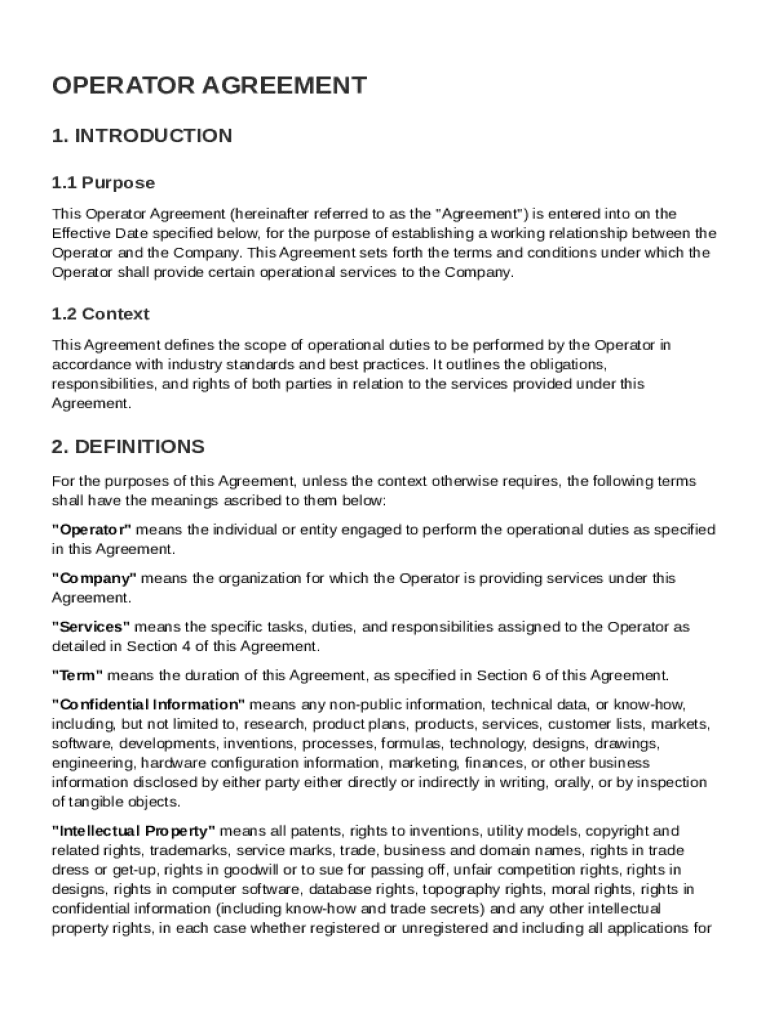
An Operator Agreement Template is a formal document outlining the terms under which an Operator will provide services to a Company. It establishes a legal relationship, specifying the roles, responsibilities, and expectations of both parties involved. This agreement covers various aspects, including scope of services, compensation, and confidentiality obligations, ensuring that both the Operator’s and the Company’s interests are protected. Using this template can help streamline the creation of operator agreements, ensuring that all essential elements are included and legally binding.
Key Elements of the Operator Agreement Template
The template is designed to provide a comprehensive framework for organizations to draft operator agreements that meet their specific needs. Key elements often include:
- Scope of Services: Defines the specific services the Operator will provide, allowing for clear understanding and agreement on expectations.
- Compensation Structure: Outlines the payment terms, including frequency and method of payment.
- Confidentiality Obligations: Protects sensitive information by specifying what data must remain confidential and any protocols for information sharing.
- Intellectual Property Rights: Details ownership and usage rights related to work products developed during the relationship.
- Indemnification Clauses: Specifies the conditions under which each party will hold the other harmless from claims or damages.
These elements are crucial for establishing a transparent and legally compliant relationship between the parties involved.
How to Use the Operator Agreement Template
Using the Operator Agreement Template involves a few straightforward steps:
- Download or Access: Obtain the template from a trusted source, ensuring it meets legal standards and contains necessary sections.
- Customize: Tailor the document to the specific needs of the parties, such as customizing the scope of services, compensation, and confidentiality clauses.
- Review: Carefully review the template to ensure all sections are applicable and accurately reflect the agreed terms.
- Legal Consultation: Consider having a legal professional review the draft to confirm compliance with relevant laws and regulations.
- Finalize and Sign: Once both parties agree on the content, sign the document to make it legally binding.
Utilizing a template ensures consistency and saves time when drafting agreements for various operators.
Steps to Complete the Operator Agreement Template
Completing the template requires attention to detail and a systematic approach:
- Identify Parties: Clearly list the names and contact details of the Operator and the Company.
- Detail Services: Articulate the services to be provided, including timelines and deliverables.
- Define Compensation: Specify financial arrangements, ensuring clarity in payment schedules and methods.
- Clarify Terms: Include terms related to confidentiality, intellectual property, and dispute resolutions.
- Allocate Responsibilities: Delineate responsibilities for both parties to minimize misunderstandings.
- Include Legal Clauses: Add any additional clauses necessary for compliance with federal or state-specific laws.
These steps aim to ensure that the agreement is thorough, clear, and enforceable.
Important Terms Related to the Operator Agreement Template
There are several important terms one should be familiar with when dealing with an Operator Agreement Template:
- Parties: The entities involved in the agreement, typically the Operator and the Company.
- Services: The specific tasks, functions, or duties the Operator is expected to perform.
- Compensation: The remuneration the Operator will receive for services rendered.
- Confidential Information: Data or information that must not be disclosed without prior consent.
- Termination: Conditions under which the agreement may be ended before the expiration date.
Understanding these terms is critical for interpreting and executing the agreement correctly.
Legal Use of the Operator Agreement Template
In the U.S., the template must comply with state and federal laws to ensure its enforceability. Legal use involves including:
- Compliance Clauses: Statements ensuring adherence to relevant laws.
- Resolution Provisions: Terms specifying how disputes will be handled, whether through mediation, arbitration, or courts.
- Governing Law: The state laws that will oversee the interpretation and enforcement of the agreement.
These legal components help protect both parties' rights and provide a basis for resolving potential disputes.
Examples of Using the Operator Agreement Template
The template can be applied in multiple scenarios, such as:
- Construction Projects: When a construction company hires subcontractors to complete specific tasks under set conditions.
- Technology Services: IT companies use operator agreements when outsourcing software development or technical support functions.
- Logistics Operations: Logistics firms might use it to formalize relationships with transport operators to ensure compliance and efficiency in service delivery.
These examples illustrate the diverse applications of the template across different sectors, emphasizing its versatility.
Business Types That Benefit Most from the Operator Agreement Template
Businesses that frequently engage with external operators can benefit significantly from using the template:
- Startups: Seeking scalable solutions and collaborating with various operators to drive growth efficiently.
- Manufacturing Firms: Engaging multiple operators to streamline production processes.
- Service Providers: Companies providing utilities or internet services, ensuring operational consistency and compliance.
For these business types, having a predefined template minimizes negotiation time and helps align operations with broader business goals.