






Definition & Meaning
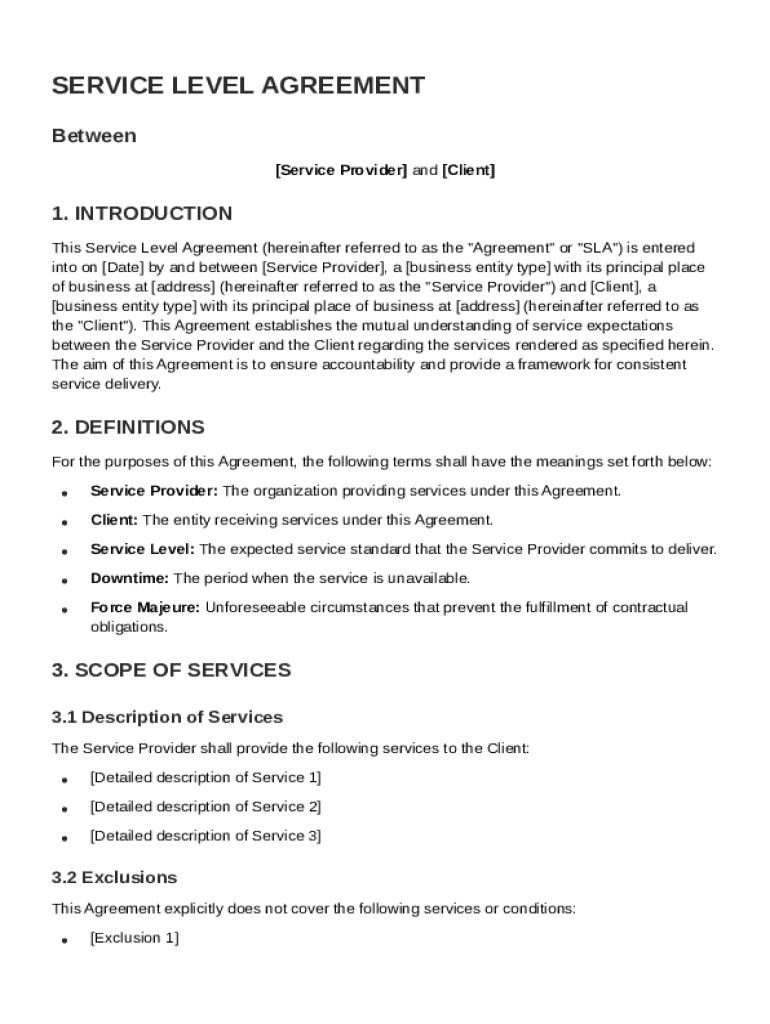
A one-page service level agreement (SLA) template is a succinct document that establishes a formal agreement between a service provider and a client, delineating expectations for service delivery. This contract typically includes definitions, performance metrics, and the scope of services, making it easy to comprehend while ensuring accountability. The goal of a one-page SLA is to simplify documentation while providing a comprehensive overview of service commitments.
Essential Elements
- Service Description: Clearly defines the services offered.
- Performance Metrics: Lists key performance indicators (KPIs) to measure service levels.
- Responsibilities: Outlines obligations of both the service provider and the client.
- Reporting: Specifies how service performance will be reported and reviewed.
- Resolution Procedures: Describes steps to resolve potential disputes.
Key Elements of the One Page Service Level Agreement Template
The one-page SLA template includes several key components that are crucial for establishing a mutual understanding between parties involved.
Performance Metrics and Targets
Defining performance metrics is essential for monitoring service quality. These metrics, such as response time and availability, serve as benchmarks to assess whether the service goals are met.
- Response Time: Average time to respond to client inquiries.
- Uptime: Percentage of time services are fully operational.
Roles and Responsibilities
It is important to delineate roles and responsibilities to avoid ambiguity. The SLA clearly designates who is responsible for each task or obligation, ensuring efficient service management.
- Responsibilities of the Service Provider: Includes delivering services as per agreed standards.
- Client Obligations: Necessary support and resources the client must provide.
Dispute Resolution and Penalties
The SLA sets out the procedures for addressing non-compliance issues and disputes. This section ensures that problems are resolved in a structured manner and outlines any penalties for failing to meet agreed standards.
How to Use the One Page Service Level Agreement Template
Utilizing an SLA template effectively involves understanding its structure and contents.
- Analyze Your Needs: Start by determining the services you require and the level of service expected.
- Select Suitable Metrics: Choose performance metrics relevant to the services provided, reflecting your business goals.
- Customization: Tailor the template to include specific details like roles, responsibilities, and any additional clauses.
- Review with Stakeholders: Ensure both parties agree on the terms laid out in the SLA.
Tips for Customization
- Standard Clauses: Customize based on industry standards and specific service requirements.
- Terms and Conditions: Adjust according to legal requirements applicable to both parties.
Steps to Complete the One Page Service Level Agreement Template
Completing the template involves a systematic, step-by-step approach to ensure it meets both legal and business needs.
- Fill in Basic Information: Enter the names of the involved parties and the date of the agreement.
- Detail Services Provided: Clearly articulate the services and scope of work.
- Specify Metrics and Benchmarks: Define measurable performance indicators.
- Outline Responsibilities: Allocate responsibilities clearly between the provider and the client.
- Add Dispute and Termination Clauses: Include processes for dispute resolution and terms of termination if service levels are not met.
- Proofread and Validate Completeness: Ensure accuracy and agreement on the content before finalizing.
Who Typically Uses the One Page Service Level Agreement Template
The one-page SLA template is widely used across various sectors where service quality needs to be clearly defined and assured.

Common Users
- IT Services: Companies providing tech support or software services.
- Telecommunications: Providers of communication services such as internet or phone services.
- Facility Management: Companies managing physical facilities and infrastructure.

Benefits for Small Businesses
Smaller firms benefit significantly from a one-page SLA due to its simplicity and clarity, helping them maintain service quality without the complexity of lengthy contracts.
Legal Use of the One Page Service Level Agreement Template
Ensuring the legal soundness of the SLA is crucial for enforceability and compliance with regulations.
Legal Considerations
- Compliance with Local Laws: Ensure the SLA adheres to local regulations, particularly regarding contract law.
- Use of Clear Language: Avoid ambiguity by using precise terms understandable by both parties.
Documentation Requirements
Retain copies of all signed agreements and any modifications as part of official records to help resolve future disputes.
Examples of Using the One Page Service Level Agreement Template
Utilizing real-world scenarios can illustrate the effectiveness and advantages of a one-page SLA template.
Scenario 1: IT Support Company
An IT support company uses the SLA template to define guaranteed response times and uptime for server maintenance, ensuring their clients receive timely support, leading to enhanced trust and long-term contracts.
Scenario 2: Digital Marketing Firm
A digital marketing firm utilizes the one-page SLA to quickly outline the deliverables and reporting frequency with clients, ensuring both parties have clear expectations from the onset of collaboration.
State-by-State Differences
While the core structure of the one-page SLA remains consistent, some state-specific regulations may influence the content and execution of such agreements.
Regional Variations
- Regulatory Requirements: States like California may have specific mandates concerning service level agreements in tech industries.
- Performance Clauses: Varying by state law, performance clauses might be more stringent in certain areas, requiring tailored customization.
Understanding these nuances by referring to state regulations ensures your one-page SLA complies fully with legal standards, preventing future complications.
Important Terms Related to One Page Service Level Agreement Template
Grasping key terms associated with service level agreements aids in comprehending the template’s content and usage.
Common Terms
- Availability: Access level to services provided, expressed as a percentage.
- Uptime: Duration services remain operational and accessible.
- Outage: A period when services are unavailable or non-functional.
- Remediation: Actions taken to address failures or service deficiencies.
Understanding these terms ensures all parties share a common language, minimizing misinterpretations in the SLA's application and enforcement.