
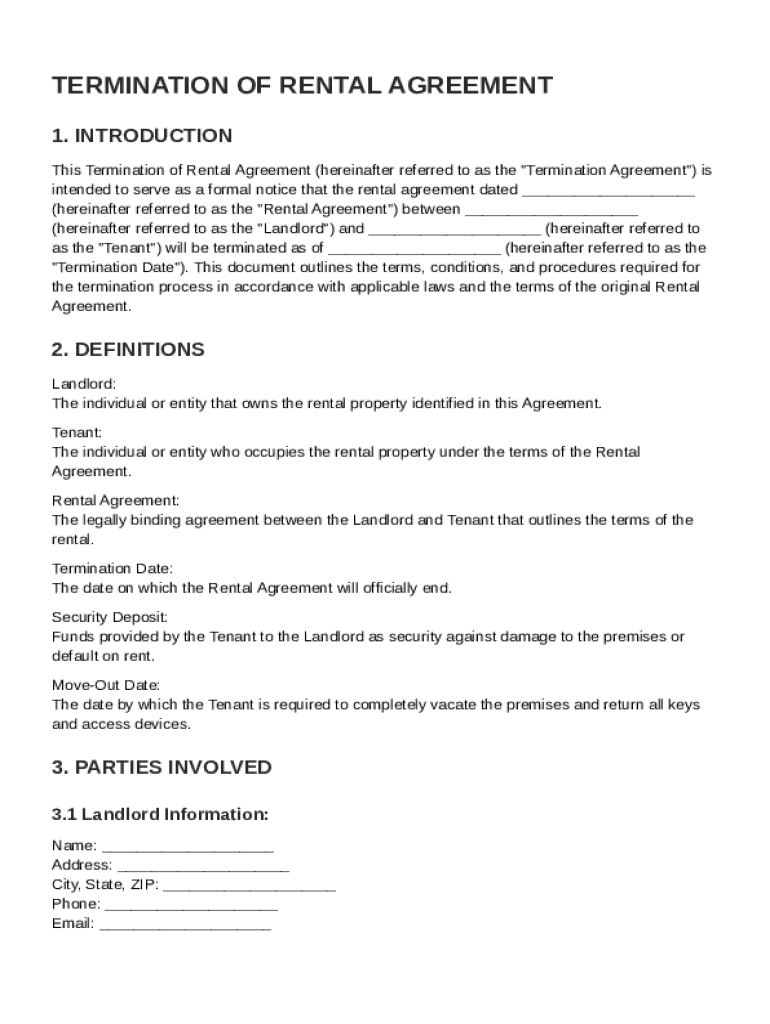







Definition and Significance of a Termination of Rental Agreement Template
A Termination of Rental Agreement Template is a structured document serving as a formal notice to end the rental agreement between a landlord and a tenant. This template is crucial for defining the obligations and rights of both parties at the end of the rental term. It typically includes sections outlining the terms and conditions of the termination, the identities of the parties involved, and the details of the property. This ensures clear communication and prevents any potential misunderstandings. The document also addresses the reasons for termination, which could range from a breach of contract to a mutual decision to end the tenancy. By providing a clear framework, this document helps in maintaining a professional relationship and minimizes friction during the termination process.
How to Use the Termination of Rental Agreement Template
Using the Termination of Rental Agreement Template involves a few straightforward steps. First, ensure all rental details are accurate, including the names of the landlord and tenant, property address, and lease dates. This accuracy is vital to eliminate confusion later. Next, specify the reason for the termination, which might be due to a contract breach, non-payment of rent, or a mutual agreement. The notice period is an essential component, as it delineates when the tenant should vacate the premises. Customizing this template to fit specific state laws is recommended, as termination requirements may vary by jurisdiction. Finally, review the entire document for completeness and accuracy before both parties sign it. This ensures mutual understanding and compliance with the agreed terms.
Steps to Complete the Termination of Rental Agreement Template
Completing the Termination of Rental Agreement Template involves several critical steps:
-
Personal and Property Details: Fill in the full legal names of both the landlord and the tenant, along with the complete address of the rental property.
-
Specification of Termination Reason: Clearly state why the rental agreement is being terminated. Common reasons could include lease violations, property damage, or the tenant deciding to move elsewhere.
-
Notice Period: Specify the timeline for when the tenant must vacate the property. This should comply with any legal notice requirements applicable in the property’s location.
-
Outstanding Obligations: Note any remaining responsibilities such as final rent payments or repairs that need completing before moving out.
-
Release of Liability: Include a clause that addresses the release of liability for both parties, confirming no further claims post-termination.
-
Signatures and Dates: Ensure that both parties sign and date the agreement to validate its execution.
Key Elements of the Termination of Rental Agreement Template
Several key elements are crucial in a Termination of Rental Agreement Template:
- Identities and Contact Information: Complete details of both landlord and tenant.
- Property Details: Precise location and description of the rental property.
- Termination Reason: The specific cause prompting the termination.
- Notice Requirements: Duration and date by which the tenant must leave the premises.
- Financial and Repair Obligations: Outstanding rent amounts or repairs that must be concluded.
- Liability Release: Agreement that neither party holds the other liable after termination.
Each element serves a specific purpose and must be detailed to ensure clarity and prevent disputes.
Legal Implications and Use Cases
The legal use of a Termination of Rental Agreement Template is grounded in ensuring that both parties conduct the termination process in compliance with relevant laws. The document formalizes the tenant’s obligation to vacate and the landlord's commitment to respect the tenant's rights up to the end of tenancy. Use cases include instances where tenants consistently fail to meet lease terms, require relocation due to personal reasons, or both parties mutually agree to terminate the rental arrangement. Additionally, the agreement aids in transitioning renters while shielding landlords from potential legal conflicts and protecting tenants from unlawful evictions.
State-Specific Regulations and Considerations
State regulations can significantly affect the execution of a Termination of Rental Agreement Template. Different states might have varying notice periods, specific terms for early termination, and conditions for automatic renewal. For example, California requires specific disclosures about rights and responsibilities within rental agreements, while New York mandates explicit notification processes. Landlords and tenants must understand the localized legal stipulations influencing termination agreements in their jurisdiction to ensure procedural compliance. Consulting with a legal expert when dealing with state-specific rental laws may provide further clarity and risk mitigation.
Examples and Scenarios of Termination of Rental Agreement Use
Several scenarios illustrate the use of a Termination of Rental Agreement Template:
-
Lease Violation: For a tenant consistently breaking the lease terms, such as causing property damage, the landlord can issue a termination notice specifying these infractions.
-
Mutual Termination: Both parties agree to end the lease early due to unforeseen circumstances, incorporating terms like repayment of advance rent or security deposit settlement.
-
Non-Payment of Rent: A landlord may terminate the lease for continued rent default, specifying any owed amounts and notice period for vacating.
These examples underscore the template’s flexibility and relevance in varied contexts.
Versions and Alternatives to the Termination of Rental Agreement Template
Different versions of the Termination of Rental Agreement Template might exist, tailored for various tenancy situations. For instance, templates can differ between residential and commercial properties, where the terms can be more complex due to business obligations. The alternatives might involve informal agreements or utilizing mediation processes if disputes between parties arise. However, a formal template remains critical for its legal recognition and structured process. Whether a simple residential termination or detailed commercial agreement, using a standardized template ensures clarity, legality, and comprehensive documentation.




