Definition & Meaning
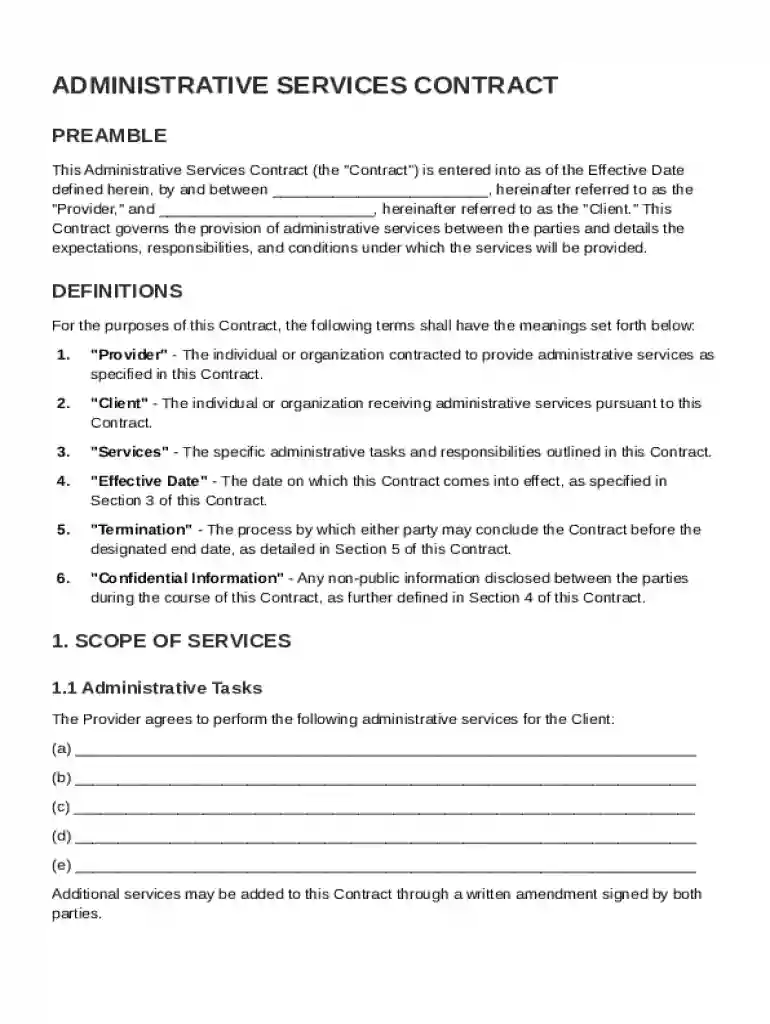
The "Admin Contract Template" serves as a foundational document outlining the agreement between a service provider and a client for administrative services. It specifies the terms related to various aspects, such as scope of services, performance standards, and compensation. This template is designed to formalize expectations and responsibilities while ensuring compliance with legal standards applicable in the U.S. It acts as a guideline for both parties to understand their roles, rights, and obligations in the administrative services engagement. Real-world scenarios further exemplify its function, such as a small business hiring an administrative service to manage its day-to-day operations efficiently and ensure legal compliance.
Key Elements of the Admin Contract Template
The template includes several crucial components that ensure a comprehensive agreement. Among the key elements are:
- Scope of Services: Details the specific administrative tasks and duties the provider will perform.
- Performance Standards: Establishes metrics for evaluating the quality and timeliness of service delivery.
- Compensation Terms: Specifies the payment structure, including rates, schedules, and any additional fee provisions.
- Confidentiality Obligations: Outlines the requirements for safeguarding sensitive information accessed during the contract term.
- Termination Clauses: Describes the conditions under which either party may terminate the agreement and the process for doing so.
- Liability Limits: Defines the extent of each party's liability related to the contract, often including indemnification provisions.
- Dispute Resolution Processes: Provides a framework for resolving conflicts through mediation or arbitration before resorting to litigation.
Each of these elements ensures both parties have a mutual understanding, reducing the risk of future disputes.
How to Use the Admin Contract Template
Utilizing the Admin Contract Template begins with understanding the template layout and sections. The key steps include:
- Review Each Section: Examine the template to ensure clarity and alignment with your specific administrative needs.
- Customize Content: Edit the fields to reflect precise terms, such as service descriptions, monetary details, and party-specific stipulations.
- Consult Legal Experts: Engage with a legal consultant to adapt the template according to jurisdiction-specific legal requirements and any unique organizational needs.
- Finalize Terms: Discuss the customized contract with the counterpart to ensure mutual agreement on all facets.
- Execute the Agreement: Ensure all involved parties sign the contract to make it legally binding and initiate the service arrangement.
This approach helps streamline contract preparation and execution, facilitating a professional relationship from the outset.
Steps to Complete the Admin Contract Template
Completing the Admin Contract Template involves detailed attention to ensure precision and effectiveness:
- Identify Essential Information: Gather all necessary data, including parties' names, addresses, and a list of services to be provided.
- Fill Out Basic Information: Enter the administrative details, like dates and key contact information, accurately.
- Detail Services and Deliverables: Explicitly describe administrative tasks, frequency, and expected outcomes.
- Set Payment Terms: Clearly define compensation terms, including billing cycles and methods of payment.
- Incorporate Compliance Clauses: Include relevant legal and regulatory compliance obligations specific to the administrative services.
- Agree on Performance Metrics: Establish criteria for evaluating service delivery and benchmarks for success.
- Sign and Distribute: Once all sections are filled out and agreed upon, both parties should sign the document. Make copies for each party involved.
Following these steps ensures that the completed template is comprehensive and ready for execution.
Who Typically Uses the Admin Contract Template
This template is especially beneficial for several key groups:
- Small Businesses: Often lack dedicated administrative staff and thus outsource these services.
- Freelancers and Contractors: Use such contracts to formalize terms with clients effectively.
- Nonprofits: May engage external administrative support for cost-effective operations.
- Corporations: Utilize the template to liaise with external vendors providing supplemental administrative services.
Each of these entities can leverage the Admin Contract Template to maintain clear professional relationships and ensure service standards are met.

Legal Use of the Admin Contract Template
Legal compliance is critical for the effective use of the Admin Contract Template, which serves multiple purposes:
- Ensuring Enforceability: Using legally vetted templates helps create enforceable contracts that stand up in court.
- Avoiding Legal Disputes: Clearly defined terms reduce the likelihood of misunderstandings that lead to legal actions.
- Compliance with Regulations: Includes sections on confidentiality and data protection aligned with federal regulations.
Legal advisers can provide guidance to tailor the template to specific needs and ensure it meets legal standards, facilitating a sound administrative agreement.
Software Compatibility
The Admin Contract Template can be seamlessly integrated with various software platforms, making it accessible across different environments:
- DocHub: Allows real-time editing and signing within the platform, supporting major file formats like DOC and PDF.
- Google Workspace: Provides direct integration with Google Drive, enabling efficient document management.
- Adobe Acrobat: Offers advanced PDF editing and signing capabilities suited for professional document workflows.
- MS Word: Enables template use for creating and editing contracts with familiar word processing tools.
Compatibility with these software options ensures that users can efficiently manage and execute administrative contracts, regardless of their preferred digital tools.
State-Specific Rules for the Admin Contract Template
Each U.S. state may have unique requirements or considerations related to administrative contracts:
- State Laws: Some states may have additional mandates for service description clarity and confidentiality provisions.
- Tax Obligations: State-specific tax reporting and withholding obligations may need addressing within the contract.
- Regulatory Compliance: State regulatory bodies may impose further constraints on services provided.
Understanding and integrating state-specific rules ensure that the contract template fully complies with the relevant legal landscape, avoiding potential regional legal disputes.