






Definition and Meaning
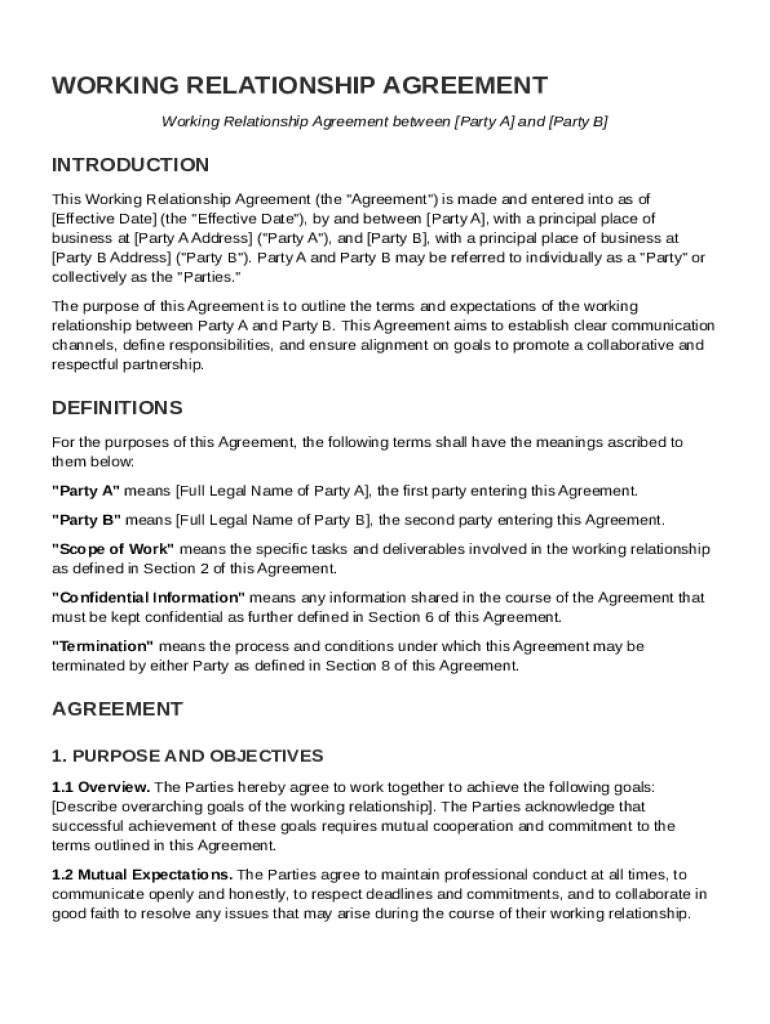
The "Working Relationship Agreement Template" is a formal document used to establish the terms and conditions governing the interaction between two or more parties, usually referred to as Party A and Party B. It serves as a foundational resource to outline mutual responsibilities, expectations, communication protocols, and goals. The agreement typically includes essential sections such as the scope of work, roles and responsibilities, confidentiality obligations, and dispute resolution processes. With this template, parties can ensure clarity and understanding, thereby reducing potential conflicts and fostering a cooperative working environment.
Key Elements of the Working Relationship Agreement Template
This template covers various crucial elements that contribute to a comprehensive and functional agreement. These elements include:
-
Scope of Work: Define the tasks, deliverables, and objectives that each party is expected to fulfill. This section ensures that all parties have a mutual understanding of the project's requirements.
-
Roles and Responsibilities: Clearly delineate who is responsible for what, ensuring that each party knows their specific duties and obligations.
-
Communication Protocols: Establish regular communication channels and frequency to ensure consistent updates and to address any arising issues promptly.
-
Compensation Terms: Outline payment structures, schedules, and any additional financial arrangements to prevent misunderstandings related to monetary transactions.
-
Confidentiality Obligations: Detail how sensitive information will be protected and specify the parties' obligations regarding non-disclosure.
-
Dispute Resolution Procedures: Provide a framework for how disputes will be handled, including negotiation, mediation, or arbitration processes.
-
Amendment and Termination: Specify conditions under which the agreement can be amended or terminated, ensuring flexibility and security for both parties.
Steps to Complete the Working Relationship Agreement Template
-
Identify the Parties: Clearly list the legal names of all participating parties, along with their roles and contact information.
-
Define Scope of Work: Collaborate to accurately detail the specific tasks, milestones, and goals both parties agree upon.
-
Assign Roles and Responsibilities: Explicitly outline responsibilities for each party and ensure mutual agreement on these terms.
-
Set Communication Guidelines: Agree on the frequency and channels for updates and meetings; document these in the agreement.
-
Detail Payment and Compensation: Specify payment amounts, due dates, and payment methods. Include any terms regarding late fees or penalties.
-
Establish Security Measures: Include clauses to protect confidential information and outline what data can or cannot be shared.
-
Discuss Dispute Resolutions: Decide on appropriate steps for resolving conflicts, whether through mediation, arbitration, or legal action.
-
Review and Finalize: Have all parties review the agreement, making edits as necessary before signing. Ensure each party has a copy for their records.
How to Use the Working Relationship Agreement Template
Utilizing this template involves using it as a customizable framework to fit the specific needs of the involved parties. Here’s how you can effectively use it:
-
Personalize the Template: Start by modifying the template to suit the specific business relationship, making adjustments to the headings and clauses as necessary.
-
Engage Legal Assistance: Consult with a legal professional to adapt the template to meet any jurisdictional legal requirements, ensuring it is enforceable.
-
Facilitate Discussions: Use the template as a basis for open discussions among involved parties to ensure everyone agrees on the outlined terms.
-
Maintain Flexibility: Be open to amendments during negotiations, keeping in mind the evolving nature of work relationships and projects.
Who Typically Uses the Working Relationship Agreement Template
This template is commonly used across various professional settings, including:
-
Freelancers and Clients: To formally define project deliverables and payment schedules.
-
Partnerships: Businesses entering into new collaborations to outline mutual expectations and avoid future conflicts.
-
Contractors and Subcontractors: To establish job scope and payment conditions.
-
Corporate Entities: Companies working together on joint ventures, ensuring each company knows their role and expectations.
-
Non-profits and Volunteers: Clearly spelling out roles and commitments to align on objectives and outcomes.


Legal Use of the Working Relationship Agreement Template
The use of this template must comply with U.S. legal standards to be enforceable. Legal aspects to consider include:
-
Adherence to Contract Law: Ensure the agreement meets all elements of a legally binding contract, including offer, acceptance, and consideration.
-
State-Specific Requirements: Some states may have additional requirements or particular clauses that must be included. It is advisable to research or consult with legal counsel knowledgeable about state law.
-
Electronic Signatures: In compliance with the ESIGN Act, electronic signatures can be legally binding if proper methods for consent and verification are followed.
-
Include Governing Law Clause: Specify which state’s laws will govern the agreement to ensure clarity over legal interpretations.
State-by-State Differences
Each U.S. state may have variations in legal requirements for working relationship agreements. Elements influenced by state law include:
-
Statute of Limitations: Different states might have varying time limits for pursuing legal action related to a breach of contract.
-
Non-Compete Clauses: Some states heavily regulate or outright prohibiting non-compete agreements, affecting their enforceability.
-
Consumer Protection Laws: Certain protections may apply depending on the state, particularly if one party is considered a consumer.
-
Licensing Requirements: For certain professions, state-specific licensing might impact the legality of the work agreed upon.
Examples of Using the Working Relationship Agreement Template
Practical applications of this template include scenarios such as:
-
A Marketing Agency and Independent Graphic Designer: Using the agreement to define project deliverables, payment terms, and intellectual property rights, ensuring all outcomes meet both parties’ expectations.
-
Software Development Collaboration: Two tech companies partnering via the template to clarify coding responsibilities, data sharing protocols, and deadlines.
-
Construction Project: A contractor and subcontractor utilizing the agreement to outline job scopes, safety protocols, and payment schedules, minimizing risks and misunderstandings.
-
Event Planning Engagement: An event company contracts an external vendor to handle catering, using the agreement to stipulate food quality standards, delivery timelines, and payment terms.