Website Development Agreement Template 2026

Get Form
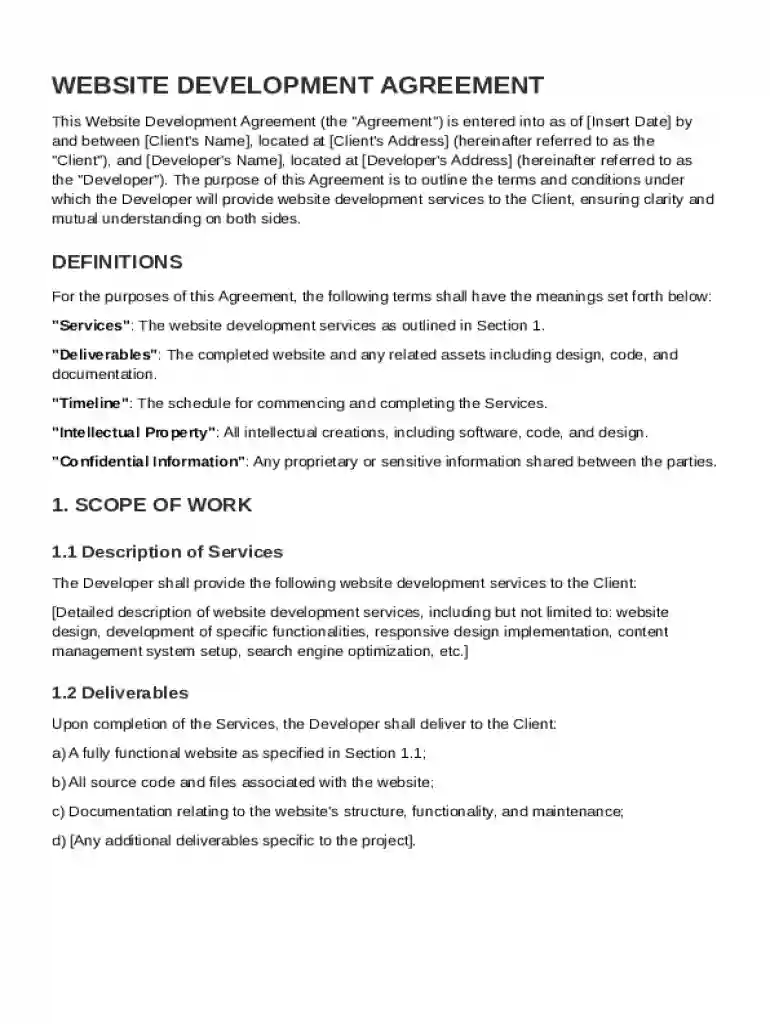
Website Development Agreement Template Preview on Page 1

Here's how it works

01. Edit your form online
Type text, add images, blackout confidential details, add comments, highlights and more.

02. Sign it in a few clicks
Draw your signature, type it, upload its image, or use your mobile device as a signature pad.

03. Share your form with others
Send it via email, link, or fax. You can also download it, export it or print it out.

Definition & Purpose of a Website Development Agreement Template

A Website Development Agreement Template is a structured form that outlines the contractual terms between a client and a developer for website development services. It specifies the roles and responsibilities of each party, providing a clear framework for the development process. Essential components include definitions, scope of work, payment terms, timeline, client responsibilities, ownership of deliverables, confidentiality obligations, warranties, termination clauses, governing law, and miscellaneous provisions. This agreement ensures mutual understanding and sets the expectations necessary for smooth collaboration between clients and developers.

Key Elements of the Website Development Agreement Template

The Website Development Agreement Template typically includes several critical sections, each addressing specific aspects of the engagement:

  • Scope of Work: Clearly defines what tasks the developer will undertake.
  • Payment Terms: Details compensation, payment schedule, and any penalties for late payments.
  • Timeline: Establishes the project milestones and deadlines.
  • Confidentiality Obligations: Ensures protection of proprietary information shared during the project.
  • Warranties: Outlines the guarantees provided by the developer regarding the functionality and quality of the developed website.
  • Termination Clauses: Specifies conditions under which the agreement can be terminated by either party.
  • Governing Law: Indicates which jurisdiction's laws will govern the agreement.

Each of these elements serves to protect the interests of both the client and the developer by providing a detailed and enforceable contract.

How to Use the Website Development Agreement Template

Utilizing the Website Development Agreement Template involves several steps:

  1. Review and Customize: Begin by thoroughly reviewing the template and customizing it to suit the specific needs and circumstances of your project. Tailor the scope, timelines, and payment terms.

  2. Negotiate Terms: Both parties should discuss and negotiate any terms that require adjustment to reach a mutually agreeable contract.

  3. Finalize and Sign: Once both parties agree on the terms, finalize the document and obtain signatures. Electronic signatures can be utilized for convenience.

This process ensures the agreement aligns with the specific needs and objectives of the project, minimizing misunderstandings or disputes.

Important Terms Related to Website Development Agreements

When using a Website Development Agreement, it's essential to understand several key terms:

  • Deliverables: The materials, documents, or services to be provided by the developer as part of the agreement.
  • Intellectual Property: The legal rights concerning creations of the mind, such as designs and software code developed during the project.
  • Indemnification: A provision that holds one party harmless from any claims or damages arising from the project.

Familiarizing yourself with these terms can help you navigate the agreement more effectively and ensure you are fully aware of your rights and obligations.

Legal Considerations for Using the Website Development Agreement Template

The legal use of a Website Development Agreement Template involves adhering to applicable laws and ensuring the agreement is enforceable. This includes:

  • Ensuring Compliance with State Laws: Each state may have variations in contract law, so ensure the contract complies with local regulations.
  • Enforcing Intellectual Property Rights: Clearly define ownership of all intellectual property created during the project to avoid disputes.
  • Incorporating Legal Disclaimers: Legal disclaimers can protect against liabilities beyond the developer’s control.

Legal advice may be sought to tailor the agreement to specific legal needs and to ensure the provisions are compliant with local laws.

Steps to Complete the Website Development Agreement Template

Completing the Website Development Agreement Template involves the following steps:

  1. Input Client and Developer Details: Fill in the names, contact information, and business details for both parties.

  2. Define Project Scope: Clearly document the specific tasks and objectives that the developer will undertake.

  3. Establish Payment and Schedule: Agree on the payment terms and include a detailed project timeline with milestones.

  4. Include Confidentiality Clauses: Add provisions for the protection of confidential information exchanged during the project.

  5. Set Warranties and Limitations: Insert warranties and outline any limitations or conditions of these warranties.

  6. Add Termination Conditions: Define the terms and conditions under which the agreement can be terminated.

  7. Final Review and Signatures: Both parties should review the completed template, make necessary revisions, and affix their signatures.

By following these detailed steps, users can create a comprehensive and effective website development agreement tailored to their project.

State-Specific Rules for the Website Development Agreement Template

Different states may have variations in the rules governing website development agreements:

  • Intellectual Property Laws: Some states have specific requirements for documenting IP ownership.
  • Contract Termination Laws: There may be different legal standards for what constitutes lawful termination.
  • Consumer Protection Laws: Regulations may vary regarding representations and guarantees offered by businesses.

Being aware of and compliant with state-specific requirements ensures the agreement is legally binding and enforceable.

Examples of Using the Website Development Agreement Template

Real-world scenarios illustrate how the Website Development Agreement Template can be applied:

  • Small Business Websites: An entrepreneur contracts a developer to design and launch a company website, specifying functionality and design elements.
  • E-commerce Platforms: A retailer engages a development firm to create a custom online storefront with integrated payment processing and inventory management.

These examples demonstrate the template's versatility across various development projects, ensuring a clear and enforceable contract tailored to specific business needs.

be ready to get more

Complete this form in 5 minutes or less

Get form

Got questions?

We have answers to the most popular questions from our customers. If you can't find an answer to your question, please contact us.
Contact us
What to include in your agreement/contract: Project scope Payment: How you want to price your business If you wish to have an advance amount paid You may include payments due to other material required eg-paid images, etc The forms of payment you will accept How you plan to bill your client.
The Development Agreement should clearly mention the additional carpet area which will be made available to the members in the new building. The schedule of payment of various considerations such as corpus fund, rentals, brokerage and transportation should be specified in the Development Agreement.
Creating a Self-Contract Stick to just one goal. Write down the steps you need to take to achieve the goal. Set a deadline for the contract to one day, or a week at most. Keep it short and focused, but formal. Focus on the upsides of the contract. Change the contract if you feel that youve accomplished it already.
A website development agreement will help ensure a smooth website development project by setting clear expectations from your developer. The agreement will set out critical factors, including the scope of work for the website, timelines for delivery, costs you will pay for the job and ownership of the content created.
Write the contract in six steps Start with a contract template. Open with the basic information. Describe in detail what you have agreed to. Describe how the contract will end. Say which laws apply and how disputes will be resolved. Include space for signatures.

Security and compliance

At DocHub, your data security is our priority. We follow HIPAA, SOC2, GDPR, and other standards, so you can work on your documents with confidence.
Learn more
ccpa2
pci-dss
gdpr-compliance
hipaa
soc-compliance

People also ask

A web development contract is an agreement established formally between a client and a website developer, whether an individual or a company. It outlines the relationship between the web developer and client and becomes enforceable under the governing laws when duly signed by both parties.
Here are the standard key components of a web development contract: Scope of work. This section outlines the primary responsibilities of a web developer as agreed upon by the client. Timing. Payment. Intellectual property rights. Relationship of parties involved. Confidential information. Indemnification. Term.

Related links