
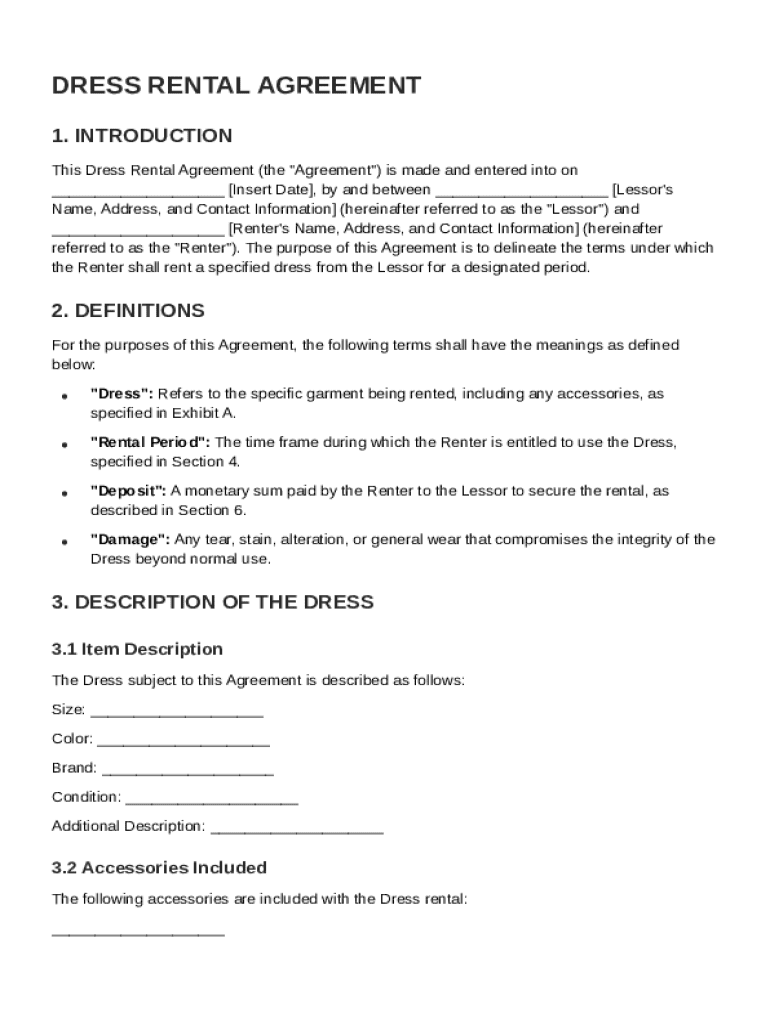







Definition & Importance of the Dress Rental Agreement Template
The Dress Rental Agreement Template serves as an essential legal document that outlines the terms and conditions under which a renter can lease a dress from a lessor. This agreement includes key components such as the rental period, associated fees, security deposit, and both parties’ responsibilities. By clearly defining these elements, the template protects the interests of both parties involved, helping to prevent misunderstandings or disputes. For the lessor, it ensures the dress is returned in satisfactory condition, while the renter gains assurance that all terms are agreed upon before any transactions.
Key Elements Explained
- Rental Terms: Specifies the duration of the rental period along with the start and end dates. Understanding these terms helps both parties align expectations.
- Fees and Deposit: Includes details on the rental fee and any security deposit required. This section might also cover payment methods and timing.
- Condition and Returns: Describes the condition of the dress at the time of rental and the expectations for its return.
Steps to Complete the Dress Rental Agreement Template
Filling out the Dress Rental Agreement Template involves several key steps to ensure accuracy and completeness of information. Here’s a step-by-step guide:
- Renter and Lessor Details: Begin by filling out the names, addresses, and contact information of both parties.
- Dress Description: Specify details of the dress, including size, color, and any accessories included, which aids in ensuring the correct item is rented and returned.
- Rental Duration: Clearly state the agreed-upon rental period, including the start and end dates, to define the timeline for the rental agreement.
- Payment Details: Insert the rental fee, security deposit, and acceptable payment methods. Include deadlines for payments to be made.
- Agreement to Terms: Ensure that both the renter and the lessor review and agree to the terms, followed by their signatures to formalize the contract.
Key Terms Within the Dress Rental Agreement Template
Understanding the essential terms used in the Dress Rental Agreement Template is pivotal for both parties involved:
- Lessor: Refers to the owner or provider of the dress being rented.
- Renter: The individual or party agreeing to rent the dress.
- Rental Fee: The cost associated with renting the dress for the specified period.
- Security Deposit: A refundable deposit to cover potential damages or late returns.
Additional Clarification on Terms
Handling these terms with clarity helps minimize potential disputes. Each party should understand these elements thoroughly as they outline core responsibilities and financial agreements tied to the rental transaction.
Who Typically Uses the Dress Rental Agreement Template
While this template is specifically crafted for dress rentals, it can be employed by various users:


Typical Users
- Formalwear Companies: Businesses offering dresses for events like weddings and proms frequently utilize this template.
- Individual Lenders: People who own designer or specialty dresses and want to rent them for occasional use.
- Event Planners: Professionals organizing events might use the template when sourcing formalwear for multiple clients.
By serving a broad range of users, the template provides flexibility, making it adaptable for different rental scenarios.
Legal Use of the Dress Rental Agreement Template
The Dress Rental Agreement Template needs to comply with certain legal requirements to ensure enforceability:
Legal Considerations
- Jurisdiction and Governing Law: The agreement should specify which state’s laws govern the contract, impacting dispute resolution procedures.
- Liability Provisions: Outlining who is responsible for damages to the dress during the rental period is crucial to minimize conflicts.
Understanding these legal components is essential for avoiding disputes and ensuring fair resolutions in the event of disagreements.
State-Specific Rules for the Dress Rental Agreement Template
Each state might have specific regulations that impact the execution of a Dress Rental Agreement:
Examples of Variations
- Consumer Rights: Some states may have stronger consumer protection laws influencing the obligations of the lessor.
- Deposit Handling: Regulations might vary on how deposits should be managed or returned.
Adapting the agreement to comply with regional laws ensures legal integrity and enhances the enforceability of the contract.
Digital vs. Paper Version
In today’s digital age, both digital and paper versions of the Dress Rental Agreement Template have their pros and cons:
Comparison
- Digital Version: Offers convenience, allowing edits and signatures online using platforms like DocHub. It facilitates easy distribution and archiving.
- Paper Version: Provides a tangible document that some parties may prefer for its permanence and ease of understanding without technology.
Both versions have their place depending on user preferences and the specific context of the rental situation.
Software Compatibility with DocHub
DocHub significantly enhances the usability of the Dress Rental Agreement Template with its robust digital tools:
Integration Benefits
- Editable Features: Use DocHub’s suite of editing tools to fill in the agreement seamlessly.
- E-signatures: Legally binding e-signatures can be added, streamlining the signing process and ensuring compliance with regulations.
Utilizing DocHub ensures a smooth workflow from document creation to execution, maintaining security and efficiency across stages.




