




Definition & Meaning
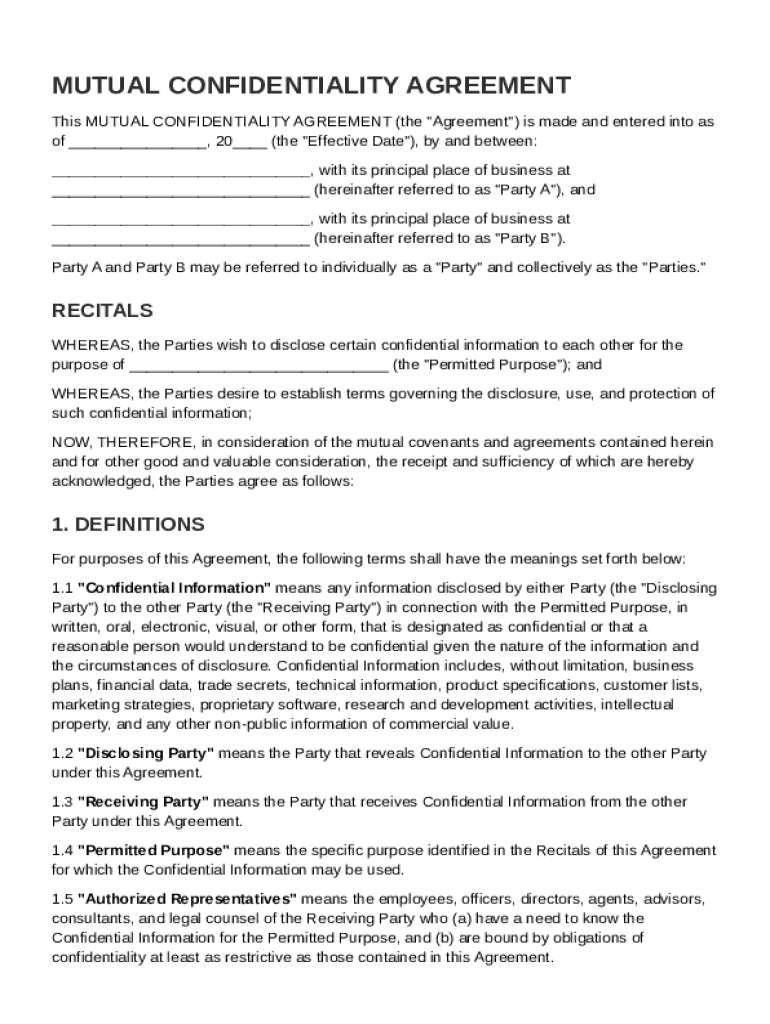
A Mutual Confidentiality Agreement Template is a legal document outlining the terms for managing confidential information shared between two parties, commonly referred to as Party A and Party B, for a specific purpose. The template is structured to protect sensitive information from unauthorized disclosure and misuse, crucial for maintaining competitive advantage, privacy, and business integrity.
Key Definitions
- Confidential Information: Defines the kind of information considered confidential, such as trade secrets, business strategies, or proprietary technology.
- Disclosure: Any type of communication or revelation of confidential information to unauthorized parties.
How to Use the Mutual Confidentiality Agreement Template
Using the Mutual Confidentiality Agreement Template effectively requires a clear understanding of its layout and clauses. This ensures both parties are fully aware of their responsibilities and protections under the agreement.
Steps to Use the Template
- Identify Parties: Specifying all parties involved is critical; names and contact details must be accurate.
- Define Purpose: Clearly articulate the purpose of sharing information to ensure focus and limit use.
- Detail Confidential Information: Enumerate what constitutes confidential information to prevent arbitrary or overly broad interpretations.
Practical Examples
- A software company shares prototypes with a potential partner; outlining confidentiality ensures proprietary code is protected.
- A healthcare provider collaborates with a third party, mandating protection for patient records under privacy regulations.
Steps to Complete the Mutual Confidentiality Agreement Template
Completing the template involves methodical progress through its sections to ensure every necessary detail is addressed in a legally sound manner.
Detailed Completion Process
- Fill Party Details: Enter the legal names and addresses of both parties to establish a clear contractual relationship.
- Specify Confidential Material: Explicitly identify materials or data regarded as confidential.
- Set Duration: Agree on the term during which confidentiality is mandated, including any post-termination obligations.
- Assign Jurisdiction: Determine the legal jurisdiction governing the agreement to resolve disputes effectively.
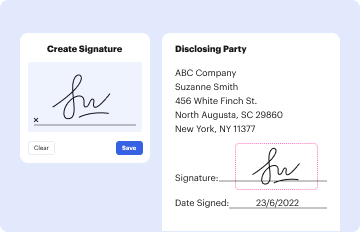
- Finalize with Signatures: Ensure both parties sign and date the document for it to be legally binding.
Key Elements of the Mutual Confidentiality Agreement Template
Understanding the vital components within the agreement can enhance its enforceability and relevance.
Essential Parts
- Obligations and Duties: Details what each party must do to protect confidential information.
- Exclusions: Defines circumstances under which information cannot be deemed confidential, such as public domain data.
- Legal Provisions: Outlines the consequences of breach, dispute resolution mechanisms, and indemnity clauses.
Real-World Applications
- In business mergers, where shared financial data must remain confidential until the transaction concludes.
- In R&D collaborations, preserving the confidentiality of joint inventions and research findings.
Legal Use of the Mutual Confidentiality Agreement Template
Legal use of this template ensures compliance with binding standards and laws, safeguarding the interests of all parties involved.
Compliance and Enforcement
- Applicable Laws: The template must abide by federal and state laws regarding contract formation and confidentiality.
- Enforceability: Ensured through properly defined terms and mutual assent. Failure to comply can result in legal consequences such as fines or injunctions.
Important Terms Related to Mutual Confidentiality Agreement Template
Understanding key terms enhances clarity and prevents misunderstandings between involved parties.
Glossary of Common Terms
- Proprietary Information: Information that provides a business with a competitive edge.
- Non-Disclosure: An agreement element emphasizing absolute confidentiality unless explicit permission is granted.
Who Typically Uses the Mutual Confidentiality Agreement Template
Various entities leverage this template to protect business secrets and sensitive information.

Common Users
- Businesses: To protect strategies and intellectual property during collaborations.
- Individuals: Consultants or freelancers who need to safeguard the proprietary information of their clients.

Examples of Using the Mutual Confidentiality Agreement Template
Practical examples illustrate how different scenarios benefit from using the agreement, safeguarding information and promoting trust.
Case Studies
- Tech Startups: Often use these agreements when negotiating terms with potential investors to protect their innovative ideas.
- Manufacturing Companies: To maintain the confidentiality of production processes when working with suppliers or contractors.
By thoroughly understanding and utilizing the Mutual Confidentiality Agreement Template, parties can ensure the proper handling, protection, and legal compliance of their sensitive information, fostering trust and collaboration in various professional contexts.