Definition and Meaning of Swing Pricing
Swing pricing is a financial mechanism used by investment funds to protect existing investors from the costs associated with the purchase or redemption of shares. It involves adjusting the net asset value (NAV) of the fund based on the size of incoming or outgoing transactions. The Swing Pricing Information Document outlines the specific procedures and factors that guide the implementation of swing pricing. The primary objective is to ensure fairness and efficiency by mitigating the impact of transaction costs on remaining shareholders.
Detailed Mechanism
- Net Asset Value Adjustment: The swing pricing mechanism adjusts the NAV to reflect transaction costs when trading activity surpasses a predetermined threshold.
- Swing Factor: This is the percentage by which the NAV is adjusted. It compensates for trading costs and is typically disclosed in the Swing Pricing Information Document.
- Partial and Full Swinging: Full swinging occurs when any level of net flows triggers the adjustment, while partial swinging involves adjustments only when flows exceed specific levels.
Steps to Complete the Swing Pricing Information Document
- Understand the Document's Purpose: Begin by reviewing the document’s introduction, which outlines its relevance and objectives in implementing swing pricing.
- Gather Financial Data: Collect relevant financial information and transaction data that influence the swing factor adjustments.
- Complete Required Sections: Fill out specific sections of the document that detail transaction thresholds and swing factors.
- Revise and Validate Entries: Ensure that all financial entries are accurate and in line with current fund performance metrics.
- Submit for Review: Forward the completed document to the appropriate regulatory or internal compliance team for approval.
Important Considerations
- Accuracy of Data: Ensure all financial figures are correct and reflect current market conditions.
- Regulatory Alignment: Verify that the completed document complies with regional and national regulations concerning investment funds.
Key Elements of the Swing Pricing Information Document
- Thresholds for Transaction Adjustments: Specific transaction volumes that trigger NAV adjustments.
- Swing Factor Details: Percentages used to adjust the NAV to reflect transaction costs.
- Rationale for Adjustments: Explanation of why specific swing factors and thresholds are applied.
- Compliance Disclosure: Information about how the swing pricing aligns with regulatory requirements.
Nuances to Consider
- Transactional Frequency: High-frequency trading may necessitate more frequent swing adjustments.
- Fund Size and Composition: Larger funds with diverse holdings might have different swing factor requirements.
Case Studies
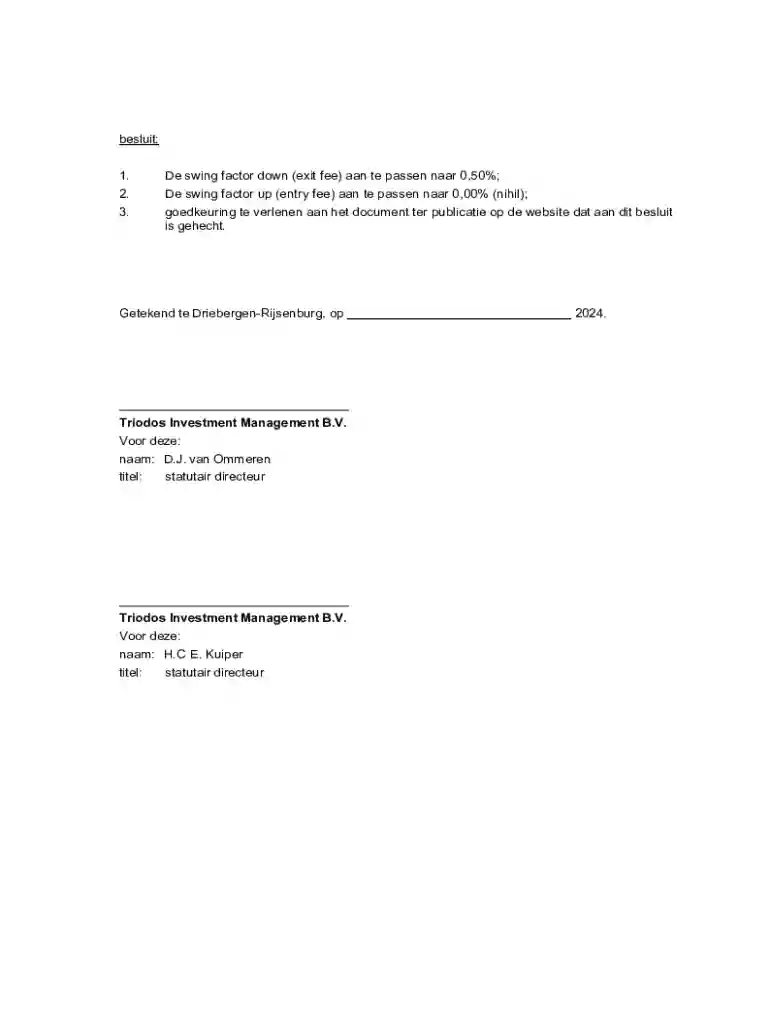
- Triodos Investment Management: Adjusted swing factors in response to tax legislation impacts, demonstrating a practical application of the document.
Legal Use of the Swing Pricing Information Document
Swing pricing is governed by regulatory bodies such as the U.S. Securities and Exchange Commission (SEC). The Swing Pricing Information Document serves as a tool to ensure that fund practices adhere to legal standards, providing transparency and accountability in fund management.
Compliance Implications
- Documentation Requirements: Funds must maintain complete and accurate records as outlined.
- Periodic Review: Regular audits and reviews of the document ensure ongoing compliance.
Software Compatibility
Using electronic or software solutions can streamline the management and submission of Swing Pricing Information Documents.
- Integration with Platforms: Compatible with platforms such as DocHub, TurboTax, and QuickBooks, which support document editing, signing, and sharing.
Technical Specifications
- Format Flexibility: Supports multiple formats including PDF, XLS, and DOC for versatility in data entry and sharing.
Required Documents
Before completing the Swing Pricing Information Document, the following documents are essential:
- Fund Performance Reports: Provide a comprehensive overview of the fund’s activities and performance.
- Transaction Histories: Detailed records of recent buying or selling activities within the fund.
Gathering Required Information
- Ensure all necessary documents are readily accessible and formatted to align with the document’s requirements.
Digital vs. Paper Version
Both digital and paper versions of the Swing Pricing Information Document have specific advantages and limitations.
Digital Version Advantages
- Accessibility: Easily accessed, stored, and shared online.
- Efficiency: Allows for quicker completion and submission processes with integrated platforms.
Considerations for Use
- Opt for digital versions for faster interactions and paper versions when dealing with entities that require traditional documentation methods.