
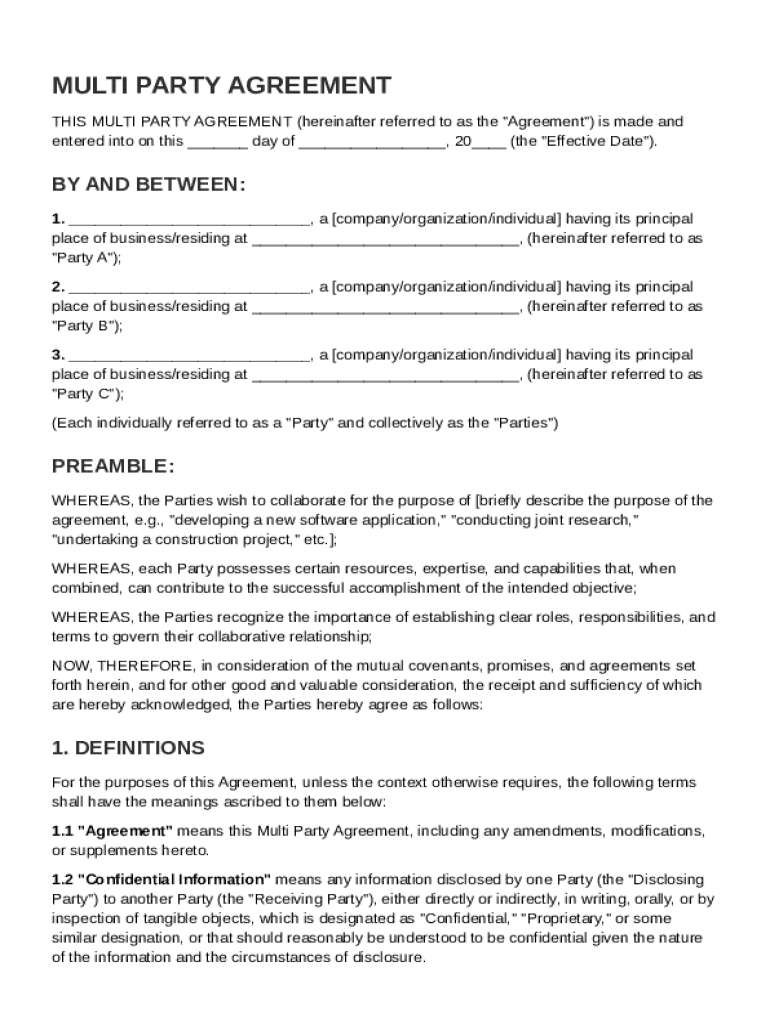







Definition and Meaning
A Multi Party Agreement Template is a formal document used to outline the collaboration among multiple parties for a specific project or venture. This agreement defines the roles, responsibilities, and objectives of each participant involved. It also details financial arrangements, confidentiality protocols, and conflict resolution strategies. Such a document serves as the foundational framework for a collective effort, ensuring that all parties have a clear understanding of their obligations and the terms governing their relationship. The template can be tailored to suit a wide range of industries and projects, from business partnerships to joint research endeavors.
Key Elements of the Multi Party Agreement Template
The Multi Party Agreement Template is composed of several critical components that contribute to its comprehensive nature:
- Roles and Responsibilities: Clearly defines what each party is expected to contribute and their duties.
- Financial Arrangements: Sets forth how financial resources will be allocated and any profit-sharing mechanisms.
- Objectives: Specifies the goals of the collaboration and the criteria for success.
- Confidentiality: Outlines how sensitive information will be protected and handled.
- Conflict Resolution: Provides methods for resolving disagreements that may arise.
- Amendments and Termination: Describes how changes to the agreement can be made and the conditions under which it may be terminated.
- Miscellaneous Clauses: Includes any additional provisions necessary for governing the relationship between the parties.
These elements ensure that the agreement is robust and adaptable to the specific needs of the parties involved.
How to Use the Multi Party Agreement Template
To effectively use the Multi Party Agreement Template, follow these steps:
- Customize the Template: Adjust the template to include all relevant details specific to your project and the parties involved.
- Identify Parties and Their Roles: Clearly list all participating entities and their respective roles within the agreement.
- Define Objectives and Scope: Outline the purpose of the collaboration, including detailed objectives and the scope of work.
- Establish Financial Terms: Clarify how funding will be managed, including contributions and distributions.
- Incorporate Legal Provisions: Ensure that legal requirements, such as confidentiality clauses and dispute resolution mechanisms, are addressed.
- Review and Finalize: Have all parties review the agreement for accuracy and completeness. Make necessary amendments before finalizing.
This structured approach facilitates a thorough understanding and execution of the agreement, minimizing the risk of conflicts and ensuring alignment among all parties.
Important Terms Related to Multi Party Agreement Template
Understanding specific terms is crucial for navigating and utilizing a Multi Party Agreement Template effectively:
- Indemnification: A provision that protects parties from liabilities incurred due to another party's actions.
- Force Majeure: A clause that releases parties from obligations due to unforeseen events beyond their control.
- Non-Disclosure Agreement (NDA): A separate agreement ensuring confidentiality that may be integrated into the template.
- Jurisdiction and Governing Law: Specifies the legal framework and court jurisdiction applicable to disputes.
- Assignment: Details the conditions under which parties may transfer their rights and responsibilities.
Familiarity with these terms ensures a well-informed interaction with the agreement and aids in anticipating potential implications.
Legal Use of the Multi Party Agreement Template
The legality of a Multi Party Agreement Template hinges on these factors:
- Compliance with Applicable Laws: Ensure the agreement adheres to federal and state laws pertaining to contracts.
- Legally Binding Nature: Confirm that all parties have the legal capacity and authority to enter into the agreement.
- Enforcement of Provisions: The agreement should include enforceable clauses, especially concerning critical aspects like confidentiality and dispute resolution.
- Precision and Clarity: Legal documents require precise language to avoid ambiguity, ensuring the template is definitive and comprehensive.
These legal aspects provide a framework for safeguarding the interests of all involved parties, minimizing risks of legal disputes.
Steps to Complete the Multi Party Agreement Template
Completing a Multi Party Agreement Template requires careful attention to detail and clear communication among all participants:
- Gather Necessary Information: Collect all relevant data about the parties, project, and objectives.
- Draft the Document: Begin by entering basic details into the template, customizing where needed.
- Address Key Components: Ensure all sections, including roles, financial terms, and legal provisions, are thoroughly addressed.
- Review for Completeness: Have all parties examine the document to verify that it captures all necessary elements and agreements.
- Obtain Signatures: Secure signatures from all participating parties to formalize the agreement.
Completing these steps results in a legally sound and operational agreement, ready for implementation.
Examples of Using the Multi Party Agreement Template
The Multi Party Agreement Template can be employed in various situations:
- Business Partnerships: Used when multiple companies join forces for a joint venture or project.
- Academic Collaborations: Facilitates agreements between universities or research institutions working on shared studies.
- Non-Profit Alliances: Structures partnerships among non-profit organizations for community projects or fundraising initiatives.
- Cross-border Collaborations: Supports international projects, ensuring compliance with different jurisdictions' legalities.
These examples highlight the template's versatility, demonstrating its utility across numerous fields and contexts.
Business Types That Benefit Most From Multi Party Agreement Template
- Corporations and Enterprises: Large-scale projects often require collaboration between multiple departments or external partners.
- Startups and Entrepreneurs: Partnerships with other startups or established companies can drive innovation and resources.
- Professional Services Firms: Law, accounting, or consulting firms that collaborate on client projects across various specialties.
- Technology Companies: Joint ventures in tech development can foster innovation and share expertise and resources.
The template is especially advantageous for businesses seeking to formalize collaborative efforts while safeguarding their interests and ensuring aligned objectives.




