






Definition and Function of the Canadian Rental Agreement Template
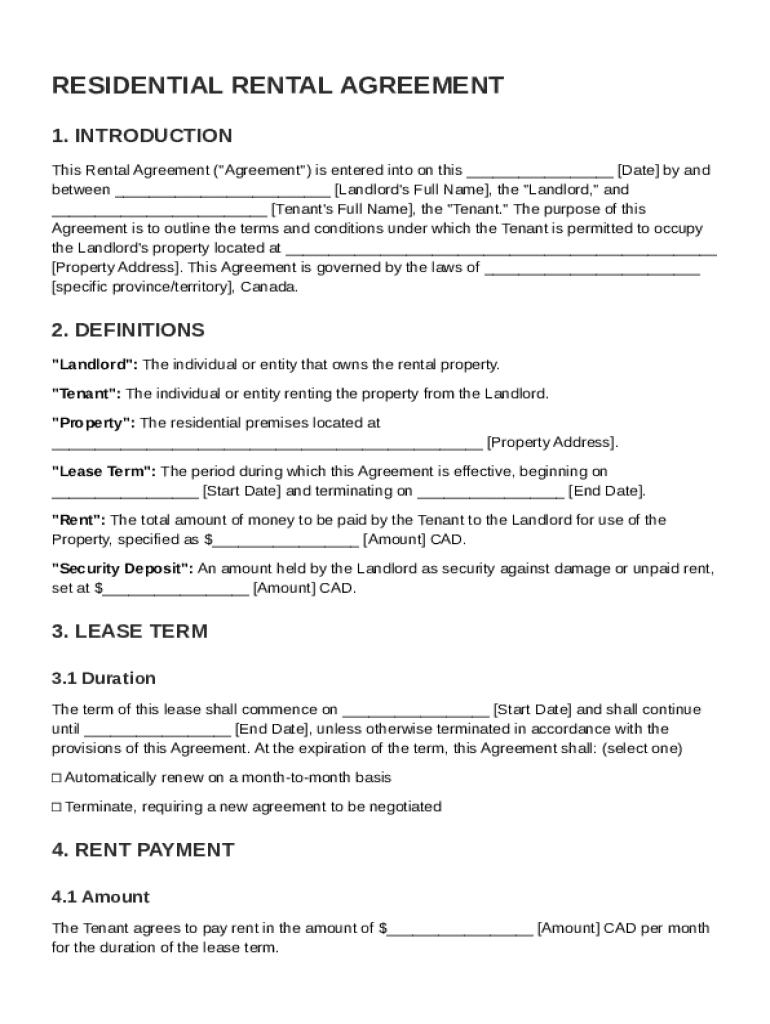
The Canadian Rental Agreement Template serves as a standardized document crucial for establishing the legal parameters between a landlord and tenant in residential property leases. This template outlines essential terms and conditions, offering clarity and protection for both parties involved. Typically, it defines the roles, responsibilities, and rights of each party, including rent payments, maintenance obligations, and termination procedures. By utilizing this template, landlords and tenants ensure that their agreement adheres to applicable provincial laws, thus minimizing potential disputes and misunderstandings. The document is essential for anyone leasing residential property in Canada and provides a comprehensive guide to managing rental relationships effectively.
How to Utilize the Canadian Rental Agreement Template
Using the Canadian Rental Agreement Template involves a structured approach to ensure all pertinent details are accurately captured. First, access the template via a reputable platform like DocHub, which supports seamless document editing and signing. Carefully fill out the landlord and tenant information, including names, addresses, and contact details. Next, specify the lease terms, such as the duration of the lease, rent amount, payment frequency, and due dates. It's crucial to include details about additional provisions like security deposits, maintenance responsibilities, and allowable modifications. Once completed, review the document thoroughly with all parties to ensure understanding before signing. Utilizing a platform that supports legally binding electronic signatures can streamline this process.
Steps to Complete the Canadian Rental Agreement Template
Completing the Canadian Rental Agreement Template requires attention to detail and accuracy. Here is a step-by-step process:
- Access the Template: Use a secure document management service like DocHub for online access.
- Fill in Parties’ Details: Enter all necessary contact information for both the landlord and tenant.
- Specify Lease Terms: Define the lease start and end dates, rent amount, payment method, and schedule.
- Security Deposit: Document any security deposit required and conditions for its return.
- Maintenance and Repairs: Outline responsibilities of both parties regarding repairs and upkeep.
- Additional Clauses: Include any additional clauses about alterations, pets, and smoking rules.
- Review Terms: Both parties should review all terms for accuracy and clarity.
- Sign the Document: Use electronic signature tools for a legally binding agreement.
Key Elements of the Canadian Rental Agreement Template
The Canadian Rental Agreement Template encompasses several fundamental elements to ensure comprehensive coverage of the rental arrangement:
- Identification of Parties: Clearly defines the landlord and tenant with full names and addresses.
- Property Details: Describes the rental property location and any included amenities.
- Term of Lease: Specifies the fixed period of the lease and conditions for renewal.
- Rent Payment Terms: Details the amount, due date, and acceptable payment methods for rent.
- Security Deposit Requirements: Instructions on deposit amount, handling, and return conditions.
- Maintenance Obligations: Responsibilities of both parties for property care and repair.
- Termination Clauses: Conditions under which the lease may be prematurely terminated.
- Prohibited Activities: Limits on activities such as smoking or unauthorized alterations.
Legal Use of the Canadian Rental Agreement Template
The Canadian Rental Agreement Template must comply with provincial and federal laws to be legally enforceable. Each province in Canada may have specific regulations governing residential leases, which can impact clauses on rent controls, eviction notices, and tenant rights. It is essential for landlords to understand and incorporate these legal stipulations into their rental agreements to avoid potential legal challenges. For tenants, awareness of these rights ensures they are adequately protected under the agreement. Consulting with a legal expert in Canadian property law can provide additional assurance that the template complies with all local requirements.
Who Typically Uses the Canadian Rental Agreement Template
The template is mainly utilized by landlords, real estate agencies, and property management companies engaged in the rental of residential properties across Canada. It is an indispensable tool for individual property owners who may not have extensive legal knowledge, enabling them to create a robust rental agreement that conforms to legal standards. Tenants also benefit from understanding this template, as it helps them negotiate fair terms and recognize their rights and responsibilities. For both parties, using a standard template facilitates a clearer, more professional leasing process.


Examples of Using the Canadian Rental Agreement Template
Real-world scenarios illustrate the practical application of the Canadian Rental Agreement Template. For instance, a landlord with multiple properties can use the template to maintain consistency and compliance across all rental agreements. Similarly, a tenant moving to a new city may leverage the template to familiarize themselves with regional rental norms and ensure they agree to fair terms. These examples underscore the template's versatility in meeting diverse needs while maintaining legal integrity.
State-by-State Differences in Canadian Rental Agreements
While the Canadian Rental Agreement Template provides a standardized framework, variations exist across provinces. For example, rent increase regulations, notice periods for termination, and the handling of security deposits may differ. In Ontario, the Residential Tenancies Act governs these aspects, while British Columbia operates under its own Residential Tenancy Act. It is essential to tailor the template to reflect such provincial differences, which may involve consulting localized guidelines to ensure accuracy and compliance.
Important Terms Related to the Canadian Rental Agreement Template
Understanding key terms is vital in grasping the intricacies of the Canadian Rental Agreement Template. Essential terms include:
- Lease Term: Duration of the rental agreement.
- Security Deposit: Amount held as collateral for property damage.
- Sublease: Arrangements for a tenant to rent the property to another party.
- Eviction: Legal process to remove a tenant from the property.
- Habitable Condition: Requirement for the property to be livable according to safety and health standards.
Knowing these terms aids landlords and tenants in negotiating agreements that reflect their intentions and comply with legal standards.