
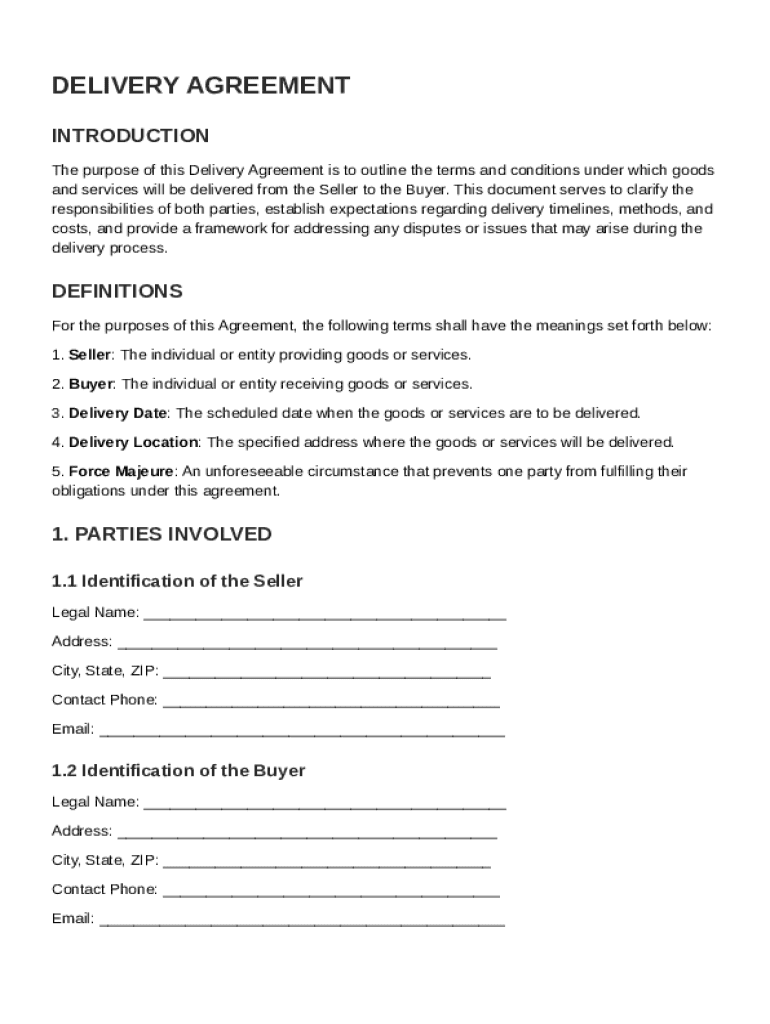







Definition and Meaning of a Delivery Agreement Template
A Delivery Agreement Template is a structured document that outlines the contractual terms between a seller and a buyer for the delivery of goods or services. This template serves as a foundational agreement that defines obligations, expectations, and legal parameters involved in the delivery process. It includes details on delivery schedules, pricing, liability limitations, payment methods, and dispute resolution processes. Utilizing this template ensures that both parties have a clear understanding of their roles and responsibilities, which helps to minimize potential conflicts. By establishing clear legal terms, it provides a risk management structure that protects both parties’ interests.
How to Use the Delivery Agreement Template
To effectively utilize a Delivery Agreement Template, users should first review the entire template to understand its scope and applicability to their specific needs. It’s important to tailor sections such as delivery terms, responsibilities, and payment schedules to reflect the specifics of the transaction at hand.
- Customize the Template: Modify sections to include specifics such as delivery timelines, item descriptions, and quantity details.
- Fill In Legal Details: Ensure the inclusion of legal names of parties, addresses, and any identification or license numbers.
- Set Payment Conditions: Clearly define payment terms, conditions for late fees, and deposit requirements.
- Include Liability Clauses: Indicate terms for damages, delays, or any situations where indemnity might apply.
- Review Compliance Requirements: Ensure that the agreement aligns with any industry-specific regulations or standards.
By following these steps, parties can create a comprehensive and legally sound agreement that meets their particular transaction needs.
Key Elements of the Delivery Agreement Template
The key elements of a Delivery Agreement Template include:
- Party Details: Names and contact information for the seller and buyer, establishing the primary participants in the contract.
- Delivery Terms: Specific details about how, when, and where the goods or services are to be delivered, setting clear logistical expectations.
- Payment Terms: Clear terms on payment amount, method, and schedules, ensuring transparency in financial transactions.
- Liability and Risk Management: Provisions that mitigate risks related to damage or delays to the delivered goods.
- Dispute Resolution: Methods for resolving conflicts, such as mediation or arbitration, should they arise.
- Termination Conditions: Conditions under which the agreement can be terminated by either party, providing a clear exit strategy.
Each of these elements is crucial for establishing a full understanding of responsibilities and protecting the interests of both parties involved.
Legal Use of the Delivery Agreement Template
The Delivery Agreement Template serves as a legally binding document. Users should ensure the template complies with applicable U.S. laws regarding contract formation and execution. For businesses operating in the U.S., it’s important to consider federal and state laws that might impact the agreement's validity. Typically, this will include:
- Contract Law: Ensuring that the agreement adheres to the principles of offer, acceptance, and consideration.
- Jurisdiction-Specific Regulations: Addressing state-specific requirements which could influence the legality of sales and deliveries.
- Consumer Protection Laws: Ensuring terms comply with laws designed to protect consumers from unfair contract terms.
Legal counsel may be advisable when drafting or customizing a Delivery Agreement to ensure all legal requirements are met, reducing the risk of unenforceability.
Steps to Complete the Delivery Agreement Template
Completing a Delivery Agreement Template involves several methodical steps to ensure all necessary information is appropriately captured and legally binding.
- Read Thoroughly: Review the entire document to ensure complete understanding.
- Input Information: Fill in relevant data for each section, from seller and buyer information to payment terms.
- Legal Review: Engage legal counsel to review the completed agreement for legal sufficiency.
- Obtain Signatures: Ensure all parties sign the agreement, acknowledging terms and consent.
- Distribute Copies: Provide all parties with a copy of the signed agreement for their records.
These steps aim to streamline the completion process while maintaining legal and procedural integrity.
Practical Examples of Using the Delivery Agreement Template
Consider a supplier contracted to deliver office supplies to a corporate client. The Delivery Agreement Template will specify the types of supplies, delivery timeline, payment terms, and processes for handling defective items. This practically manifests through elements such as:
- Scheduled Deliveries: Dates when supplies must be delivered and conditions for changes or delays.
- Acceptance Tests: Criteria the supplies must meet to be accepted by the buyer.
- Payment Milestones: Stages where payment is expected, perhaps upon delivery confirmation.
These examples underscore the necessity of clear terms to facilitate smooth transactions.
Who Typically Uses the Delivery Agreement Template
This template is primarily utilized by businesses engaged in sales, distribution, and procurement. Typical users include:
- Manufacturers: Outlining the delivery of raw materials or finished products to retailers.
- Suppliers: Contracting terms for the supply of goods to businesses or consumers.
- Distributors: Formalizing agreements with retailers or end users for product distribution.
Organizations in logistics, warehouse management, and global trade often rely on delivery agreements to formalize terms with partners and clients, ensuring seamless operations.


Important Terms Related to the Delivery Agreement Template
Understanding key terminology within the Delivery Agreement Template is crucial for effective application:
- F.O.B. (Free On Board): Indicates that the seller bears all logistics costs until the goods are on board a shipping vessel.
- Force Majeure: Clauses that excuse parties from liability in unforeseen, uncontrollable events.
- Indemnification: Provisions that protect one party from liability arising from particular circumstances.
These terms are vital in clarifying duties and risks, thus fostering better compliance and management of agreements.
Examples of State-Specific Rules for the Delivery Agreement Template
While a delivery agreement primarily follows federal contract law, state-specific regulations may apply. For instance:
- California's Sales Tax Rules: Such agreements in California must factor in state-specific sales tax collection and remittance requirements.
- New York's Consumer Protection Statutes: Mandate transparency in contract terms and responsiveness to consumer complaints in delivery agreements.
Businesses should consult with legal experts familiar with regional laws when drafting agreements to ensure full compliance.




