






Definition & Meaning
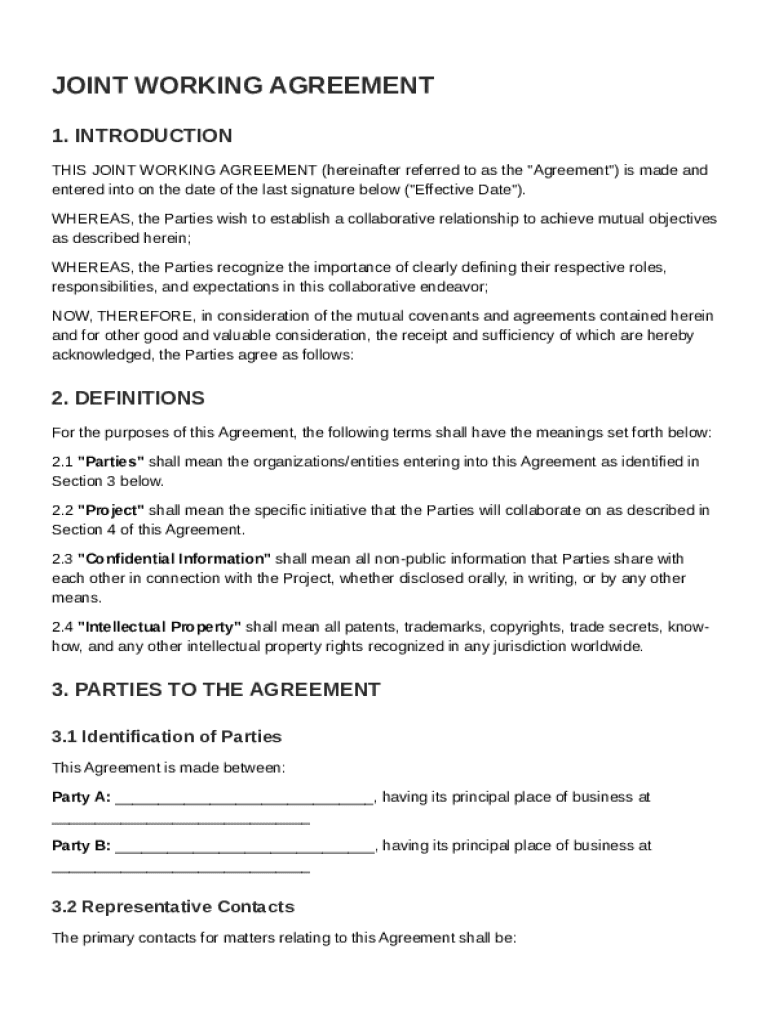
A Joint Working Agreement Template is a formal document that outlines the collaboration between two or more parties aiming to work on a particular project or pursue mutual goals. This template serves as a guiding framework, detailing the roles and responsibilities, timelines, financial agreements, and other critical elements necessary for successful collaboration. By using this template, the involved parties can ensure a shared understanding and clear communication, minimizing the potential for misunderstandings or disputes.
Key Elements of the Joint Working Agreement Template
The Joint Working Agreement Template encompasses several essential components to delineate the relationship and expectations among involved parties:
- Definitions and Objectives: Establishes the terminology used in the agreement and outlines the specific goals of the collaboration.
- Governance Structure: Details the management hierarchy and decision-making processes, ensuring smooth cooperation.
- Financial Arrangements: Provides a clear understanding of how costs will be shared, profits distributed, and financial responsibilities handled.
- Confidentiality and Intellectual Property: Protects sensitive information and clarifies ownership rights over any jointly developed intellectual property.
- Duration and Termination: States the time frame for the agreement, conditions for renewal, and procedures for termination.
- Dispute Resolution: Outlines mechanisms for resolving disagreements to maintain a harmonious working relationship.
- Miscellaneous Provisions: Covers any additional terms that are specific to the collaboration and its unique requirements.
Steps to Complete the Joint Working Agreement Template
Filling out the Joint Working Agreement Template requires careful attention to ensure all details reflect the collaborators’ intentions. Here's a step-by-step guide:
- Identify Parties Involved: List all organizations or individuals participating in the agreement, including their legal names and contact information.
- Define Project Scope and Goals: Clearly articulate the project’s purpose and objectives to align efforts and expectations.
- Establish Roles and Responsibilities: Specify the duties each party will perform, ensuring that all aspects of the project are covered.
- Set Financial Terms: Detail how expenses will be divided, payment schedules, and any revenue-sharing agreements.
- Address Confidentiality and IP Rights: Agree on how proprietary information will be protected and allocate rights to any created intellectual property.
- Outline Governance and Decision-Making Protocols: Describe how decisions will be made and who has authority in various aspects of the project.
- Specify Term and Termination Conditions: Indicate the agreement’s duration and outline procedures for ending the collaboration, if necessary.
- Include Dispute Resolution Methods: Determine how conflicts will be handled, possibly utilizing mediation or arbitration services.
- Add Miscellaneous Clauses: Incorporate any additional terms relevant to the specific partnership that have not been covered.
Important Terms Related to Joint Working Agreement Template
Understanding specific terminology within the Joint Working Agreement is crucial for clear communication:
- Partner: An entity or individual involved in the agreement with shared goals and responsibilities.
- Deliverables: Specific outcomes or outputs expected from the collaboration.
- Milestones: Key stages in the project where certain objectives must be achieved.
- Indemnity: A clause that protects parties from financial loss due to specific risks associated with the project.
- Force Majeure: Circumstances beyond control that may prevent parties from fulfilling their contractual obligations.
Legal Use of the Joint Working Agreement Template
The Joint Working Agreement Template ensures that all parties have a legally binding document that defines their collaboration parameters. Compliance with necessary legal standards helps prevent disputes and ensures the protection of rights, assets, and confidential information. The agreement aligns with U.S. commercial practices and supports initiatives by providing a structured, enforceable contract. This legal framework is crucial for businesses in maintaining trust and accountability throughout the duration of the project.
Examples of Using the Joint Working Agreement Template
Joint Working Agreements are applicable across various industries and project types. Here are some scenarios:
- Technological Collaborations: Two tech companies jointly develop a software application, utilizing each company’s specialization for innovation and marketing.
- University and Corporate Partnerships: An academic institution partners with a corporation to conduct research and development in scientific studies.
- Healthcare Initiatives: Health organizations team up for community outreach programs focusing on preventive health care and education.
- Cross-National Ventures: Corporations from different countries form alliances to tap into new markets and share logistic and operational costs.
Business Entity Types Benefiting from Joint Working Agreement Template
Different business structures stand to gain from utilizing a Joint Working Agreement Template:
- Limited Liability Companies (LLCs): Benefit from clear definitions of partnership roles and protections available under LLC regulations.
- Corporations: Utilize agreements for large-scale projects requiring extensive resource sharing and multinational cooperation.
- Partnerships: Enhance operational efficiency through predefined task allocations and resource management.
- Nonprofits: Foster cooperative relationships for public service initiatives, ensuring alignment with missions and values.
State-by-State Differences
In the United States, legal requirements for partnerships, including Joint Working Agreements, can vary by state. The level of formality, necessary disclosures, and governance structures may differ. Therefore, it’s important for parties to consult state-specific laws when drafting and executing these agreements to ensure compliance with local regulations. Some states may require additional documentation or provisions specific to particular industries or collaboration types. It's essential to adapt the template to these requirements while maintaining its core components.