




01. Edit your form online
Type text, add images, blackout confidential details, add comments, highlights and more.

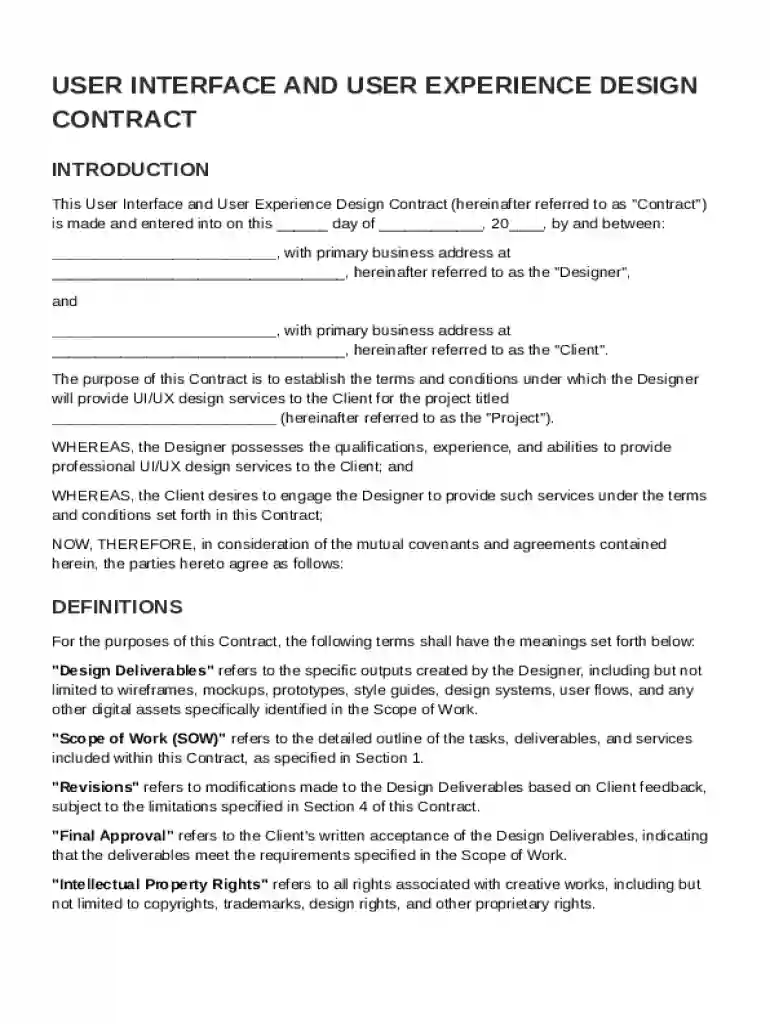
Type text, add images, blackout confidential details, add comments, highlights and more.

Draw your signature, type it, upload its image, or use your mobile device as a signature pad.

Send it via email, link, or fax. You can also download it, export it or print it out.
The UI/UX Design Contract Template serves as a formal agreement between a designer and a client. This document outlines the terms and conditions specific to UI and UX design services, ensuring that both parties have a clear understanding of their roles and responsibilities. It typically includes sections such as the scope of work, payment terms, intellectual property rights, and confidentiality obligations. By standardizing these elements, the contract helps prevent disputes and promotes a harmonious working relationship.
To effectively utilize the UI/UX Design Contract Template, begin by customizing the template to suit your specific project needs. Identify and articulate the scope of work, which should detail the deliverables, deadlines, and design requirements. Clearly define the payment structure, including rates, schedules, and methods. Ensure both parties agree on the intellectual property terms, outlining who will own the rights to the final design. Finally, review and agree on confidentiality and termination clauses to protect sensitive information and outline what happens if the contract is ended prematurely. Once all sections are completed, both the designer and client should sign the document to formalize the agreement.
The UI/UX Design Contract Template comprises several critical components:
Each element is crucial for delineating expectations and responsibilities, thus enhancing clarity and minimizing misunderstandings.
Completing the UI/UX Design Contract Template involves several steps:
These steps ensure that the contract is thorough and legally binding upon execution.
The UI/UX Design Contract Template can be used in various scenarios:
These examples highlight the template's versatility in different business contexts, helping mitigate risks and establish trusted relationships.
Understanding key terms within the UI/UX Design Contract Template is pivotal:
Familiarity with these terms ensures all parties have a common language and understanding, facilitating smoother negotiations and execution.
Using a UI/UX Design Contract Template offers numerous benefits:
These advantages underscore the importance of utilizing a structured contract template in any design engagement.
Choosing between digital and paper formats depends on preferences and needs:
Digital versions complement modern, agile business practices, while paper versions may be used for traditional or backup purposes, ensuring flexibility in document handling.
At DocHub, your data security is our priority. We follow HIPAA, SOC2, GDPR, and other standards, so you can work on your documents with confidence.






Sep 20, 2017 This sample designer contract is what I use for my own work. Its a hybrid of the AIGA, GAG and common sense changes for the sake of digital-Read more
Download your free professional RFP template with 18+ expert questions. Save 20+ hours on procurement, start evaluating Design Collaboration Tools vendors todayRead more


