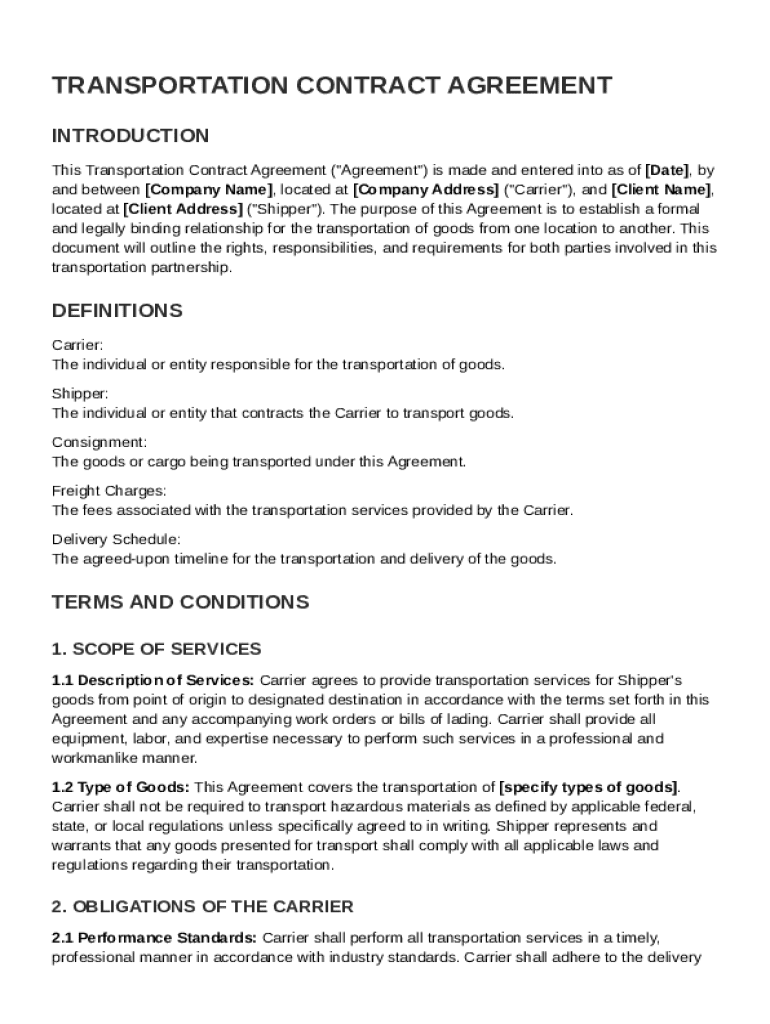







Definition and Meaning
The Transportation Contract Template is a formal contract that establishes a clear understanding between a carrier and a shipper, setting forth the terms and conditions for the transportation of goods. This document serves as an agreement detailing roles, responsibilities, and expectations on both sides, ensuring efficient and legally compliant transportation operations. In essence, it provides the legal framework necessary to protect both parties and facilitate a smooth logistical process by outlining key provisions such as compensation, liability, and insurance obligations.
Key Elements of the Transportation Contract Template
The Transportation Contract Template encompasses several critical elements that are vital for its effectiveness:
- Parties Involved: Clearly identifies the carrier and shipper, along with their contact information and roles in the transportation process.
- Scope of Work: Defines the nature and extent of services to be provided, including pick-up and delivery locations and types of goods transported.
- Compensation Terms: Specifies payment methods, calculation structures, and schedules for transport services rendered.
- Liability and Insurance: Details the liability responsibilities of each party and outlines the required insurance coverage levels to protect against potential losses or damages.
- Duration and Termination: Enumerates the length of the agreement and conditions for termination by either party, including notice periods and termination grounds.
- Dispute Resolution: Describes mechanisms for resolving conflicts, such as mediation or arbitration, to address potential disagreements amicably and legally.
How to Use the Transportation Contract Template
To utilize the Transportation Contract Template effectively:
- Download and Review: Obtain the template from a trusted source and review it thoroughly to ensure it aligns with your specific transportation needs.
- Customize: Fill in pertinent details regarding the involved parties, services provided, and specific terms and conditions that are unique to your agreement.
- Legal Consultation: Consult a legal professional to verify compliance with relevant laws and ensure all protective measures are in place.
- Finalize: Collect signatures from all parties involved once all terms are agreed upon, ensuring a legally binding agreement.
Steps to Complete the Transportation Contract Template
Completing the Transportation Contract Template involves several key steps:
- Input General Information: Start by entering basic information about the carrier and shipper, such as names, addresses, and contact details.
- Specify Cargo Details: Document details about the goods to be transported, including type, weight, and dimensions.
- Outline Payment Terms: Clearly outline payment agreements, including payment schedules and methods.
- Determine Liability and Insurance: Specify liability limitations and insurance requirements as agreed upon by both parties.
- Set Effective Dates: Indicate the start and end dates of the contractual agreement, along with any renewal options.
- Include Signatures: Ensure that authorized representatives from both organizations sign the document to validate its enforceability.
Important Terms Related to the Transportation Contract Template
Understanding the terminology related to the Transportation Contract Template is crucial:
- Carrier: The party responsible for transporting goods from one location to another.
- Shipper: The entity requiring transportation services for their goods.
- Bill of Lading: A critical document issued by a carrier to a shipper, outlining receipt and details of shipment.
- Freight Forwarding: The process of coordinating and dispatching shipments via asset-based carriers.
Legal Use and Compliance
Legal compliance is essential when using a Transportation Contract Template. Ensure your contract:
- Adheres to State Laws: Aligns with state-specific transportation and commercial laws to obtain enforceability.
- Includes Indemnification Clauses: Protects both parties against specific liabilities by outlining indemnification conditions.
- Embraces Electronic Signature Laws: If using digital signatures, the contract must comply with electronic signature laws like the ESIGN Act.
State-Specific Considerations for the Transportation Contract Template
The application and interpretation of transportation contracts can vary by state. Factors to consider:
- State Transportation Regulations: Each state may have specific regulations regarding transport operations or contract terms.
- Jurisdiction Clauses: Outlining the preferred jurisdiction for any legal disputes must be influenced by the location of goods or primary business operations.
Examples of Utilizing the Transportation Contract Template
Utilizing real-world scenarios can aid in understanding:
- Small Business Shipment: A local e-commerce store partners with a logistics company using a transportation contract to ensure timely delivery of products.
- Large-Scale Operations: A multinational manufacturer engages a fleet service for worldwide distribution, using a standardized transportation contract to streamline processes and protect interests financially and legally.
Each section of the Transportation Contract Template is pivotal in offering a secure, well-defined relationship between carriers and shippers, optimizing effectiveness in logistics operations.