Definition and Importance of Notarial Record Form
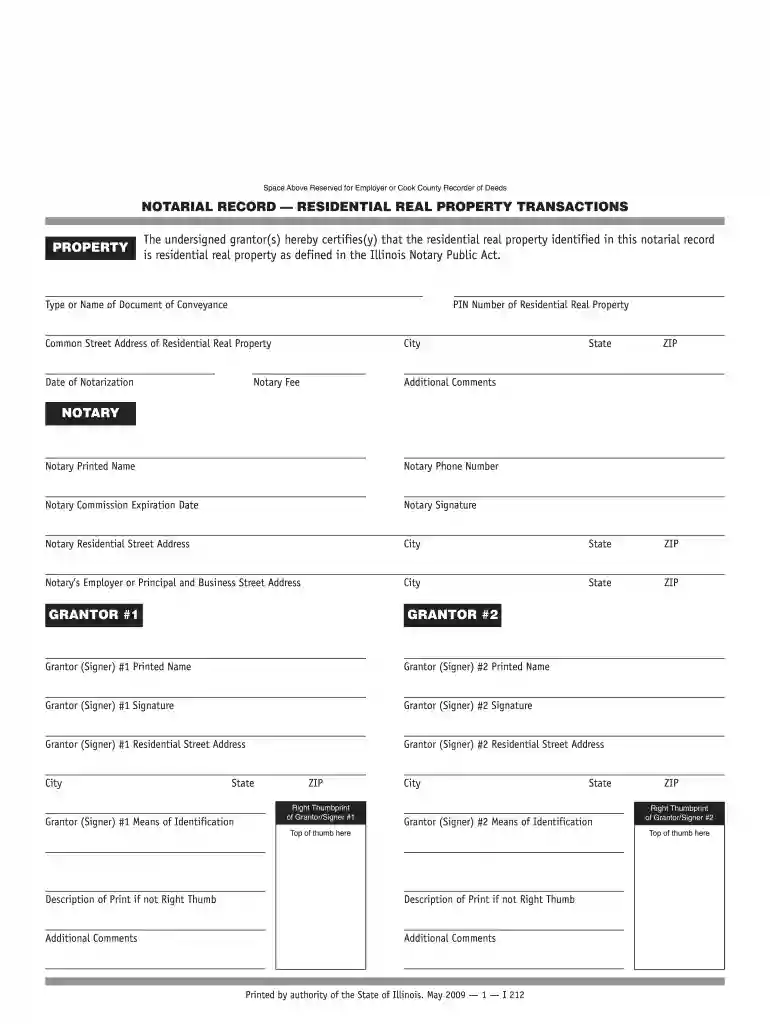
The notarial record form is a critical document used primarily in real property transactions to validate and record the notarization process. Designed to ensure compliance with state-specific notary laws, particularly in Illinois, this form documents the details of the transaction, the parties involved, and the credentials of the notary public. Its significance lies in providing authentication, maintaining the integrity of the transaction, and protecting against potential fraud. The form typically includes sections for detailed notary information, grantor identification, and the method of verification used by the notary.
Specific Use Cases
- Real Estate Transactions: It's most commonly employed in residential real estate dealings, where it certifies the validity of signatures.
- Legal Compliance: Ensures adherence to the Illinois Notary Public Act, safeguarding legal compliance in the notarization process.
Steps to Complete the Notarial Record Form
Filling out the notarial record form involves precise steps to ensure accuracy and legal validity. Understanding each section of the form is crucial.
- Personal Information Section: Input the grantor's full legal name and contact details.
- Document Identification: Clearly state the type of document being notarized, such as a deed or mortgage release.
- Notary Information: Include the notary public’s full name, commission number, and expiration date.
- Verification Method: Specify the method used to verify the signer's identity, such as photo identification.
- Signature Fields: Ensure all parties, including the notary, sign and date the form in the designated areas.
Pro Tips for Accurate Completion
- Double-check all entered details for spelling and correctness.
- Ensure the notary's action is fully recorded to avoid legal implications later.
How to Obtain the Notarial Record Form
Accessing the notarial record form is straightforward but varies by jurisdiction.
Methods of Procurement
- Online Access: Many state notary websites offer downloadable PDFs of the form.
- In-Person Requests: Obtain forms from local government offices such as the county clerk or recorder's office.
- Third-Party Vendors: Some legal services offer customizable versions of the form suited to specific state requirements.
Key Elements of the Notarial Record Form
Each section of the form serves a vital purpose in the notarization and record-keeping process.
Critical Components
- Notarization Details: Captures the essential transactional data like time, date, and location.
- Identification Method and Document Number: Records how parties were identified and any reference numbers related to the transaction.
- Jurisdiction-Specific Sections: Some forms might have unique requirements based on state laws, such as residency declarations or additional witness signatures.
Legal Use of the Notarial Record Form
Ensuring the notarial record form adheres to legal standards is crucial for its enforceability in real property transactions.
Compliance and Regulations
- Illinois Notary Public Act Compliance: In Illinois, specific attention is required to meet the standards set by this legislative act.
- Legal Protection: Assures involved parties that the transaction has been reviewed and approved by a certified notary, reducing the risk of disputes.
State-Specific Rules for the Notarial Record Form
Different states mandate variations in the notarial record form based on regional laws.
Illinois-Specific Guidelines
- Record Maintenance: Notaries must maintain records in a journal separate from the form, documenting each transaction.
- Expiration of Commission: Clearly indicate the notary's commission expiration to validate authority at the time of notarization.
Digital vs. Paper Versions
Understanding the nuances between digital and traditional paper formats can streamline the notarization process.
Advantages and Disadvantages
- Digital Forms: Offer convenience and can be verified through electronic signatures, though they may require additional security measures.
- Paper Forms: Provide a tangible record but might involve more paperwork and storage considerations.
Penalties for Non-Compliance
Failing to appropriately complete and maintain the form can result in harsh penalties.
Consequences
- Legal Repercussions: Inadequate records or missed entries can lead to legal disputes or voided transactions.
- Monetary Fines: Notaries and involved parties may face fines if compliance with state requirements is not met.
Understanding the comprehensive roles and operational guidelines of the notarial record form ensures a legally compliant, efficient, and transparent notarization process, vital to any real property transaction in jurisdictions like Illinois.