
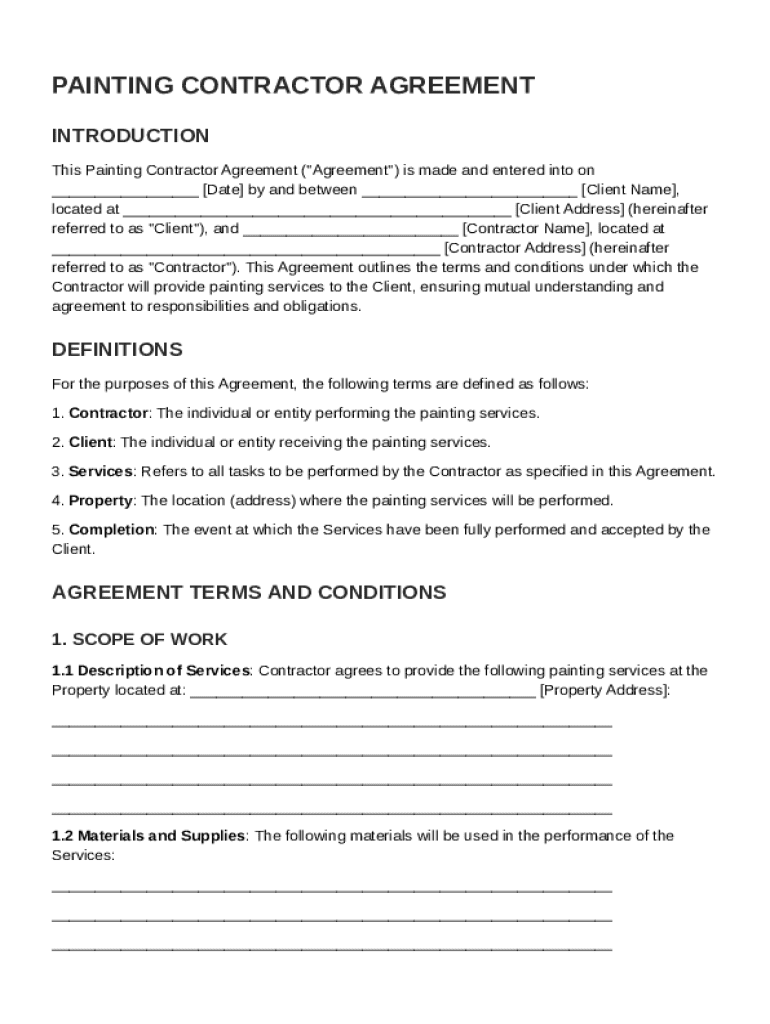







Definition and Importance of the Painting Contractor Agreement Template
The Painting Contractor Agreement Template is a legal document used to define the terms and conditions between a client and a contractor for painting services. This agreement is essential because it provides clarity and sets expectations, preventing misunderstandings throughout the project. It includes crucial components such as the scope of work, payment terms, and responsibilities, making it a vital tool for ensuring mutual understanding and compliance with legal requirements.
Key Features of the Agreement
- Scope of Work: Clearly outlines what the painting service will cover, including specific tasks and deliverables.
- Payment Terms: Details the financial aspects, including the total cost, payment schedule, and any deposit requirements.
- Responsibilities: Defines the roles and responsibilities of both the contractor and the client to avoid disputes.
- Change Orders: Establishes the procedure for handling any changes to the original agreement.
How to Use the Painting Contractor Agreement Template
Step-by-Step Instructions
- Review the Template: Start by thoroughly reading through the template to understand each section and its implications.
- Customize for Your Project: Modify the scope of work and payment terms to reflect the specific details of your painting project.
- Add Parties Information: Fill in the names and contact details of both the client and the contractor.
- Finalize Terms: Ensure that all parties agree on responsibilities, timelines, and any special conditions.
- Sign the Agreement: Both parties should sign the document to make it legally binding.
Best Practices
- Use clear and concise language to avoid ambiguity.
- Ensure that all modifications are documented within the agreement.
- Discuss any unclear terms before signing to align both parties' expectations.
Key Elements of the Painting Contractor Agreement Template
Core Sections Explained
- Definitions: Provides clarity on terminology used throughout the agreement.
- Warranties and Indemnifications: Protects both parties by outlining what each party can expect regarding the quality and reliability of work.
- Termination Conditions: Specifies the conditions under which the agreement can be ended by either party.
- Governing Law and Dispute Resolution: Identifies which legal jurisdiction will be used and details the methods for resolving misunderstandings.
Examples of Clauses
- Confidentiality: Ensures sensitive project details are not shared outside the agreement.
- Force Majeure: Addresses unforeseen events that could impact project completion.
Who Typically Uses the Painting Contractor Agreement Template


Primary Users
- Contractors: Use the template to formalize agreements with clients, ensuring clear communication of services and payment terms.
- Clients/Homeowners: Utilize the agreement to safeguard their interests and outline expectations for the contractor.
Business Types
- Residential and Commercial Painters: Provides a structured framework to handle different project sizes and scopes.
- Property Management Companies: Often require standardized agreements to manage multiple properties efficiently.
Legal Use and Compliance of the Painting Contractor Agreement Template
Ensuring Legality
- State-Specific Adjustments: Tailor the agreement to meet local legal requirements that may vary from state to state in the U.S.
- Consult with Legal Experts: Advisable to have a legal professional review the agreement to ensure compliance with all applicable laws.
Compliance Risks
- Failure to Specify Clear Terms: Could lead to legal disputes if expectations are not met.
- Ignoring State Regulations: Risks invalidating the agreement if local laws are not adhered to.
Important Terms Related to the Painting Contractor Agreement Template
Common Terminology
- Indemnification: A contractual obligation of one party to compensate for the loss incurred by the other party.
- Retainer: A deposit paid upfront to secure the contractor's services.
- Completion Date: The expected date when the painting job will be finished.
Terminology in Context
- Using these terms accurately within the agreement ensures all parties have a shared understanding of contractual obligations and rights.
Examples of Using the Painting Contractor Agreement Template
Practical Scenarios
- Residential Painting Job: Homeowners contract a painting professional to refresh their interior living space.
- Commercial Building Update: A business hires a contractor to repaint their office exterior, customizing the agreement to include specialized color requirements.
Benefits Observed
- Dispute Prevention: Well-defined terms help avoid disagreements about project outcomes or payment.
- Streamlined Communication: Clear roles and expectations reduce the frequency of misunderstandings.
State-Specific Rules for the Painting Contractor Agreement Template
Regional Variations
- License Requirements: Some states may require contractors to hold specific licenses or certifications.
- Building Codes: Local ordinances might dictate which materials or methods are permissible for painting projects.
Addressing State Differences
- Adapt the template to reflect these regional rules and include necessary stipulations specific to the jurisdiction of the painting project.
By understanding these facets of the Painting Contractor Agreement Template, parties can ensure a legally sound, clear, and mutually beneficial agreement that addresses the needs and expectations of both clients and contractors.




