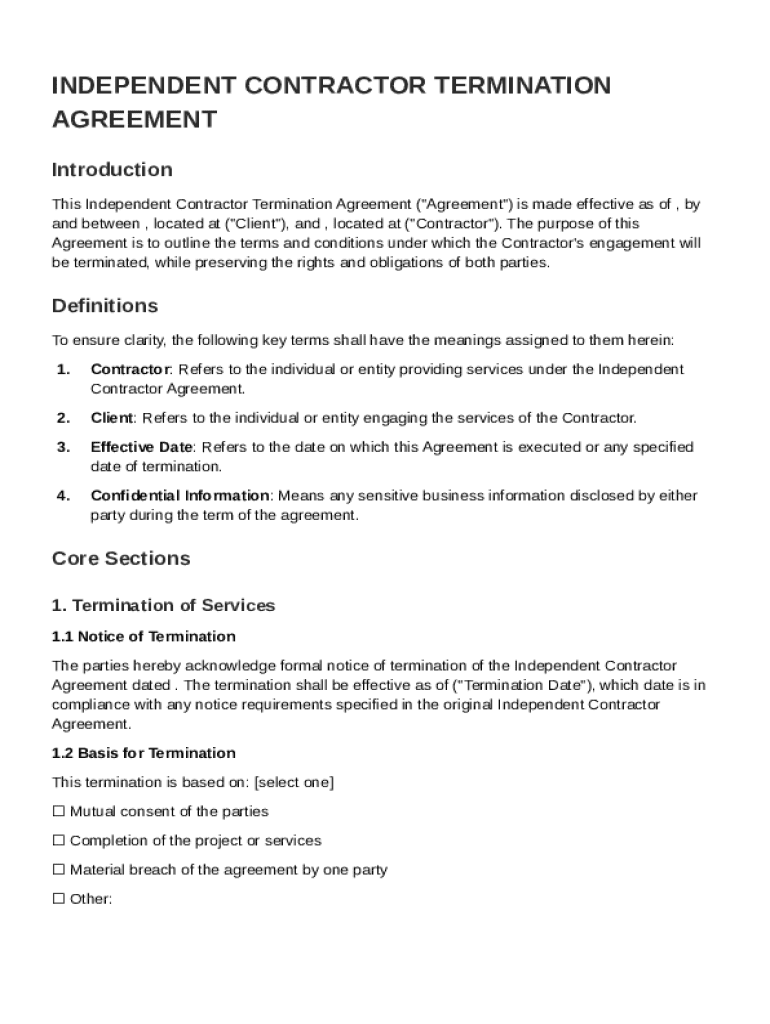







Definition & Meaning
An Independent Contractor Termination Agreement Template is a formal document that outlines the terms and conditions under which the contract between a client and an independent contractor can be terminated. This template is essential in ensuring a mutual understanding and agreement on the termination process, protecting the rights and obligations of both parties. It typically includes sections on definitions of key terms, procedures for termination, confidentiality obligations, and final compensation arrangements, among others. By clearly defining these terms, the agreement provides clarity and minimizes the potential for disputes during the termination process.
Key Elements of the Independent Contractor Termination Agreement Template
This template comprises various crucial sections that serve specific purposes:
- Termination Procedures: Details the process through which the contract can be formally ended, including notice periods and any required conditions.
- Final Compensation Details: Specifies the final payment arrangements, including the date of the last payment and any outstanding sums to be settled.
- Return of Property: Lists any client-owned property that the contractor must return upon termination.
- Confidentiality Obligations: Ensures that the contractor continues to protect any sensitive information received during the engagement, even after the contract ends.
- Mutual Release of Liability: Provides that both parties release each other from any claims or future obligations concerning the terminated contract.
- Miscellaneous Provisions: May include clauses on governing law, amendment procedures, and any unresolvable disputes.
Each section ensures both parties understand their responsibilities and rights upon ending the contract.
How to Use the Independent Contractor Termination Agreement Template
Utilizing this template effectively requires a few key steps:
- Review the Entire Document: Ensure all terms and sections apply to your specific situation and note any parts needing modification.
- Complete Required Fields: Input specific details, such as names, termination dates, and final compensation figures.
- Customize for Specific Needs: Adjust any clauses to reflect the nature of the independent contracting arrangement accurately.
- Consult with Legal Counsel: For added security, seek a legal expert's opinion to confirm that the agreement meets legal requirements and adequately protects both parties.
- Obtain Signatures: Ensure that both parties sign the document to make the termination legally binding.
This step-by-step approach ensures the document accurately reflects your needs and provides legal protection.
Important Terms Related to Independent Contractor Termination Agreement Template
Several critical terms are often included to provide clarity:
- Notice Period: The time frame within which one party must notify the other of intent to terminate the contract.
- Termination for Cause: Specific instances where a contract can be ended due to breaches or failures in fulfilling obligations.
- Severance Pay: Any additional compensation provided to the contractor upon termination, outside of the final compensation.
- Binding Arbitration: A method for resolving disputes without needing litigation, often included to streamline resolution processes.
Understanding these terms is essential for using the template effectively.
Steps to Complete the Independent Contractor Termination Agreement Template
To properly fill out and finalize the agreement, follow these steps:
- Gather Necessary Information: Collect all relevant data, such as contractor and client details, project specifics, and agreed-upon termination terms.
- Input Data into the Template: Carefully input the gathered information into the designated sections of the template.
- Review the Filled Template: Cross-check all details for accuracy and completeness, ensuring all fields are filled.
- Comfort Signatures of Both Parties: Make sure both client and contractor sign the agreement. Digital signatures can be utilized for efficiency.
- Distribute the Final Document: Share copies of the signed agreement with all involved parties, keeping a digital backup for records.
These steps aid in ensuring all aspects of the termination are documented and agreed upon.
Legal Use of the Independent Contractor Termination Agreement Template
The template is designed to meet the legal requirements for terminating an independent contractor relationship in a U.S. context. It complies with federals laws, such as the Electronic Signatures in Global and National Commerce (ESIGN) Act, which ensures electronic signatures are valid. Furthermore, local state laws should be taken into consideration to adapt the agreement to state-specific regulations. Legal review is sometimes necessary to ensure all statutory requirements are met, thereby providing peace of mind for both parties.
State-Specific Rules for the Independent Contractor Termination Agreement Template
While federal requirements are standard, states may have specific rules influencing the implementation of the termination agreement:
- California: Requires detailed final compensation terms due to strict contractor protection laws.
- New York: Demands comprehensive confidentiality clauses given the state's data protection emphasis.
- Texas: Allows more lenient notice periods, but requires consideration of local business practices.
Tailoring the agreement to these variances ensures it meets local legal standards.
Examples of Using the Independent Contractor Termination Agreement Template
Here are practical scenarios illustrating the use of the template:
- Scenario 1: A marketing agency contracts a graphic designer. Upon early project completion, both parties agree to terminate the contract amicably, using the template to outline final payments and return of materials.
- Scenario 2: A startup hires an IT consultant to develop a software platform. Due to issues with deliverables, the startup decides to terminate the contract for cause, detailing the notice and severance terms in the agreement.
- Scenario 3: A freelance writer concludes a content project ahead of schedule. Both the writer and the client agree to terminate the contract, utilizing the template to record final payment details and confidentiality commitments.
These cases demonstrate the template's versatility across different industries and situations.