Definition and Meaning
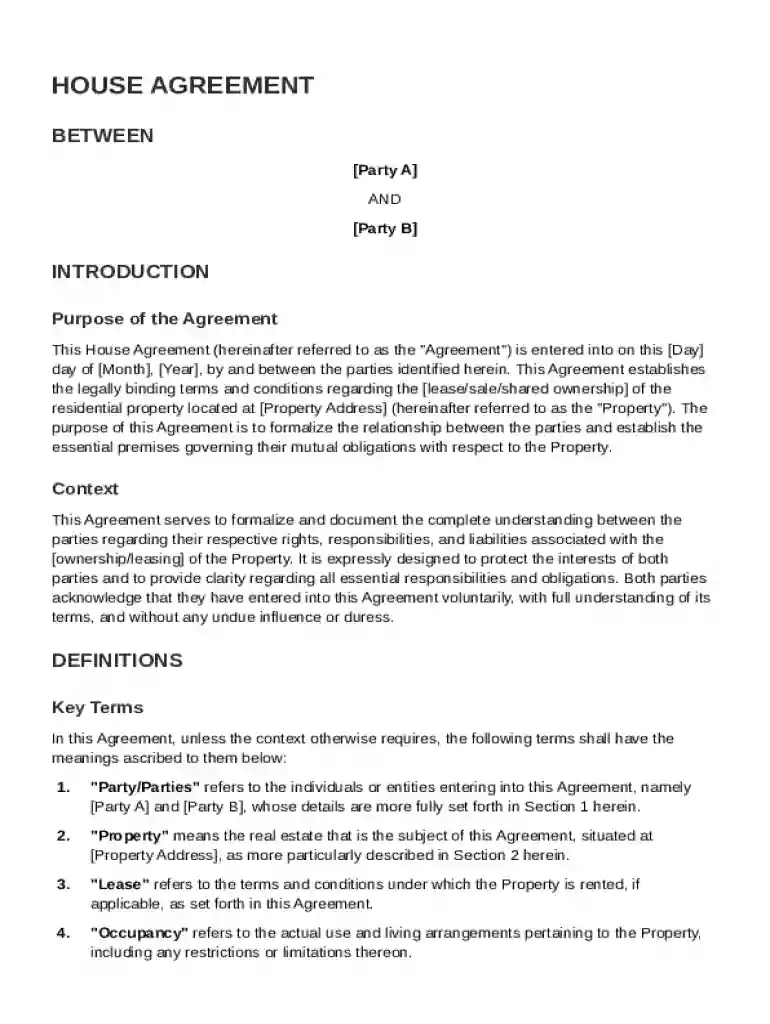
The House Agreement Template is a legally binding document used to formalize the relationship between parties involved in the lease, sale, or shared ownership of a residential property. This template helps define key terms, responsibilities, and expectations to protect the interests of all parties. By clearly outlining each party's obligations and rights, it minimizes potential disputes and misunderstandings. Common elements include details about the property, financial arrangements, and rules governing occupancy.
Key Elements of the House Agreement Template
When creating or reviewing a House Agreement Template, it is crucial to include specific elements to ensure clarity and legality. Key components typically encompass:
- Identification of Parties: Clearly list the names and contact information of all parties involved.
- Property Details: A thorough description of the property, including address and any furnishings or appliances included.
- Financial Terms: Specifics about rent, payment schedule, security deposits, and any additional fees, along with the consequences of late payments.
- Duration and Termination: Start and end dates, along with conditions for renewal or termination of the agreement.
- Roles and Responsibilities: Assign duties regarding maintenance, utilities, repairs, and any restrictions on property use.
- Legal Provisions: Governing law, dispute resolution methods, and clauses for modifications to the agreement.
How to Use the House Agreement Template
Using a House Agreement Template involves several steps to ensure it meets the needs of both parties:
- Review and Customize: Read through the template to understand its provisions. Customize it with specific details particular to the property and arrangement.
- Consult Legal Advice: Consider consulting a legal professional to confirm the agreement meets local laws and personal needs.
- Negotiate Terms: Both parties should discuss any concerns and agree on the terms, making adjustments where necessary.
- Finalize and Sign: Once agreed upon, both parties should sign the document, making it a legally binding contract.
Legal Use of the House Agreement Template
For the House Agreement Template to be legally effective, it must adhere to specific criteria and regulations:
- Compliance with State Laws: Ensure the agreement respects all applicable state and federal housing laws.
- Fair Housing Provisions: It must not include discriminatory language or clauses.
- Disclosure Requirements: Required disclosures, such as lead paint warnings for older properties, must be included.
- Signatures: All parties must sign the document, indicating their understanding and acceptance of the terms.
Steps to Complete the House Agreement Template
Fulfilling the House Agreement Template requires a detailed process to ensure accuracy and completeness:
- Gather Information: Collect all necessary information about the property and involved parties.
- Fill Out the Template: Enter the data into the relevant sections of the template, ensuring to correct and verify details.
- Review for Accuracy: Double-check the document for any errors or omissions.
- Obtain Signatures: Have all parties sign and date the document, affirming their agreement to the terms.
- Distribute Copies: Provide each party with a completed copy for their records.
Important Terms Related to the House Agreement Template
Understanding key terms within the House Agreement Template enhances comprehension and communication:
- Lessee/Lessee: The person or entity renting or leasing the property.
- Lessor/Landlord: The person or entity granting the lease of the property.
- Security Deposit: A sum of money held as security for performance of the lease terms.
- Rent: The payment made by the lessee to the lessor for use of the property.
- Occupancy Rules: Guidelines and restrictions related to the utilization of the property.
State-Specific Rules for the House Agreement Template
Different states have varying requirements and regulations governing House Agreements:
- Deposits and Fees: Limits on security deposit amounts and conditions under which they must be returned.
- Eviction Procedures: Legal requirements and notices required to evict a tenant.
- Maintenance and Repairs: Obligations for maintenance, detailing who handles specific repairs and the timeline for completion.
- Lease Notice Requirements: Notice periods for lease termination or non-renewal, varying by state.
Examples of Using the House Agreement Template
House Agreement Templates have various practical applications:
- Rental Scenarios: Used to establish rental terms between a landlord and tenant, ensuring mutual understanding and legal coverage.
- Shared Ownership: For co-owners to outline their responsibilities and rights in a shared property arrangement.
- Lease-to-Own Agreements: Serve as a framework for tenants planning to purchase the property eventually.