






Definition and Core Purpose
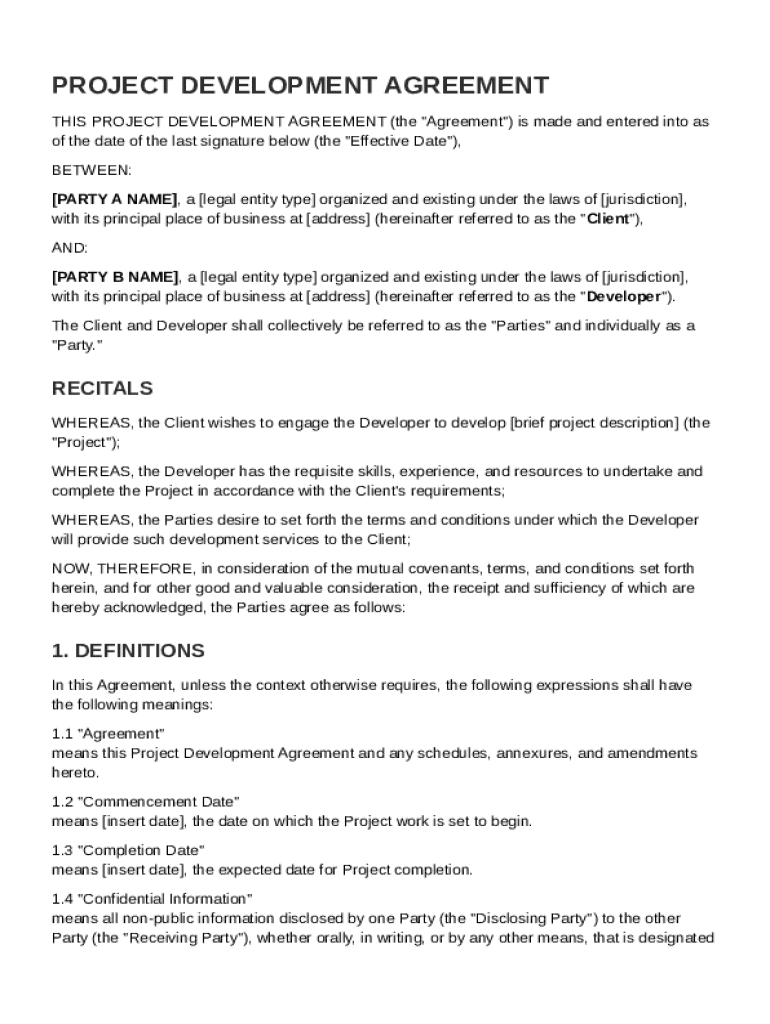
The Project Development Agreement Template is a comprehensive document used to outline the terms and conditions between a client and a developer for the development of a specific project. It serves as a legally binding contract that defines roles, responsibilities, and expectations, ensuring mutual understanding and cooperation. Key components include project descriptions, payment terms, deliverables, confidentiality obligations, intellectual property rights, and termination clauses. This structure helps mitigate risks and aligns the project goals, ensuring clear communication between the parties.
How to Use the Template Effectively
Preparation and Customization
To effectively use the Project Development Agreement Template, both parties should familiarize themselves with the document's structure, including key sections like deliverables, terms, and penalties for non-compliance. Begin by carefully reviewing each clause and ensuring it aligns with the project scope and specific needs. Customize the template by filling in relevant project details, such as timelines and milestones, to tailor the agreement to the particular interests and requirements of both parties.
Collaboration and Finalization
- Review collaboratively: Both parties should engage in a collaborative review to ensure clarity and consensus.
- Seek legal advice: Consider consulting a legal professional to address any ambiguities or legal concerns.
- Finalize and sign: Once agreed upon, finalize the document by signing, ensuring all parties have copies.
Key Elements of the Template
Project Scope and Description
The agreement should clearly delineate the project's scope, including the work to be performed, timelines, and specific deliverables. A well-defined scope helps manage expectations and minimizes the risk of scope creep.
Payment Terms
Detailed payment terms should include total project cost, payment schedule, and payment methods. Stipulating milestone-based payments helps ensure that the developer receives timely compensation aligned with project progress.
Confidentiality and Intellectual Property
- Confidentiality clauses: Protect sensitive information shared during the project.
- Intellectual property rights: Define ownership of project deliverables and any developed technology.
Steps to Complete the Agreement
- Gather Information: Collect necessary project details, including timelines, budgets, and specific client and developer obligations.
- Draft the Agreement: Using the template, fill in project-specific information while ensuring legal accuracy for all clauses.
- Review and Edit: Conduct a thorough review for consistency and clarity, ensuring it meets both parties' expectations.
- Negotiate Terms: Discuss any modifications or clarifications needed, based on input from both parties.
- Finalize and Sign: Once all parties agree, sign the document and distribute copies to all stakeholders.
Who Typically Uses the Template


Common Users
The template is commonly used by project managers, business owners, and legal teams within engineering, technology, construction, and creative industries. These professionals rely on the template to streamline project management and legally safeguard operations.

Case Studies
- Tech startups: Often use the template to formalize the development of new products or digital services.
- Construction companies: Utilize the agreement to outline the terms for large-scale construction projects.
Legal Use and Compliance
Legal Framework and Binding Nature
The template must comply with applicable laws to ensure its enforceability. Adherence to the ESIGN Act allows electronic signatures on agreements made through digital platforms like DocHub, ensuring they are legally binding.
Dispute Resolution
Include clear dispute resolution procedures in the agreement to outline how conflicts should be managed, such as through mediation or arbitration. This ensures that disputes are settled efficiently and equitably, minimizing disruption.
Examples and Scenarios
Real-World Examples
- Technology firms: Use the template to contract software developers for new application projects, detailing feature specifications and deadlines.
- Marketing agencies: Establish clear agreements with clients for campaign development, specifying deliverables, timelines, and cost.
Scenario Analysis
Imagine a scenario where a developer deviates from outlined project deliverables. The agreement’s terms on scope and permissible variations provide leverage to request alignment back to agreed goals or negotiate changes.
State-Specific Considerations
Jurisdictional Differences
Certain terms in the agreement may need customization based on the state laws governing contract enforcement. Considerations for state-specific requirements can include variations in licensing, confidentiality norms, or penalties for breach.
Important Considerations
- Local regulatory requirements: Certain states may have unique regulatory mandates that impact terms concerning data security or industry-specific compliance.
- Regional risk factors: Geographic risk factors may necessitate additional terms for force majeure or insurance coverage in the agreement.