






Definition and Meaning
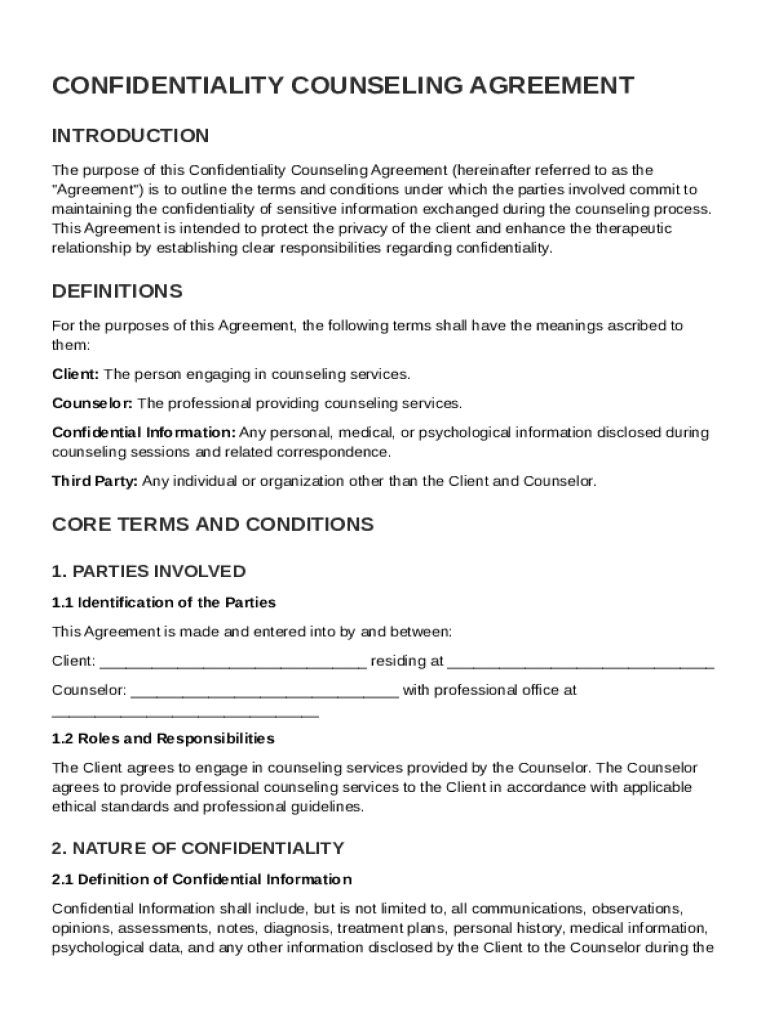
The Confidentiality Counseling Agreement Template is a structured document that establishes the protocols for maintaining confidentiality between a counselor and their client. This agreement outlines key terms and sets forth the roles and responsibilities of both parties. It clearly defines the concept of confidentiality within the context of counseling, ensuring both parties understand what information is protected and the boundaries of this protection. The document serves to create a trustworthy environment where clients can freely share sensitive information.
Key Components of Confidentiality
- Sensitive Information: Refers to personal details or disclosure during counseling.
- Confidentiality Exceptions: Situations where information may be disclosed legally, such as in cases of harm to self or others.
- Client Consent: Permissions for sharing information, usually through written consent.
Key Elements of the Confidentiality Counseling Agreement Template
The agreement encompasses several essential elements to ensure comprehensive coverage and mutual understanding.
Essential Clauses
- Roles and Responsibilities: Defines the counselor’s obligation to maintain confidentiality and the client's responsibility to respect any laid out procedures.
- Scope and Limits: Specifies the extent of confidentiality and any legal exceptions that may apply.
- Client Rights: Details on accessing counseling records and the procedure for disputing any entries.
Supporting Sections
- Amendment Procedures: Outlines how the agreement may be modified and under what circumstances.
- Termination Terms: Conditions under which the agreement can be ended, including mutual consent or breach of terms.
Legal Use of the Confidentiality Counseling Agreement Template
The use of this template is grounded in legal standards and ethical practices specific to counseling.
Compliance with Legal Standards
- Adherence to the ESIGN Act: If electronically signed, the signatures are legally binding.
- Governing Laws: Typical agreement will specify the jurisdiction that governs it, often aligning with the state where services are provided.
Ethical Considerations
- Professional Codes: Aligns with professional counseling codes of conduct, ensuring the template meets ethical obligations.
- Breach Protocols: Describes steps to be followed in cases of unauthorized information disclosure.
How to Use the Confidentiality Counseling Agreement Template
Effective use of the template involves several key steps to ensure proper implementation.
Step-by-Step Process
- Customization: Tailor the template to include relevant details specific to the counselor-client relationship.
- Review and Acknowledge: Both parties should review the document thoroughly to ensure understanding.
- Sign and Secure: Obtain signatures to formalize the agreement and store securely for future reference.
Practical Considerations
- Regular Updates: Revisit periodically to ensure alignment with any changes in laws or counseling practices.
- Soft Copy Management: Store digitally with encrypted protection for added data security.
Steps to Complete the Confidentiality Counseling Agreement Template
Completing the template requires a systematic approach.
Detailed Instructions
- Input Personal Information: Enter the full names and contact information of both counselor and client.
- Define Confidentiality Terms: Clearly articulate the terms and any exceptions to confidentiality.
- Outline Procedures for Amendments: Specify how changes to the agreement will be managed.
- Include Legal Jurisdiction: Identify which state's laws govern the agreement.
Important Terms Related to the Confidentiality Counseling Agreement Template
Understanding the terminology used in the agreement is crucial.
Key Legal and Counseling Terms
- Therapeutic Privilege: A term related to the counselor's discretion in withholding certain information for client benefit.
- Informed Consent: Client’s acknowledgment of understanding confidentiality limits and agreeing to terms.
- Case Records: Documentation of sessions, notes, and other relevant materials that are covered by confidentiality.
State-Specific Rules for the Confidentiality Counseling Agreement Template
Different states may have unique legal requirements affecting the use of confidentiality agreements.
Considerations by State
- Mandatory Reporting Laws: May vary state-to-state, affecting confidentiality breaches in specific scenarios.
- State Licensing Regulations: Could dictate additional confidentiality obligations for licensed counselors.
Examples of Using the Confidentiality Counseling Agreement Template
Real-world applications can clarify the usage of the template.
Case Studies
- Counseling Services: A counselor in California using the agreement to navigate state-specific reporting laws.
- Remote Counseling: Utilizing digital versions of the agreement to facilitate online sessions.
This structured approach to the Confidentiality Counseling Agreement Template offers a comprehensive understanding of its purpose, execution, and associated legalities, ensuring both counselors and clients are well-informed and protected.