
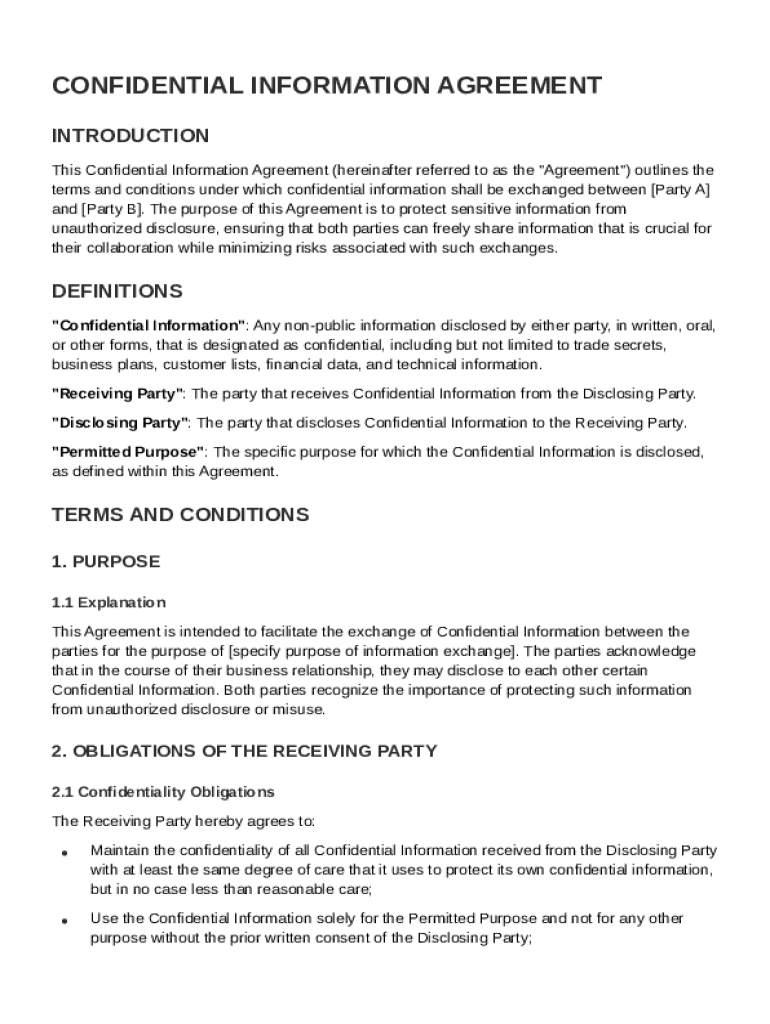







Understanding the Confidential Information Agreement Template
The Confidential Information Agreement Template is a legal document designed to facilitate the safe exchange of sensitive information between two parties, often referred to as [Party A] and [Party B]. This template explicitly defines 'Confidential Information,' outlining the responsibilities of the receiving party in terms of maintaining confidentiality, restricting access, and utilizing the information solely for the agreed-upon purposes. It is essential to note that this agreement provides protection for sensitive data from unauthorized disclosure, an integral component during collaboration or business negotiations.
Key Elements of the Confidential Information Agreement Template
The template is structured to include several critical components that ensure comprehensive data protection:
- Definition of Confidential Information: Clearly outlines what constitutes confidential information under the agreement.
- Obligations of the Receiving Party: Details the receiving party's responsibilities, including maintaining confidentiality, limiting access, and using the information solely for specified purposes.
- Duration of Confidentiality: Specifies the time period during which the receiving party must adhere to confidentiality obligations.
- Return or Destruction of Information: Outlines the procedures for returning or destroying confidential information upon the termination of the agreement or completion of its purpose.
- Legal Remedies for Breaches: Describes the potential legal actions and remedies available to the disclosing party in the event of a breach.
- Governing Law and Amendments: Specifies the governing jurisdiction and outlines the processes for amending the agreement.
How to Use the Confidential Information Agreement Template
Utilizing the Confidential Information Agreement Template involves several important steps to ensure its effectiveness:
- Identify the Parties: Clearly identify the parties involved, including their legal names and addresses.
- Define Confidential Information: Specify in detail what information is considered confidential.
- Outline Obligations: Detail the obligations of the receiving party concerning the protection and use of the information.
- Set Timeframes: Define the duration for which the confidentiality obligations apply.
- Include Legal Provisions: Incorporate necessary legal provisions, such as governing law and dispute resolution mechanisms.
- Review and Sign: Ensure both parties review and sign the agreement to acknowledge their understanding and acceptance of the terms.
Legal Use of the Confidential Information Agreement Template
The legal enforceability of the template depends on its proper execution and adherence to contractual laws. It is advisable to consult with a legal professional during the drafting process to ensure the agreement is comprehensive and enforceable under relevant laws. This is critical as the agreement forms the legal basis for protecting sensitive information and may be utilized in court to enforce confidentiality obligations or seek remedies for breaches.
Important Terms Related to Confidential Information Agreement Templates
- Non-Disclosure Agreement (NDA): A broader term often used interchangeably with Confidential Information Agreement, encompassing various forms of confidentiality agreements.
- Proprietary Information: Information owned by [Party A] that must be protected from unauthorized disclosure.
- Residuals Clause: A clause allowing [Party B] to retain general ideas and concepts that cannot be easily controlled or erased.
Who Typically Uses the Confidential Information Agreement Template
This template is commonly used in various professional scenarios, including:
- Business Partnerships: Companies entering into partnerships may require confidentiality agreements to protect proprietary information.
- Employment Agreements: Employers may use these agreements with employees to safeguard trade secrets and proprietary methods.
- Consulting Arrangements: Consultants often receive sensitive client information that needs protection through such agreements.
- Mergers and Acquisitions: During these processes, confidentiality agreements are crucial for safeguarding sensitive information exchanged between potential buyers and sellers.


Examples of Using the Confidential Information Agreement Template
Consider a scenario where a tech company ([Party A]) is collaborating with a design firm ([Party B]) to create new software. The Confidential Information Agreement ensures [Party B] cannot disclose or use [Party A]'s proprietary algorithms for any other project. Another example includes a biotechnology firm entering an alliance with a pharmaceutical company. The agreement protects sensitive research data shared during collaboration, ensuring the receiving party uses it only for outlined objectives.
State-Specific Rules for the Confidential Information Agreement Template
While the fundamental components of confidentiality agreements are generally consistent across the U.S., state laws can influence certain aspects. For instance:
- California: Has unique provisions under its business and professions code, limiting the enforceability of non-compete clauses that could be integrated into confidentiality agreements.
- New York: Enforces strict requirements for defining the scope of confidential information, ensuring that agreements are not overly broad.
Understanding these state-specific rules is critical for ensuring the legal validity of your confidentiality agreement.
Versions or Alternatives to the Confidential Information Agreement Template
There are various forms and versions of confidentiality agreements tailored to specific needs:
- Mutual Confidentiality Agreement: Both parties agree to protect each other's confidential information.
- One-Way Confidentiality Agreement: Only one party discloses confidential information, and the receiving party agrees to protect it.
- Multi-Party Confidentiality Agreement: Used when multiple entities are involved, ensuring mutual protection across all parties.
These variations enable organizations to select the most appropriate version to protect their interests effectively.




