Definition & Meaning
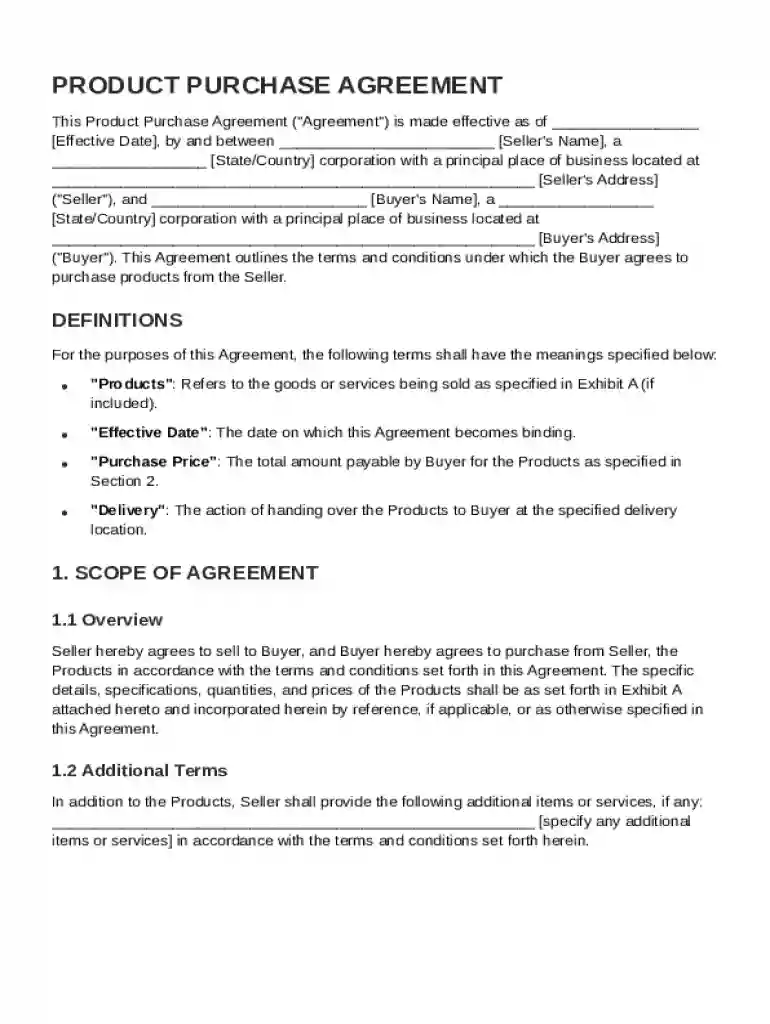
The Product Purchase Agreement Template serves as a comprehensive legal contract that outlines the essential terms and conditions involved in the sale of products between a Seller and a Buyer. This document is critical in defining the relationship between the parties, covering aspects such as the purchase price, payment terms, and delivery conditions. The agreement addresses both the Seller's obligation to provide products and the Buyer's responsibility in making timely payments. It ensures a mutual understanding of the transaction details, helping to prevent disputes by clearly stating each party's rights and obligations.
In a general sense, this template is a foundational document that facilitates a smooth transaction process by defining the procedures for acceptance or return of goods, warranty provisions, and confidentiality obligations. The agreement ensures compliance with governing laws, typically aligning with U.S. standards, and includes miscellaneous provisions that apply to specific scenarios or unique transaction requirements.
Key Elements of the Product Purchase Agreement Template
Understanding the critical components of the Product Purchase Agreement Template is vital for both Buyers and Sellers. These elements ensure all necessary terms are covered to form a legally binding contract.
- Definitions: Clearly defined terms that are used throughout the agreement for clarity and consistency.
- Purchase Price: Details on how the price of the products is determined, including any applicable discounts or charges.
- Payment Terms: Specifies payment schedules, accepted payment methods, and consequences for late payments.
- Delivery Details: Outlines delivery methods, timeframes, responsibilities for shipping costs, and risk of loss.
- Warranties: Provides guarantees from the Seller regarding the quality and functionality of the products.
- Acceptance Procedures: Procedures for inspection and acceptance of the delivered products.
- Confidentiality Obligations: Ensures both parties maintain confidentiality regarding proprietary information.
- Governing Law: Specifies the jurisdiction's laws that govern the agreement, ensuring legal compliance.
- Miscellaneous Provisions: Includes clauses for changes to the agreement, dispute resolution, and other specific terms.
How to Use the Product Purchase Agreement Template
Using the Product Purchase Agreement Template effectively requires understanding its structure and properly filling out each section. Here's a step-by-step approach:
- Download and Review: Obtain the template from a reliable source such as DocHub and thoroughly review its contents to ensure it fits your transaction's specific needs.
- Fill in Party Information: Enter the full legal names and contact details of both the Buyer and Seller.
- Specify Product Details: Clearly describe the products, including quantity, specifications, and any special features or conditions.
- Negotiate Terms: Discuss and agree on crucial terms such as price, delivery method, and payment schedule with the other party.
- Customize Clauses: Adjust clauses related to confidentiality, warranties, and governing law to reflect the agreement between the parties.
- Legal Review: Consider having the agreement reviewed by a legal professional to ensure it complies with relevant laws and adequately protects your interests.
- Finalize and Sign: Once both parties are satisfied with the terms, sign the document electronically through a platform like DocHub, ensuring a secure and legally binding agreement.
Legal Use of the Product Purchase Agreement Template
The Product Purchase Agreement Template must be used in compliance with applicable laws to be legally enforceable. The key legal considerations include:
- Compliance with ESIGN Act: Ensure that electronic signatures used on the agreement are recognized under the Electronic Signatures in Global and National Commerce Act (ESIGN).
- Adherence to State Laws: The agreement should specify the governing law, typically the state law where the Seller is located or where the transaction takes place. This is crucial for dispute resolution.
- Proper Representation: Both parties should have the capacity to enter into a binding contract and must represent themselves truthfully.
- Mutual Consent: Essential terms must be agreed upon by both parties without duress or misrepresentation.
Important Terms Related to Product Purchase Agreement Template
Understanding specific terminologies is essential for interpreting the Product Purchase Agreement Template accurately:
- Force Majeure: This clause exempts parties from liability if unforeseen events prevent fulfilling the contract.
- Indemnity: An agreement between parties to compensate for any losses or damages incurred during the transaction.
- Term and Termination: Specifies the duration of the contract and conditions under which it can be terminated.
- Non-Disclosure Agreement (NDA): Ensures proprietary information shared between parties remains confidential.
- Severability: Ensures that if one part of the contract is found unenforceable, the rest remains valid.
Steps to Complete the Product Purchase Agreement Template
Completing the Product Purchase Agreement Template involves several strategic steps to ensure accuracy and enforceability:
- Gather Information: Collect all necessary information regarding the transaction, including product details and parties involved.
- Draft Initial Agreement: Use the template to draft the initial agreement with all essential elements filled out.
- Review and Edit: Make necessary edits to standard clauses to tailor the agreement to your needs.
- Discuss Changes: Communicate with the other party to discuss any changes or clarifications needed.
- Finalize Document: Once both parties agree on the terms, finalize the document with any last-minute adjustments.
- Obtain Signatures: Use a secure platform to obtain legally binding electronic signatures from both parties.
- Store Securely: Ensure the final signed agreement is stored securely, both digitally and physically, for future reference.
State-Specific Rules for the Product Purchase Agreement Template
While the Product Purchase Agreement Template provides a general framework, specific state rules may alter its application:
- Contractual Limits: Some states have specific limitations on certain contract terms, such as maximum liability clauses or penalty interests on late payments.
- Consumer Protection Laws: States may have additional consumer protection laws that affect sales transactions. For example, California's Consumer Legal Remedies Act imposes specific disclosure requirements.
- Sales Tax Regulations: Understanding state sales tax regulations is crucial, as they can differ significantly and impact the overall cost.
- Statute of Limitations: The time frame within which parties can bring legal action may vary by state, affecting enforcement.
Examples of Using the Product Purchase Agreement Template
Practical examples demonstrate how the Product Purchase Agreement Template can be applied in real-world scenarios:
- Retail Sale: A Buyer purchasing inventory from a Supplier would use the template to ensure both parties agree on the supply terms and warranty expectations.
- Custom Manufacturing: A Manufacturer selling custom products to a Client would clarify specific product specifications, payment installments, and delivery schedules.
- B2B Transactions: Companies engaging in high-value transactions may require additional confidentiality agreements and detailed acceptance procedures within the template.
Utilizing these templates in various contexts helps streamline transactions, providing a solid legal foundation and ensuring smooth operations across different business types.