




01. Edit your form online
Type text, add images, blackout confidential details, add comments, highlights and more.

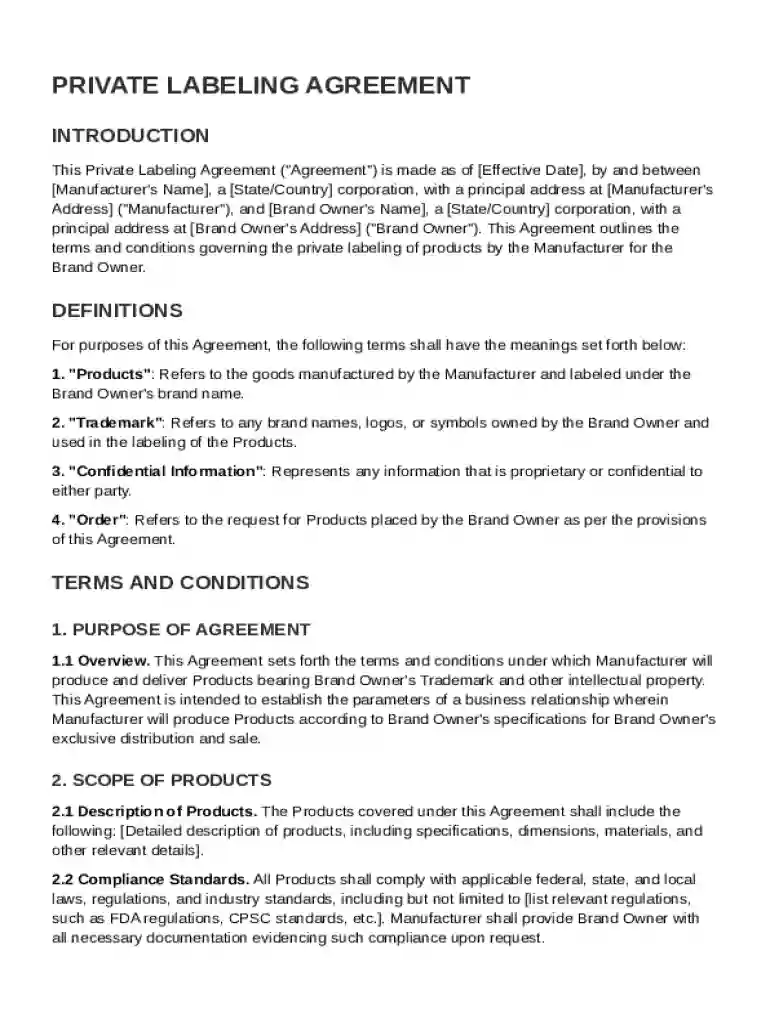
Type text, add images, blackout confidential details, add comments, highlights and more.

Draw your signature, type it, upload its image, or use your mobile device as a signature pad.

Send it via email, link, or fax. You can also download it, export it or print it out.
A Private Labeling Agreement Template is a legal document that defines the terms and conditions between a manufacturer and a brand owner for the production and labeling of products under the brand owner's trademark. This agreement outlines the roles and responsibilities of each party, ensuring that all products created meet the specified standards and quality expected by the brand owner. It includes provisions on confidentiality, liability, and dispute resolution, making sure both parties are protected throughout the business relationship.
The key elements of a Private Labeling Agreement Template typically include product specifications, compliance with relevant regulations, payment terms, and intellectual property rights. Within the template, each party's marketing responsibilities are clearly outlined, ensuring there is no ambiguity in who is responsible for promoting and selling the final product. The agreement also includes clauses on termination, force majeure events, and possible amendments to keep the business relationship adaptable to changing circumstances.
Completing a Private Labeling Agreement Template involves several steps to ensure all necessary details are included and understood by both parties. Here's a breakdown of the steps typically involved:
Draft Initial Agreement:
Specify Terms and Conditions:
Include Legal Provisions:
Review Regulatory Compliance:
Mutual Agreement Signatures:
Understanding the terminology used in the Private Labeling Agreement Template is crucial for clarity and precision. Here are some important terms explained:
Private Labeling Agreements are used by various industries to streamline production and branding processes. Here are a few practical scenarios:
The Private Labeling Agreement Template is widely used by businesses across different sectors who wish to leverage manufacturing expertise to enhance their brand offerings. Common users include:


The Private Labeling Agreement Template is legally binding, ensuring that both parties adhere to the outlined obligations and responsibilities. It plays a crucial role in mitigating risks and clarifying expectations. To ensure its enforceability, parties should:
While the core content of Private Labeling Agreements remains consistent, compliance with state-specific regulations is crucial. Variations might include:
Parties should consult with legal advisors familiar with local laws to adapt their agreement appropriately to the applicable jurisdiction.
At DocHub, your data security is our priority. We follow HIPAA, SOC2, GDPR, and other standards, so you can work on your documents with confidence.




COMPANY shall comply with all laws and regulations relating to its manufacture, processing, producing, using, importing Selling, labeling or distribution ofRead more
Jul 3, 2026 Use this beginner guide to review a clothing manufacturing agreement, from specs and lead times to payment, QC, bDocHub terms, and IP.


