






Definition & Meaning
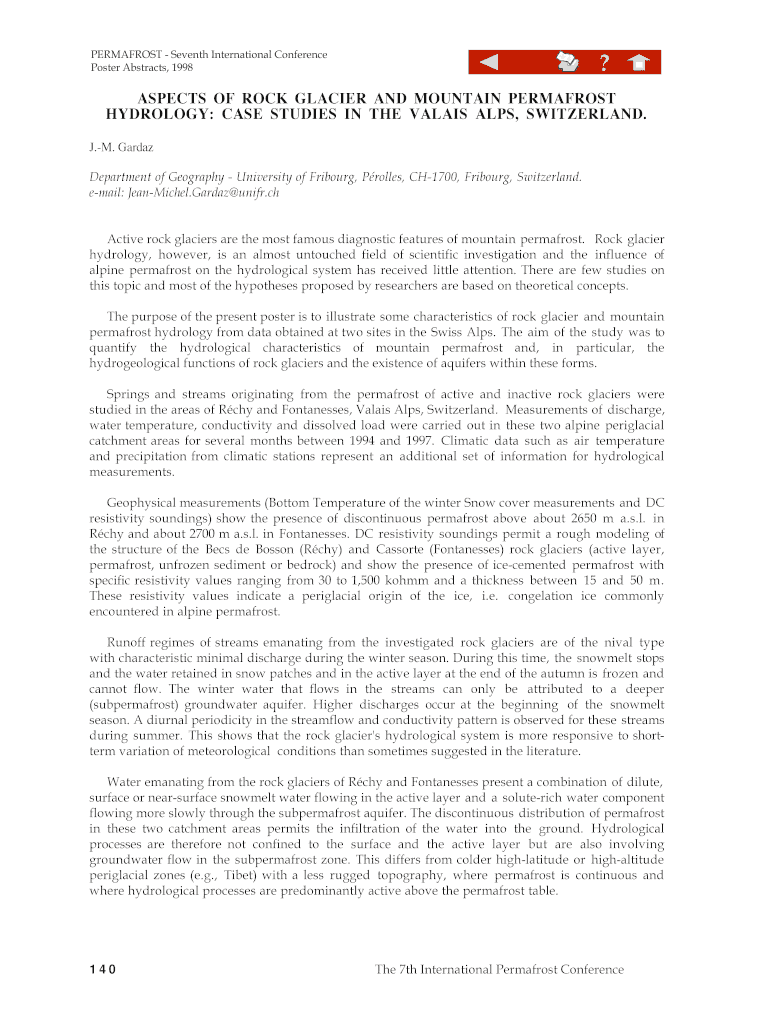
The "Long Abstractsfinal" form is designed to provide detailed summaries and overviews of extensive research studies or projects, particularly within academic or professional contexts. These abstracts serve as concise summaries that highlight key findings, methods, and conclusions, making it easier for readers to grasp the essence of a report without diving into the entire document. They are especially useful in conferences, journal submissions, or when presenting research findings to a broader audience.
Key Elements of the Long Abstractsfinal
The Long Abstractsfinal encapsulates several critical elements that ensure a comprehensive overview of any given study or project. These elements include:
- Objective: Clearly states the primary goal or hypothesis of the study.
- Methodology: Details the techniques and procedures used in the research, including any specific tools or approaches.
- Results: Summarizes the main findings, emphasizing the most significant data and any patterns observed.
- Conclusion: Provides a concise discussion on the implications of the results, how they contribute to the field, and potential future research directions.
- Keywords: Lists essential terms for indexing and searchability, aiding in the form's accessibility to relevant researchers and professionals.
How to Use the Long Abstractsfinal
Using the Long Abstractsfinal involves multiple steps to ensure it accurately represents the content it summarizes. This process includes:
- Review the Full Study: Thoroughly understand the study to accurately extract key points.
- Draft each Section: Write initial drafts for each part—objective, methods, results, and conclusion.
- Condense Information: Aim for brevity while maintaining essential details, ensuring each section is concise and clear.
- Incorporate Keywords: Select impactful and specific terms to enhance the abstract's discoverability.
- Edit for Clarity: Refine the text to ensure readability and coherence, removing jargon or redundant information.
Who Typically Uses the Long Abstractsfinal
The Long Abstractsfinal is predominantly used by:
- Researchers: To summarize their findings for publication.
- Academics: For presenting research at conferences or seminars.
- Students: Often in thesis or dissertation submissions to encapsulate their work.
- Professionals: In fields like pharmaceuticals, engineering, and social sciences, where detailed documentation of project outcomes is required.


Steps to Complete the Long Abstractsfinal
Completing the Long Abstractsfinal involves structured steps to produce an effective abstract:
- Identify Key Information: Extract the main points from the research or report.
- Organize the Structure: Follow a logical flow starting from objectives to conclusions.
- Draft Content: Write initial content for each section, prioritizing clarity and impact.
- Refine Language: Simplify complex terms without losing technical accuracy.
- Include Keywords: Select and integrate relevant keywords for better indexing.
State-Specific Rules for the Long Abstractsfinal
While the form itself may not have diverse state-specific rules, its application could vary based on regional academic or professional guidelines. Variations might include:
- Bibliometric Standards: Adapting to local academic citation styles, such as APA, MLA, or Chicago.
- Submission Requirements: Different states may have unique requirements for grants or funded projects.
- Regulatory Compliance: Ensuring the study adheres to regional ethical and legal standards.
Digital vs. Paper Version
In today's digital-first world, the Long Abstractsfinal is predominantly managed and distributed digitally. However, differences between digital and paper versions may include:
- Accessibility: Digital versions are easier to share, search, and archive.
- Editing: Digital abstracts allow for more straightforward revisions and updates.
- Distribution: Paper abstracts, while less common, may still be used in formal settings like certain types of academic conferences.
Examples of Using the Long Abstractsfinal
Several real-world settings illustrate the use of Long Abstractsfinal:
- Academic Journals: Used as preliminary sections to engage readers and pique interest.
- Pharmaceutical Studies: Summarizing trial results for regulatory submissions.
- Engineering Projects: Outlining project objectives and outcomes for stakeholder presentations.
- Social Science Research: Providing succinct overviews for policy makers and non-specialists to understand research implications.
This structured content provides an exhaustive and in-depth overview of the form "Long Abstractsfinal," ensuring maximum relevance and utility for the target audience.