






Definition & Meaning
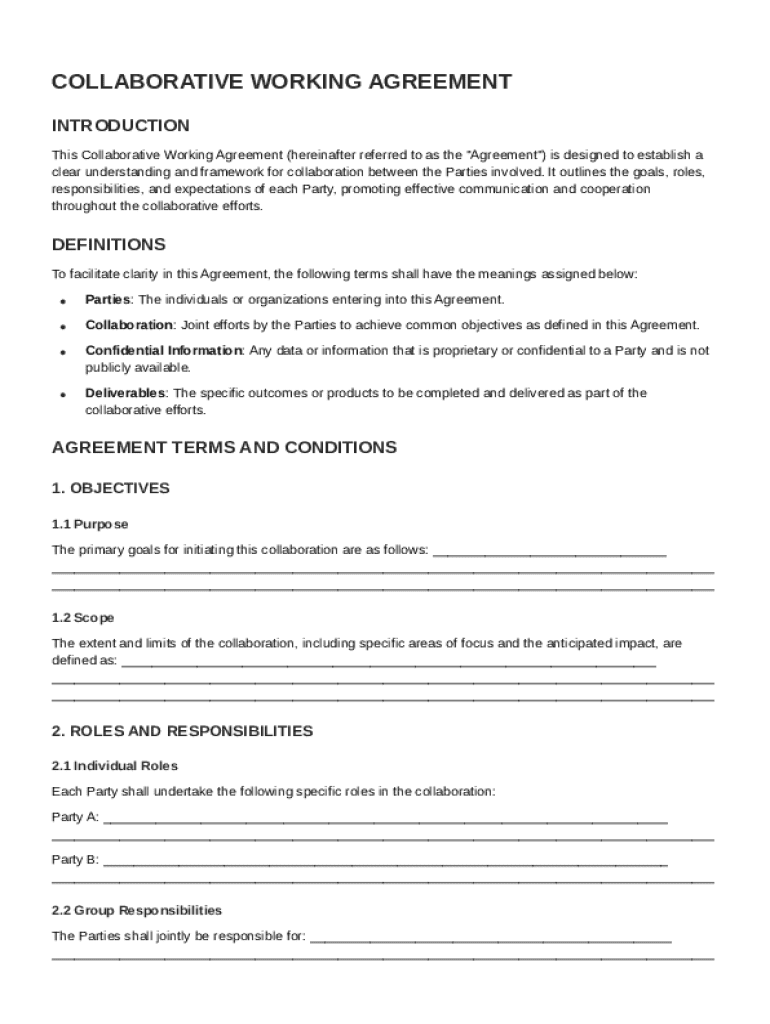
A Collaborative Working Agreement Template is a foundational document utilized in professional environments to set clear expectations and guidelines for cooperative efforts between two or more parties. This structured framework outlines essential elements such as project goals, roles, communication protocols, responsibilities, and procedures for dispute resolution. A key purpose of this agreement is to promote seamless collaboration by detailing how intellectual property rights will be managed and protected, especially newly developed assets during the cooperation. This template serves as a vital tool in maintaining transparency, safeguarding confidential information, and formalizing the intent and scope of collaborative undertakings.
Key Elements of the Collaborative Working Agreement Template
The core components of a Collaborative Working Agreement Template serve to structure and govern collaborative activities. Key elements include:
- Objectives and Goals: Clearly defined mutual goals that guide the collaborative effort.
- Roles and Responsibilities: Detailed descriptions of each party's expected contributions and duties.
- Communication Protocols: Established methods and frequency for updates and discussions to ensure all parties remain informed.
- Confidentiality Clauses: Provisions to protect sensitive information shared during the collaboration.
- Intellectual Property Rights: Clauses detailing ownership and usage rights of any newly developed materials or ideas.
- Dispute Resolution Processes: Agreed-upon methods for resolving conflicts, potentially involving third-party mediation if necessary.
- Terms for Amendment and Termination: Guidelines for modifying the agreement and procedures for ending the collaboration if required.
Steps to Complete the Collaborative Working Agreement Template
Filling out a Collaborative Working Agreement Template involves several essential steps:
- Identify Parties Involved: Clearly state the names and roles of each participating individual or organization.
- Define Purpose and Scope: Specify the collaborative project's goals, deliverables, and expected outcomes.
- Outline Responsibilities: Detail individual duties, deadlines, and accountability measures for each participant.
- Establish Communication Channels: Agree on how and when participants will communicate, including platforms and meeting schedules.
- Set Confidentiality and IP Terms: Clearly state how confidential information will be protected and outline agreements regarding intellectual property and ownership.
- Specify Dispute Resolution Mechanisms: Document the agreed-upon methods for resolving any potential disagreements.
- Revisions and Signatures: Allow for review, necessary changes, and final sign-off by all parties to formalize the agreement.
How to Use the Collaborative Working Agreement Template
Utilizing the Collaborative Working Agreement Template involves several key practices to ensure its effectiveness:
- Customizing the Template: Tailor each section to fit the specific collaboration, ensuring clarity and relevance in every clause.
- Engaging All Parties: Encourage input from all involved parties during the drafting process to foster collective ownership and commitment.
- Regular Reviews: Schedule periodic reviews of the agreement to accommodate any changes in project scope or objectives.
- Documenting Changes: Record any modifications to the agreement in writing, with consent from all parties, to maintain clarity and accountability.
Who Typically Uses the Collaborative Working Agreement Template
The Collaborative Working Agreement Template is widely used across various sectors and types of arrangements, including:
- Business Partnerships: Companies entering into joint ventures or strategic alliances.
- Research Consortia: Academic institutions and research organizations collaborating on projects.
- Creative Collaborations: Artists, designers, and content creators working together on creative ventures.
- Non-Profit Organizations: NGOs partnering on initiatives to amplify impact.
- Cross-Functional Teams: Internal company teams working together across departments to achieve organizational goals.


Important Terms Related to Collaborative Working Agreement Template
Understanding relevant terminology in a Collaborative Working Agreement Template is vital:
- Statutory Rights: Legal rights granted by law that may offer additional protections.
- Force Majeure: A standard clause included to protect parties from uncontrollable events affecting the agreement.
- Liability: An outline of parties' legal responsibilities in case of failure to meet the agreement terms.
- Termination Clause: Provisions outlining circumstances under which the agreement can be dissolved.
Examples of Using the Collaborative Working Agreement Template
Real-world applications of the Collaborative Working Agreement Template demonstrate its versatility:
- Tech Startups: Partnering to develop innovative technology solutions, with clear roles and revenue sharing.
- International Corporations: Joint ventures for expanding into new markets, detailing regulatory compliance and cultural considerations.
- Universities: Shared research projects focusing on data sharing protocols and publication rights.
- Museums: Collaborative exhibits where institutions share pieces and contribute to curatorial planning.
Legal Use of the Collaborative Working Agreement Template
A Collaborative Working Agreement is a legally binding document when all parties sign it, subject to local jurisdiction laws. It's essential to:
- Review Legal Regulations: Ensure that the agreement aligns with local and federal laws.
- Legal Consultation: Seek legal advice to verify the enforceability of terms, especially concerning intellectual property and confidentiality.
Understanding your legal landscape ensures the document not only protects the interests of each party but also adheres to relevant legislation, making it a key resource in formalizing cooperative endeavors.