






Definition & Meaning
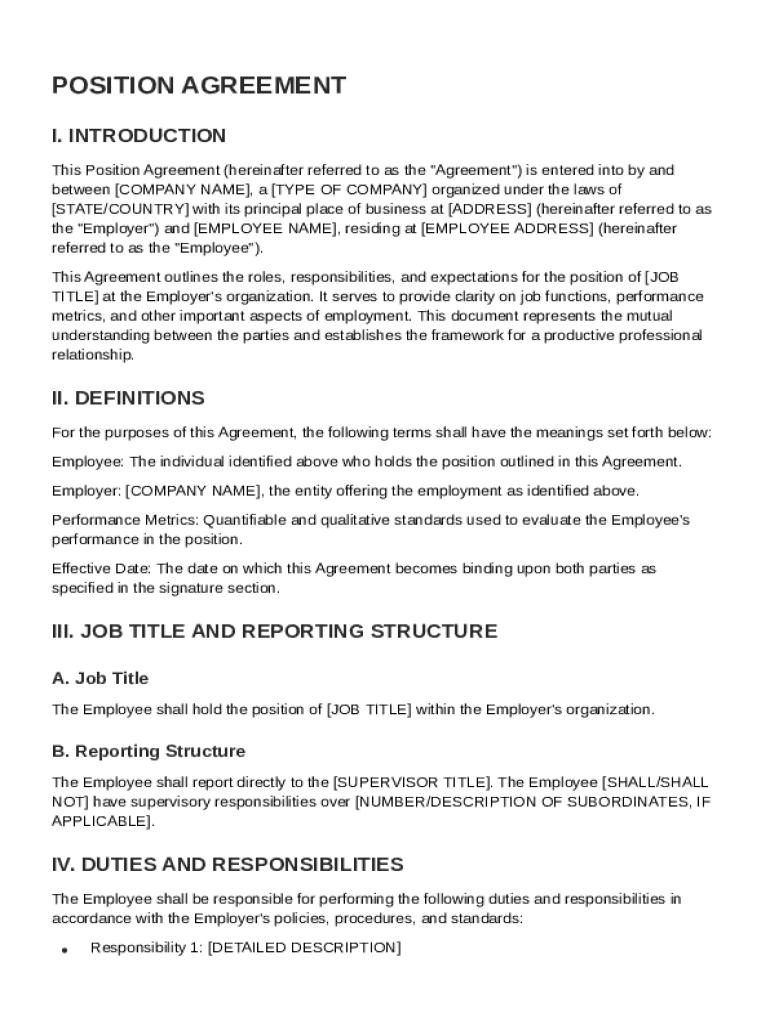
A Position Agreement Template is a structured document that defines the terms under which an employee is hired by an employer. It is a formal agreement that clarifies job expectations, responsibilities, performance criteria, compensation, benefits, and other crucial aspects of employment. Its purpose is to establish a clear understanding between the employee and employer, helping to prevent misunderstandings and set the groundwork for a constructive working relationship. By outlining specific roles and responsibilities, it helps to align the efforts of the employee with the strategic goals of the organization.
Key Elements of the Position Agreement Template
The Position Agreement Template typically includes several critical components that ensure a comprehensive understanding between the involved parties:
- Job Title and Description: Clearly defines the role's name and provides a detailed job description, highlighting key duties and responsibilities.
- Compensation and Benefits: Specifies salary, bonuses, and any benefits such as health insurance, retirement plans, and paid leave.
- Performance Expectations: Sets measurable goals and objectives to gauge the employee's success in the role.
- Work Hours and Location: Details the expected working hours, workplace location, and any flexibility regarding remote work.
- Confidentiality Obligations: Outlines any privacy policies or confidentiality agreements that the employee must adhere to.
- Termination Terms: Specifies the conditions under which the employment agreement may be terminated by either party.
Steps to Complete the Position Agreement Template
Filling out a Position Agreement Template involves several steps to ensure all necessary details are captured accurately:
- Review the Standard Template: Begin by familiarizing yourself with the template’s structure and pre-filled sections.
- Customize the Job Description: Tailor the job title and description to precisely fit the position in question.
- Define Compensation and Benefits: Accurately list salary, benefits, and other compensation-related details.
- Outline Performance Metrics: Establish clear, achievable performance goals and review criteria.
- Specify Work Conditions: Include expected working hours, location, and any remote work policies.
- Insert Confidentiality Clauses: Add relevant clauses that address data protection and confidentiality requirements.
- Finalize and Review: Complete a thorough review of the entire document for accuracy and completeness before signatures are added.
Who Typically Uses the Position Agreement Template
Various parties may utilize a Position Agreement Template, each with a specific interest in ensuring it is adequately executed:
- Human Resource Departments: HR professionals use the template to streamline the onboarding process and maintain consistency in employee agreements.
- Hiring Managers: They use it to clearly communicate job expectations and performance goals.
- Legal Teams: Legal advisors ensure that terms comply with employment laws and regulations.
- Employees: New hires receive a copy to understand their roles and the terms of employment fully.


Legal Use of the Position Agreement Template
The legality of the Position Agreement Template is crucial to enforceability and compliance with employment laws:
- ESIGN Act Compliance: Ensures that digital signatures affixed to the agreement are legally recognized.
- State and Federal Regulations: The template must adhere to jurisdiction-specific laws, such as minimum wage requirements and nondiscrimination statutes.
- Contractual Law: As a formal agreement, it must be drafted in accordance with general principles of contract law to be upheld in a legal dispute.
State-Specific Rules for the Position Agreement Template
Employment laws can vary significantly between states, impacting the content and use of position agreements:
- At-Will Employment: Some states recognize at-will employment, where either party can terminate the agreement without cause.
- Benefit Requirements: States may mandate different benefits, such as health insurance and leave policies.
- Non-Compete and Non-Disclosure Clauses: Enforceability of these clauses can differ, requiring careful consideration based on state laws.
Software Compatibility
With the shift towards digital solutions, the Position Agreement Template can often be integrated with various software tools to enhance its functionality:
- DocHub: Users can edit, sign, and store the agreement seamlessly within the DocHub platform.
- Google Workspace: Integration with Google Drive allows for easy access and sharing among team members.
- HR Software: Many HR platforms easily incorporate these templates, enabling streamlined onboarding processes and secure document storage.
- Other Formats: Compatibility with DOC, PDF, and TXT ensures versatility across different software applications.
Examples of Using the Position Agreement Template
Practical examples highlight how different organizations can apply the Position Agreement Template in various scenarios:
- Startups: Customizing agreements to reflect the dynamic roles and rapid growth typical in startup environments.
- Large Corporations: Ensuring consistency and compliance across numerous departments and jurisdictions.
- Non-Profit Organizations: Tailoring agreements to align with mission-driven objectives and volunteer roles.
- Healthcare Providers: Addressing unique confidentiality needs and compliance with healthcare regulations such as HIPAA.
By thoroughly understanding and implementing these guidelines, organizations and employees can leverage Position Agreement Templates to establish precise and legally-sound employment relationships.