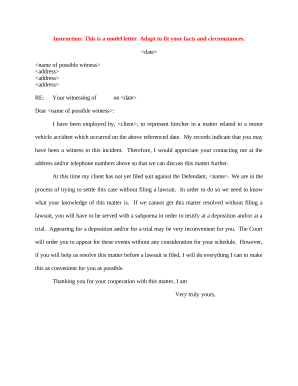
01. Edit your form online
Type text, add images, blackout confidential details, add comments, highlights and more.

Type text, add images, blackout confidential details, add comments, highlights and more.

Draw your signature, type it, upload its image, or use your mobile device as a signature pad.

Send it via email, link, or fax. You can also download it, export it or print it out.
A Small Estate Affidavit is a legal document used in Wise County, Texas, to facilitate the administration of a deceased person's estate when they pass away without a will, and the total estate value does not exceed $50,000. This affidavit serves to simplify the probate process for the decedent's heirs by detailing the deceased's assets, liabilities, family information, and allowing the heirs to collect and distribute the estate with minimal court intervention.
To effectively use the Small Estate Affidavit in Wise County, Texas, follow these steps:
Ensure Eligibility: Verify that the total estate value does not exceed $50,000, excluding homestead and exempt property. Also, confirm that no formal probate proceedings have been initiated.
Complete the Form: Fill in all the necessary information, including the decedent’s details, asset inventory, liabilities, and family information.
Signatures: Obtain signatures from all distributees and two disinterested witnesses to affirm the accuracy of the information provided.
Submit the Affidavit: File the completed affidavit with the probate court of Wise County, Texas.
Gather Necessary Information: Collect details about the decedent, including their date of death, residency, family heirship, and a detailed inventory of their assets and liabilities.
Draft Affidavit: Using the information gathered, complete the affidavit form, ensuring all sections are filled out accurately.
Sign and Notarize: The affidavit must be signed by all involved parties and notarized to validate its legality.
File with the Court: Submit the notarized affidavit to the county court for approval, paving the way to distribute the assets as specified.
The Small Estate Affidavit in Texas is legally recognized under the Estates Code, allowing heirs to claim the decedent’s estate without going through a lengthy probate process. It is primarily used when the deceased has no will and the estate value falls under the statutory limit, ensuring a quicker, more cost-effective legal resolution for heirs.
To qualify for using the Small Estate Affidavit in Wise County, Texas:


To obtain the Small Estate Affidavit for Wise County, Texas, you can:
We've got more versions of the Small Estate Affidavit - Wise County - co wise tx form. Select the right Small Estate Affidavit - Wise County - co wise tx version from the list and start editing it straight away!
At DocHub, your data security is our priority. We follow HIPAA, SOC2, GDPR, and other standards, so you can work on your documents with confidence.