
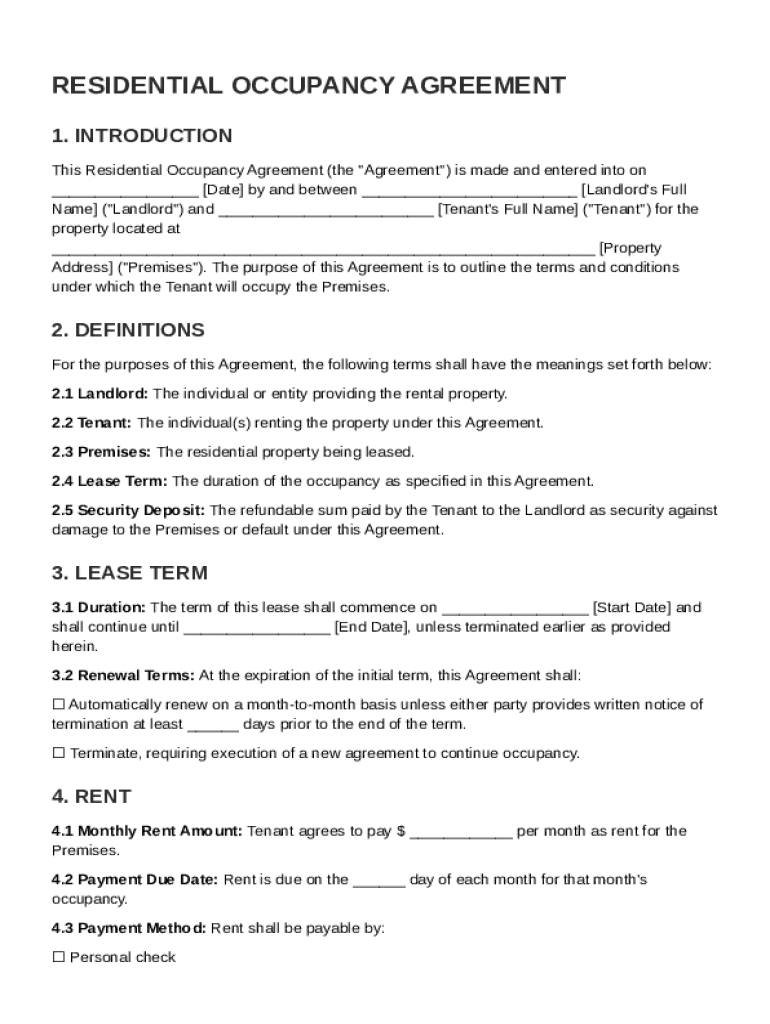







Definition and Meaning of the Residential Occupancy Agreement Template
The Residential Occupancy Agreement Template is a structured document designed to formalize the rental relationship between a landlord and a tenant for residential properties. This template specifies the obligations and responsibilities of each party during the tenancy. It typically covers essential aspects such as lease terms, rent payment schedules, security deposits, utility allocations, and maintenance duties. Understanding the scope and stipulations within this template is crucial for both parties to avoid potential disputes and ensure a harmonious rental experience.
Key Elements Included
- Lease Term Details: Specifies the duration of the rental agreement, including start and end dates.
- Rent Payment Obligations: Outlines the amount of rent, payment frequency, and acceptable payment methods.
- Security Deposit Requirements: Details the amount of deposit required, conditions for its use, and terms for its return.
- Utility Responsibilities: Clarifies which utilities the tenant is responsible for paying.
How to Use the Residential Occupancy Agreement Template
Using the Residential Occupancy Agreement Template involves a systematic approach to ensure both accuracy and compliance with local laws. Begin by customizing the template with specific details pertinent to the property and the agreement terms. Ensure that all sections are reviewed and understood by both parties before finalization to prevent misunderstandings.
Steps for Customization
- Fill in Personal and Property Details: Include the names of both parties and the address of the property.
- Specify Rent and Payment Terms: Clearly state the rent amount, due date, and late payment penalties.
- Outline Security Deposit Terms: Detail the deposit amount and conditions for its return.
Steps to Complete the Residential Occupancy Agreement Template
Completing the Residential Occupancy Agreement Template involves carefully filling out each section to reflect the agreed terms accurately. Both parties must review each section thoroughly.
Detailed Steps
- Personal Information: Enter details of the landlord and tenant(s).
- Property Description: Include a detailed description of the rental property.
- Terms and Conditions: Ensure all terms are clearly stated and mutually agreed upon.
- Signatures and Date: Have all parties sign and date the document to formalize the agreement.
Key Elements of the Residential Occupancy Agreement Template
Understanding the key elements within the Residential Occupancy Agreement Template is vital for ensuring that all necessary components are addressed. Each element serves a specific purpose and provides clarity on different aspects of the tenancy.
Fundamental Components
- Maintenance and Repair Obligation: Defines who is responsible for routine maintenance and how repairs will be managed.
- Use of Premises: Limits on how the property can be used to avoid misuse or violation of community regulations.
- Governing Law and Jurisdiction: States which laws govern the agreement and where legal disputes will be resolved.
State-Specific Rules for the Residential Occupancy Agreement Template
Different states may impose specific regulations and requirements that must be included in a Residential Occupancy Agreement. It is crucial to incorporate these state-specific clauses to ensure compliance with local laws.
Examples of State-Specific Considerations
- Security Deposit Laws: Varying rules on the maximum allowable deposit and conditions for its return.
- Notice Periods for Termination: State-specific requirements for providing notice before ending the tenancy.
- Health and Safety Regulations: State mandates on safety and health conditions that must be met.
Important Terms Related to the Residential Occupancy Agreement Template
Understanding the terminology used in the Residential Occupancy Agreement Template is essential for interpreting the document correctly. These terms often have specific legal implications and must be understood by both parties.
Common Terms
- "Tenant" and "Landlord": Defines the parties involved in the agreement.
- "Rent": The payment made by the tenant to the landlord for the use of the property.
- "Premises": The property being rented under the agreement.
Legal Use of the Residential Occupancy Agreement Template
The legal use of the Residential Occupancy Agreement Template requires both parties to adhere strictly to its terms. It is enforceable in court, provided it complies with applicable laws and is signed by all parties.
Legal Benefits
- Dispute Resolution: Provides a clear basis for resolving disputes through the outlined terms.
- Legal Enforceability: Ensures that both parties are legally obligated to uphold their responsibilities as defined.
- Compliance Assurance: Helps both parties comply with state and local rental laws.
Examples of Using the Residential Occupancy Agreement Template
Real-world examples can illustrate how tenants and landlords effectively use the Residential Occupancy Agreement Template to ensure smooth rental transactions. These scenarios highlight common applications and potential issues encountered during the rental process.
Typical Use Cases
- New Tenancy: Establishing initial rental agreements with new tenants.
- Renewal and Amendments: Adjusting terms or extending the lease period.
- Conflict Resolution: Utilizing agreement terms to resolve disputes regarding rent or property maintenance.




