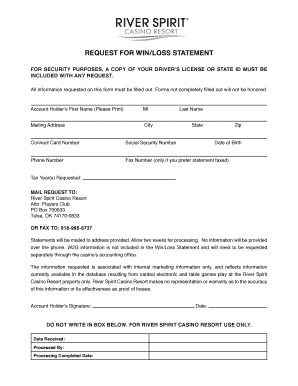
01. Edit your form online
Type text, add images, blackout confidential details, add comments, highlights and more.

Type text, add images, blackout confidential details, add comments, highlights and more.

Draw your signature, type it, upload its image, or use your mobile device as a signature pad.

Send it via email, link, or fax. You can also download it, export it or print it out.
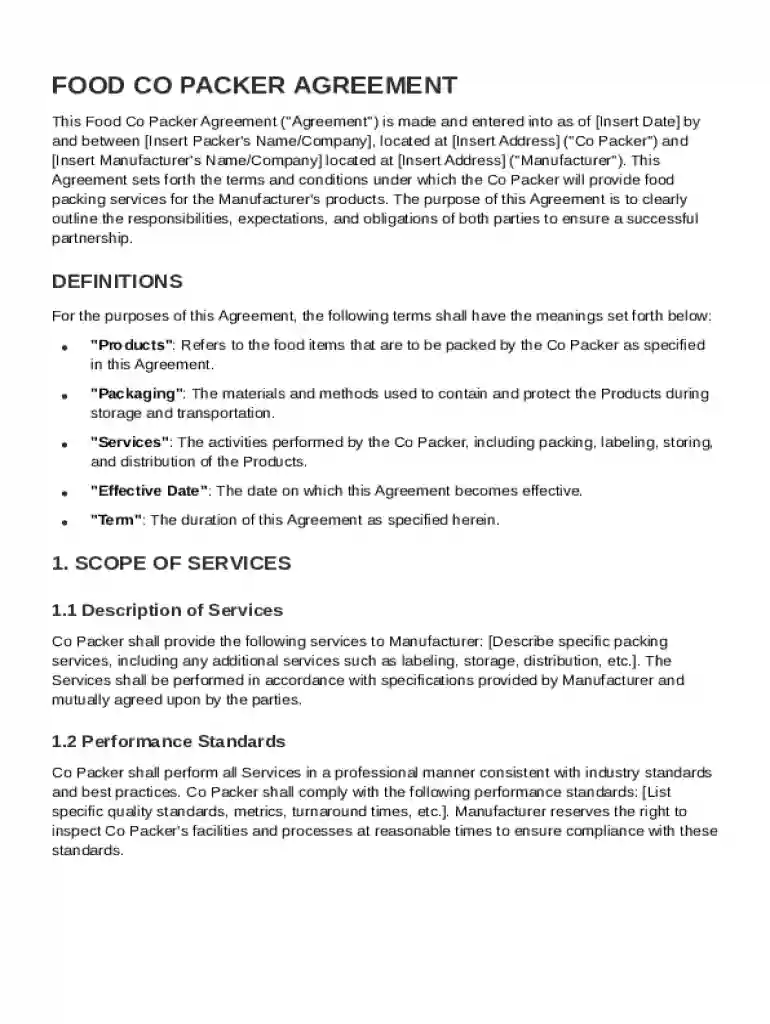
The Food Co Packer Agreement Template serves as a formal document that sets forth the terms and conditions between a co-packing facility (Co Packer) and a food manufacturer. This contract delineates each party's roles and responsibilities in the packaging process, ensuring that all operations adhere to regulatory standards and mutually agreed-upon guidelines. By clearly defining expectations, the agreement helps prevent misunderstandings and facilitates a successful business relationship.
The agreement outlines the specific services the Co Packer will provide, such as the types of food products to be packed, the volume of production, and any special packaging or labeling requirements. It's essential for both parties to agree on the exact nature of services to avoid future disputes.
This section details the financial aspects of the agreement, including pricing structures, payment schedules, and any penalties for late payments. It may also cover additional costs, such as setup fees or charges for expedited services.
The liability clause specifies the extent to which each party is responsible for any damages or losses incurred during the co-packing process. Indemnification provisions may outline how each party will protect the other from legal claims resulting from negligence or failure to meet agreed standards.

Manufacturers requiring external assistance for packaging may utilize this agreement to streamline operations and focus on production. By engaging a Co Packer, manufacturers can expand their capacity without investing in additional infrastructure.
Facilities offering co-packing services use this template to formalize agreements with clients, ensuring that all responsibilities and expectations are clear. This helps maintain operational efficiency and client satisfaction.
SMEs entering the food market often rely on co-packers to handle logistics and packaging, allowing them to allocate resources to marketing and product development.
The agreement must comply with industry regulations, including food safety and packaging standards outlined by federal and state agencies. Both parties should ensure that the contract adheres to applicable laws to prevent legal complications.
Confidentiality clauses protect proprietary information, such as trade secrets or unique product formulations. The agreement should specify which information is confidential and the obligations of each party in safeguarding this data.
A new organic snack company uses the template to contract a co-packing facility for trial runs before scaling production.
A beverage manufacturer utilizes the agreement for seasonal products, allowing flexibility and efficiency in meeting demand spikes during summer months.
A gourmet coffee brand engages a co-packer for complex packaging options that require specific expertise and equipment not available in-house.
Defines the conditions under which the agreement can be terminated by either party, including notice periods and any financial implications.
This clause addresses unforeseen events (e.g., natural disasters) that may prevent either party from fulfilling their obligations and outlines the remedies available.
Specifies the process for resolving disputes, such as mediation or arbitration, to ensure potential conflicts are handled efficiently and amicably.
Businesses may opt for tailored agreements to address unique operational requirements or industry-specific regulations.
Industry associations might provide templates that standardize certain aspects of co-packing agreements, ensuring compliance with common guidelines while allowing for customization where necessary.
At DocHub, your data security is our priority. We follow HIPAA, SOC2, GDPR, and other standards, so you can work on your documents with confidence.