Definition & Meaning
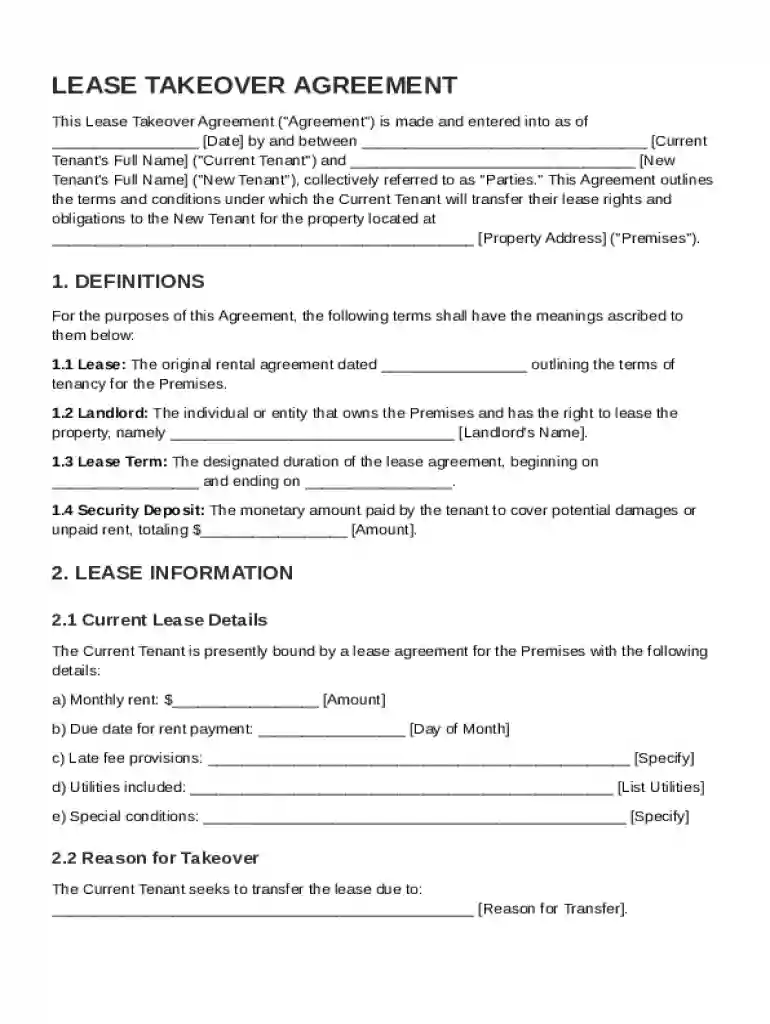
A Lease Takeover Agreement Template is utilized to document the transfer of lease rights and obligations from the Current Tenant to the New Tenant. This template facilitates the smooth transition of lease responsibilities, ensuring all necessary details are preserved. The lease takeover agreement outlines the pertinent information including the duration and terms of the current lease, the responsibilities of both tenants, and any conditions that must be met for the transfer to be approved by the landlord. By defining these terms, the agreement provides clear assurance that the New Tenant will assume the obligations of the original lease, while releasing the Current Tenant from any future liabilities once the transfer is finalized.
Practical Scenarios
- Apartment Lease Transfers: This template is often used when a tenant needs to move out before their lease term ends, allowing another tenant to take over.
- Commercial Property Leases: Businesses may use lease takeover agreements when relocating or downsizing, passing the lease to another company.
- Joint Tenancy Situations: Families or roommates may use this agreement to transfer lease responsibilities to a new member if one moves out.
Key Elements of the Lease Takeover Agreement Template
The Lease Takeover Agreement Template contains several critical elements to ensure a thorough and legally sound document. Understanding these key components helps in creating a robust agreement:
- Identification of Parties: Clearly specifies the Current Tenant, New Tenant, and the Landlord or property management entity.
- Lease Terms and Conditions: Details the remaining duration of the lease, rent amount, due dates, and any specific lease clauses transferred.
- Tenant Obligations: Outlines both past and new tenant responsibilities, such as maintenance duties, utility payments, and other tenant-specific clauses.
- Landlord Approval: Includes provisions for landlord approval, recognizing the landlord’s role in consenting to the transfer of the lease.
- Release of Liability: Contains clauses that release the Current Tenant from future obligations under the lease, provided all conditions are met.
Examples
- Simple Lease Transfers: Comprehensive enough to cover straightforward residential lease takeovers.
- Complex Commercial Agreements: Adaptable to accommodate intricate details necessary for business leases.
Steps to Complete the Lease Takeover Agreement Template
Completing the Lease Takeover Agreement Template involves a few sequential steps to ensure accuracy and compliance with all related terms and conditions.
- Gather Necessary Information: Collect the original lease agreement, tenant contact details, and consent documentation from the landlord.
- Fill Out Lease Details: Input the terms from the original lease, including rent amounts, expiration date, and specific obligations.
- Define the Transfer Terms: Clearly articulate the roles of the New Tenant and the conditions for taking over the lease.
- Obtain Necessary Signatures: Ensure that all parties – Current Tenant, New Tenant, and Landlord – provide their signatures to validate the agreement.
- Finalize and Distribute: Provide copies of the completed agreement to all parties involved and store securely for future reference.
Who Typically Uses the Lease Takeover Agreement Template
The Lease Takeover Agreement Template is a versatile tool used by various entities for different purposes. Understanding who utilizes this template can provide insight into its wide applicability.

Common Users
- Residential Tenants: Individuals or families seeking to transfer lease obligations to another person.
- Commercial Tenants and Businesses: Businesses looking to transition out of a lease agreement, often to relocate or resize their operations.
- Property Managers and Real Estate Agents: Professionals facilitating lease transfers to ensure seamless transitions for clients and tenants.
Legal Use of the Lease Takeover Agreement Template
Ensuring the legal soundness of a Lease Takeover Agreement Template is crucial, as it serves as a binding document between parties. Adhering to legal requirements protects involved parties from disputes or misunderstandings.
Legal Considerations
- Landlord Approval: It is legally necessary to secure landlord consent for any lease transfer to ensure enforceability of the agreement.
- Comprehensive Lease Identification: Clearly outlining the original lease terms and any modifications as part of the transfer is critical.
- Notarization and Witnesses: In some jurisdictions, notarizing the document or having witnesses sign may be required to reinforce its legal standing.
Important Terms Related to Lease Takeover Agreement Template
Understanding unique and important terms related to the Lease Takeover Agreement Template is integral for both tenants and landlords. Awareness of these terms facilitates clearer communication and reduces potential for errors.
Key Terms
- Assumption of Lease: The New Tenant agrees to assume all obligations stated in the original lease.
- Relinquishment of Rights: The Current Tenant agrees to relinquish rights and obligations upon signing the agreement.
- Conditional Approval: Provisions may include scenarios where the landlord requires additional conditions before consent is granted.
State-Specific Rules for the Lease Takeover Agreement Template
Lease laws vary between states, making it vital to understand state-specific rules when preparing a Lease Takeover Agreement Template. Awareness of these regulations ensures that the agreement complies with local statutes.
Common State Variations
- Notice Requirements: Some states necessitate specific advance notice to landlords and new tenants about the lease transfer.
- Consent Conditions: Variations exist in landlord consent rules, with some states providing landlords with the right to refuse a takeover without any stated cause.
- Fees and Charges: It’s important to check if any state-enforced fees apply to the transfer process under local lease statutes.