






Definition & Meaning
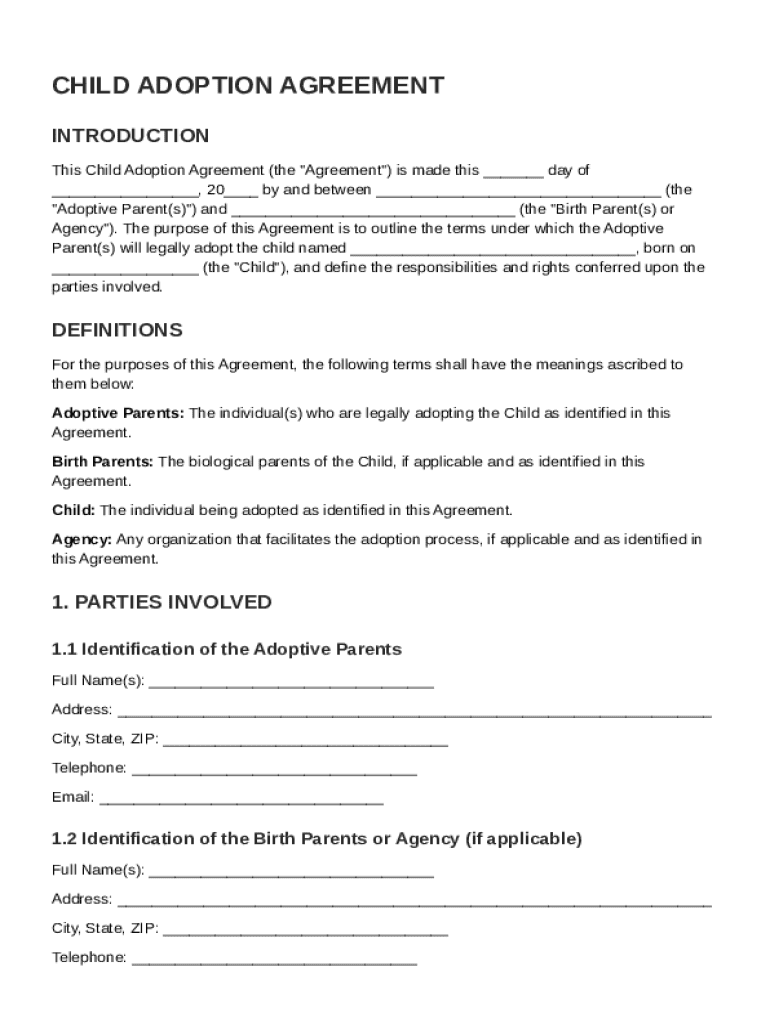
A Child Adoption Agreement is a legal document that outlines the terms and conditions under which adoptive parents assume legal custody and responsibility for a child. This form establishes a permanent parent-child relationship, focusing on the rights and obligations of all parties, including the birth parents or adoption agency. It covers crucial components such as the identification of involved parties, the child's information, and the consent to adopt.
Components of a Child Adoption Agreement
- Identification of Parties: Lists the adoptive parents, birth parents, and any involved agencies.
- Child's Information: Includes the child's name, birthdate, and legal status.
- Consent: Details the consent given by the birth parents or their legal representatives.
- Responsibilities and Rights: Outlines the duties and rights of the adoptive parents.
Purpose
This agreement is designed to ensure compliance with applicable adoption laws while emphasizing confidentiality and the legal aspects of the adoption process. It aims to protect the interests of the child and all parties involved by clearly defining expectations and responsibilities.
Key Elements of the Child Adoption Agreement Template
The Child Adoption Agreement Template includes several key sections critical to ensuring a transparent and lawful adoption process. These sections guarantee that all aspects of the adoption are addressed comprehensively.
Essential Sections
- Intent to Adopt: This confirms the adoptive parents' commitment to establish a lifelong relationship with the child.
- Legal Considerations: Addresses compliance with state and federal adoption regulations.
- Provisions for Amendments: Allows for future modifications to the agreement under certain conditions.
Important Terminology
- Parental Rights: Legal responsibilities and duties expected from the adoptive parents.
- Confidentiality Clause: Protects sensitive information relating to the adoption process.
How to Use the Child Adoption Agreement Template
Utilizing the Child Adoption Agreement Template effectively requires understanding its structure and requirements.
Step-by-Step Instructions
- Review the Document: Understand the legal obligations and rights outlined within the agreement.
- Complete Required Fields: Fill in all sections identifying parties involved, child details, and consent statements.
- Customize for Specific Needs: Adapt sections to reflect particular terms agreed upon by both parties.
- Consult Legal Guidance: Seek advice from a legal professional to ensure compliance with state laws.
- Finalize and Sign: Once all information is accurate and complete, initial and sign the document.
Considerations
- Accuracy: Ensures that all information provided is current and legally sound.
- Thorough Review: Adoptive and birth parents should carefully examine each section before signing.
Legal Use of the Child Adoption Agreement Template
The adoption process involves significant legal considerations that must be addressed through the Child Adoption Agreement Template.
Compliance with Legal Standards
- ESIGN Act Adherence: Ensures signatures collected electronically are legally binding.
- State-specific Legislation: Accounts for variations in adoption law across different states.
- Confidentiality Requirements: Maintains privacy of the individuals involved as stipulated by law.
Importance of Legal Counsel
Involving legal professionals can provide clarity and assurance, ensuring that the agreement falls within legal parameters and upholds the best interests of the child.
State-Specific Rules for the Child Adoption Agreement Template
Different states have specific rules and regulations concerning adoption agreements that need careful consideration when using the template.
Understanding State Variations
- Consent Age: Varies by state and affects when a child can legally be adopted.
- Inspection of Adoption Agencies: Some states require a thorough vetting process for agencies involved.
- Documentation Requirements: Each state may have unique forms and processes required for a legal adoption.
Avoiding Legal Pitfalls
By familiarizing oneself with state-specific rules, parties can avoid common legal issues and ensure a smooth adoption process.
Examples of Using the Child Adoption Agreement Template
Real-world scenarios illustrate how the Child Adoption Agreement Template is applied effectively.
Case Studies
- Interstate Adoption: A couple navigates the complexities of adopting a child from another state, utilizing state-specific sections of the template.
- Adoption through an Agency: An agency outlines responsibilities and processes clearly for both adoptive and birth parents using the template.
Lessons Learned
These examples demonstrate the template's flexibility in accommodating various adoption scenarios, highlighting the importance of customizing the agreement based on individual circumstances.
Important Terms Related to Child Adoption Agreement Template
Familiarity with key terminology helps clarify the adoption process.
Key Definitions
- Adoptive Parents: Individuals seeking to assume legal parental rights over the child.
- Birth Parents: Biological parents relinquishing their legal rights and responsibilities.
- Adoption Agency: An organization facilitating placements and handling legal processes.
- Amendment Provisions: Clauses that permit revisions to the agreement with consent from involved parties.
Understanding these terms is crucial for effectively navigating and utilizing the Child Adoption Agreement Template.
Steps to Complete the Child Adoption Agreement Template
Fulfilling every requirement of the Child Adoption Agreement Template entails following a structured process.
Detailed Completion Process
- Gather Necessary Information: Compile information about the child and parents.
- Fill Out the Child’s Section: Provide accurate information relevant to the child.
- Complete Parental Consent: Ensure consent from all necessary parties is documented.
- Review Legal Sections: Examine sections related to legal compliance and confidentiality.
- Sign the Agreement: Once reviewed, the document should be signed by all parties involved.
Taking these steps helps ensure that the agreement is accurate, complete, and legally binding.