Definition & Meaning
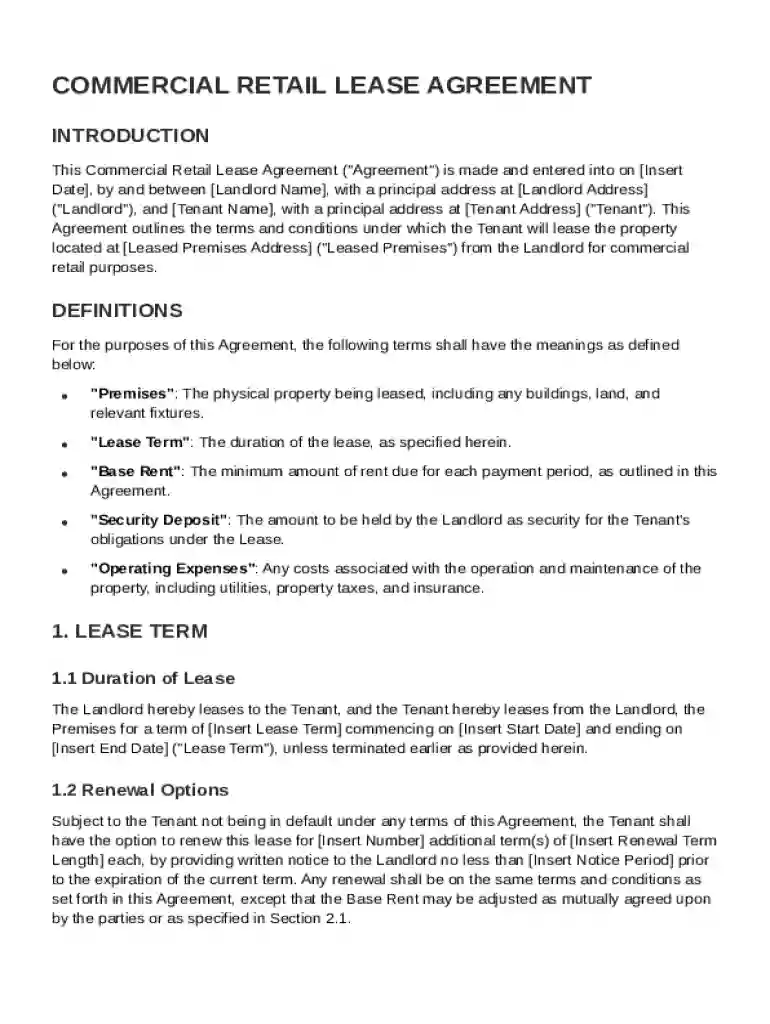
A Commercial Retail Lease Agreement Template is a structured document representing a legal contract between a landlord and a tenant for leasing commercial retail space. Lease agreements outline essential terms such as the duration, rent terms, permitted uses, and other obligations of both parties. The template serves as a comprehensive guide for creating agreements tailored to specific property and business needs, allowing parties to address unique requirements while maintaining legal integrity.
- Lease Duration: Establishes the timeline for which the property is rented, including start and end dates.
- Rent Details: Specifies the rent amount, payment intervals, and any increases or adjustments over the lease term.
- Security Deposit: Details the amount required as a deposit to safeguard against damages or unpaid rent.
Key Elements of the Commercial Retail Lease Agreement Template
The template is composed of several fundamental components that form the backbone of any retail lease agreement. These include:
- Definitions of Key Terms: Clarifies specific terminologies used within the document to avoid misinterpretation.
- Maintenance Responsibilities: Dictates which party is responsible for routine maintenance and repairs to ensure the property's condition.
- Insurance Obligations: Outlines the requirements for property and liability insurance that protect both landlord and tenant interests.
Detailed Breakdown
- Alteration Procedures: Rules governing modifications to the property, including required permissions.
- Termination Conditions: States how and when the lease can be legally ended by either party.
- Default Remedies: Describes actions that can be taken if either party fails to fulfill contractual obligations.
Important Terms Related to Commercial Retail Lease Agreement Template
Understanding key terms in the agreement is crucial for both parties to comprehend their rights and responsibilities fully.
- Permitted Use: Defines allowable activities conducted within the leased space to ensure compatibility with zoning laws.
- Common Area Maintenance (CAM) Charges: Costs associated with the upkeep of shared spaces within a retail complex.
- Indemnification: A clause to protect a party from liability in the event of specified risks or third-party claims.
Examples
- Subletting: Conditions under which the tenant may lease out their space to another tenant.
- Escalation Clauses: How rent may increase due to inflation or increased property taxes over time.
Business Types
- Franchise Operations: Frequently rely on consistent leases across locations.
- Specialty Retailers: Shops focusing on specific product lines like electronics, clothing, or cosmetics.
- Mall Operators: For leasing to small and medium-sized brands within a larger commercial property.
Legal Use of the Commercial Retail Lease Agreement Template
The template ensures compliance with legal requirements, serving as a basis for enforcing contract terms.
- Binding Agreement: Upon signing, the document is legally enforceable in the United States.
- Compliance with Local Laws: Ensures that terms adhere to state and municipal regulations for commercial properties.
Legal Nuances
- Breach of Contract: Specifies remedies when one party violates agreement terms.
- Negotiability: Offers flexibility in tailoring terms to specific lease situations while maintaining legality.
State-Specific Rules for the Commercial Retail Lease Agreement Template
Lease agreements often have conditions that vary based on state regulations to prevent legal conflicts.
- Property Taxes: Some states allow landlords to pass property tax increases onto tenants.
- Eco-friendly Requirements: Emerging agendas in certain states might require energy-efficient adaptations.
- Eviction Laws: Rules that dictate the notice period and legal steps required for tenant eviction.
Examples
- California: Strong tenant protection laws mandate specific notification periods before changes.
- New York: Unique commercial tax considerations apply based on location within the city/state.
Steps to Complete the Commercial Retail Lease Agreement Template
Utilizing a structured template ensures thoroughness, clarity, and organization.
- Gather Essential Information: Details about both the landlord and tenant, property description, and lease terms.
- Customize Terms: Adjust the template to accommodate specific needs such as rent amount and duration.
- Review and Edit: Carefully examine the completed template for accuracy and compliance with relevant laws.
- Execution: Both parties review and sign the document, giving legal efficacy to the lease agreement.
- Coordination: Ideally handled during initial rent negotiations for clear expectations.
Why Use a Commercial Retail Lease Agreement Template
Templates simplify the process of drafting retail lease contracts, providing numerous benefits.
- Efficiency: Minimizes workload and accelerates agreement preparation.
- Consistency: Ensures standardization across different properties and leasing scenarios.
- Customizability: Allows adjustments specific to user needs without starting from scratch.
Benefits
- Legal Compliance: Use an industry-standard format respected across commercial real estate sectors.
- Risk Management: Detail-oriented templates help mitigate potential disputes by covering various contingencies.
Software Compatibility: Google Workspace Integration
Combining DocHub's features with the Google Workspace ecosystem enables smooth interactions across platforms.
- Direct Google Drive Access: Import, edit, and save documents directly to and from your Drive.
- Gmail Integration: Open attachments in DocHub, make necessary adjustments, and send updated copies swiftly.
- Real-Time Collaboration: Use Google Docs-like functionalities for shared editing and reviews within lease templates.
Compatibility Example
- Template Updates: Users can revise older agreements within Google Workspace, ensuring they reflect current legal terms and market standards.