






Definition & Meaning
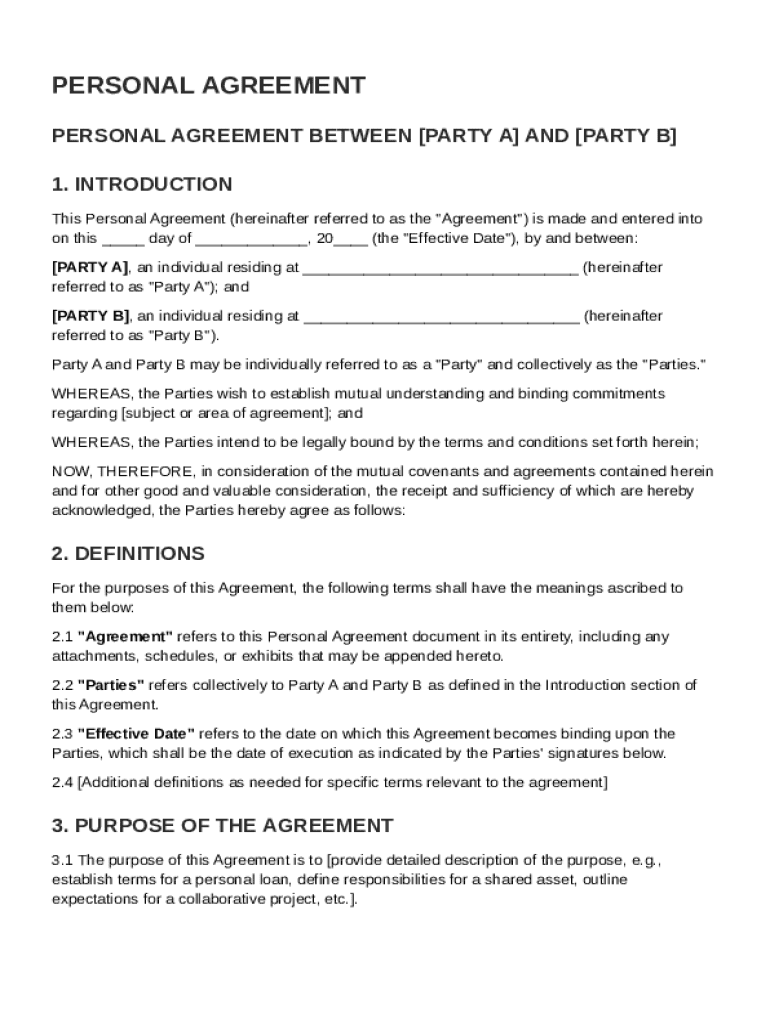
A Personal Agreement Template is a standardized document designed to formalize mutual commitments and responsibilities between two parties, typically referred to as Party A and Party B. This template provides a comprehensive framework for their relationship concerning a specific subject and includes essential clauses such as definitions, objectives, and terms of enforcement. The purpose of the agreement is to ensure clarity and mutual understanding between the involved parties, setting a legally binding precedent for the conduct of interactions and expectations.
Practical Applications
- Business Collaborations: Used to outline roles and responsibilities between business partners.
- Rental Agreements: Establishes terms between landlords and tenants.
- Service Contracts: Defines obligations between service providers and clients.
How to Use the Personal Agreement Template
Using a personal agreement template involves several strategic steps to ensure its effectiveness. Initially, identify the specific needs and objectives of both parties involved. Customizing the template to address these will provide clarity and precision. After customization, both parties should review the document to ensure mutual understanding and agreement.
Step-by-Step Guide
- Identify the Purpose: Determine the specific goals and objectives of the agreement.
- Customize the Template: Modify the template to include the unique terms, conditions, and clauses relevant to the agreement.
- Review and Edit: Both parties should carefully review the document to confirm it accurately reflects their intentions and minimizes potential misunderstandings.
- Obtain Signatures: Ensure all involved parties provide signatures to validate the agreement's authenticity and legal standing.
Examples
- Partnerships: Franklin and Joanna customize their agreement to detail their respective roles in a new startup.
- Freelance Work: A graphic designer and their client outline project terms and payment details.
Key Elements of the Personal Agreement Template
The key elements within a personal agreement template are integral to ensuring the document's comprehensive nature. These elements usually include definitions, objectives, confidentiality provisions, and dispute resolution mechanisms. Each component is meticulously crafted to offer clear guidance and prevent ambiguity.
Core Components
- Definitions: Detailed explanations of terms used within the agreement to avoid misunderstandings.
- Objectives: Clear articulation of the goals and intentions of the agreement.
- Confidentiality Provisions: Clauses ensuring that both parties maintain the privacy of sensitive information.
- Dispute Resolution: Predefined processes for resolving disagreements, which may include mediation or arbitration.
Legal Use of the Personal Agreement Template
The legal implications of a personal agreement template are significant, as it establishes a binding contract between parties. The template is designed to comply with the ESIGN Act, ensuring that electronic signatures equate to traditional handwritten ones, thereby making the document legally enforceable.
Considerations for Legal Compliance
- Validity of Signatures: Electronic signatures must adhere to legal standards to be considered valid.
- Enforceability: The agreement must be clearly written, with all parties consenting voluntarily, to ensure enforceability.
- Jurisdiction: Specify the state laws governing the agreement if necessary to address state-specific legal requirements.
Examples of Using the Personal Agreement Template
Examples of the personal agreement template's application across various scenarios highlight its versatility. These include business partnerships, real estate transactions, and freelance services. Each example can adapt the template's structure to fit the distinct needs and requirements of the parties involved.
Real-World Scenarios
- Employment Agreements: Tailor the template for contracts between employers and employees, covering duties and compensation.
- Joint Ventures: Utilize the template to clarify the financial contributions and revenue-sharing aspects of a collaborative business effort.
State-Specific Rules for the Personal Agreement Template
When using a personal agreement template, it's crucial to consider state-specific laws that may influence its validity and enforcement. Different states may have varied requirements regarding contract law, especially concerning non-compete clauses or confidentiality agreements.
Compliance Guidelines
- Research State Laws: Investigate the particular rules and regulations applicable in the document's jurisdiction.
- Adapt Clauses Accordingly: Modify sections of the agreement to meet state-specific legal requirements, such as mandated disclosures or statutory provisions.
Required Documents
When finalizing a personal agreement, having the necessary documents ready is crucial. This includes identification documents of the parties involved, any referenced contracts or agreements, and proof of the assets or services being outlined.
Checklist
- Identification: Government-issued ID for identity verification.
- Supporting Documentation: Ancillary agreements or contracts that complement or are referenced in the agreement.
- Financial Records: Proof of any financial terms such as payments or deposits.
Form Submission Methods
Submitting the finalized personal agreement can be achieved through various methods, depending on the preference of the parties and the requirements of the agreement itself. These methods include online submissions, traditional mail, or in-person delivery.
Available Options
- Online: Use secure electronic signing platforms that allow for easy submission and storage.
- Mail: Send through tracked postal services for an added layer of security.
- In-Person: Deliver and sign the agreement in person, ensuring immediate confirmation and understanding.
By thoroughly understanding and implementing these sections into the personal agreement template, users can ensure their documents are both comprehensive and legally sound, tailored specifically to their unique requirements and circumstances.