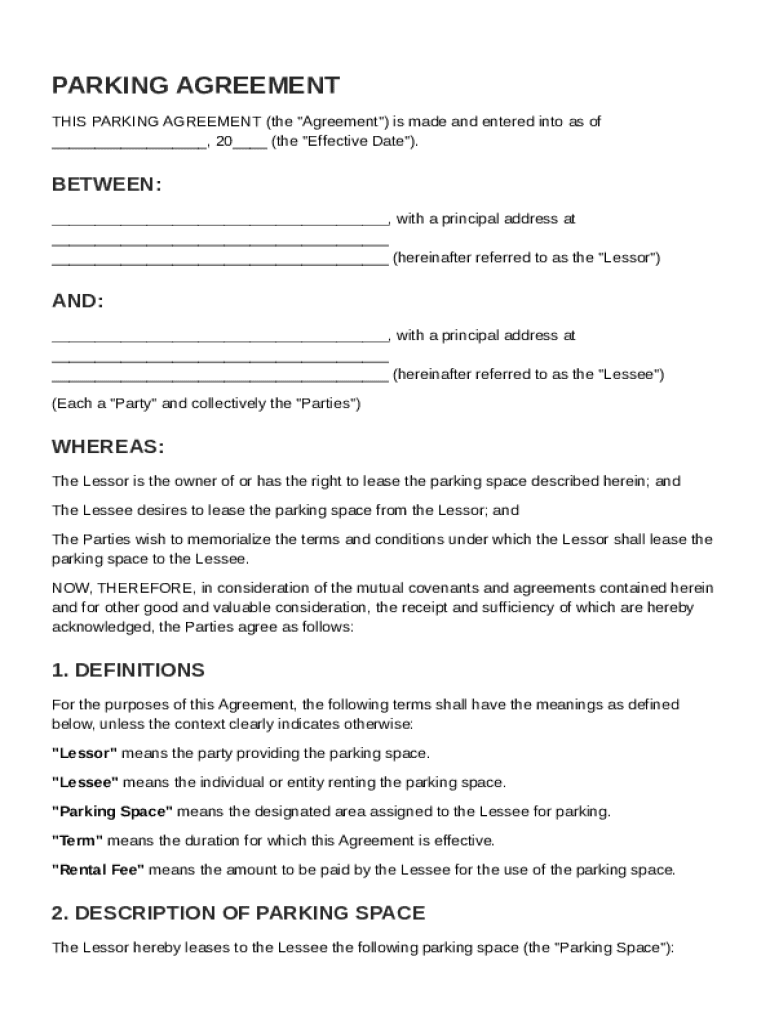







Definition & Meaning
A "Parking Agreement Template" is a structured document that outlines the terms and conditions of leasing a parking space, typically between a lessor (owner) and a lessee (user). This legal agreement serves to provide clarity on the arrangement by defining the responsibilities, rights, and obligations of both parties. It includes detailed descriptions of the parking space, duration of the lease, and payment terms, among other elements. The template ensures that both the lessor and lessee are aligned on the expectations and terms, reducing potential disputes.
Common Clauses in the Agreement
- Lease Duration: Specifies how long the lessee is allowed to use the parking space.
- Payment Terms: Details the cost of leasing the space, payment schedule, and accepted payment methods.
- Permitted Uses: Outlines what the space can be used for, often restricting activities to parking vehicles only.
- Termination Conditions: Provides information on how the agreement can be terminated by either party.
How to Use the Parking Agreement Template
Using the Parking Agreement Template requires careful customization to fit the specific needs of the lessor and lessee. The process involves filling in the placeholders with pertinent details about the arrangement and reviewing each section for accuracy.
- Download the Template: Obtain a copy of the template from a trusted source, ensuring it is up to date and legally compliant.
- Customize Details: Insert the lessor's and lessee's information, describe the parking space, and set the lease terms.
- Review and Edit: Carefully review each section to ensure clarity and mutual understanding between both parties.
- Sign the Agreement: Both parties should sign the document, optionally utilizing electronic signature tools for convenience and legality.
Practical Tips
- Use DocHub: Easily edit and annotate the template using DocHub's suite of tools to streamline the process.
- Legal Review: Consider having the document reviewed by a legal professional to ensure total compliance with local laws.
Steps to Complete the Parking Agreement Template
Completing the Parking Agreement Template involves several key steps to ensure all necessary information is captured accurately. These steps are essential for both protecting your rights and fulfilling your obligations within the agreement.
- Gather Essential Information: Collect details about both parties, such as names, addresses, and contact numbers.
- Define the Space and Terms: Clearly specify the location, size, and boundaries of the parking space.
- Set Financial Terms: Include specifics on payment amounts, due dates, and penalties for late payment.
- Specify Insurance and Liability: Determine insurance requirements and liabilities for damage or loss.
- Finalize and Sign: Both parties should verify all details, sign the agreement, and secure copies for their records.
Variations to Consider
- Shared Spaces: If the space is to be shared, include additional terms that define how it will be managed.
- Variable Pricing: Consider inclusion of clauses for pricing adjustments over time or based on usage.
Key Elements of the Parking Agreement Template
The template consists of numerous components that ensure it is comprehensive and legally binding. Each element contributes to the functionality and clarity of the document.
Essential Components
- Definitions: Clear definitions for terms used throughout the document to avoid ambiguity.
- Space Description: Detailed description and map or diagram, if applicable, of the parking space.
- Terms of Use: Rules governing how the space can be used, including any restrictions.
- Insurance: Requirements concerning lessee's or lessor's insurance obligations.
- Amendments and Severability: Details on how amendments can be made to the agreement and the effects of unenforceable clauses.
Legal Use of the Parking Agreement Template
In the United States, the use of a Parking Agreement Template carries certain legal implications, and it's crucial to ensure the document is enforceable by law.
- Compliance: The agreement must comply with state and local laws regarding property leases.
- Legally Binding Signatures: Both parties must sign the document; using electronic signatures from platforms like DocHub ensures legality per the ESIGN Act.
- Confidentiality and Data Protection: Parties are advised to include clauses safeguarding personal data shared through the agreement.
Legal Considerations
- Governing Law: The section stating the jurisdiction governing the agreement's enforcement and interpretation.
- Dispute Resolution: Methods for resolving disputes, including mediation or arbitration, if applicable.
State-Specific Rules for the Parking Agreement Template
Parking agreements may vary significantly across states due to differing laws and regulations regarding leasing arrangements. Understanding and adapting these variations is crucial when filling out the template.
- Local Statutes: Certain states might have unique requirements regarding even partial public space leasing.
- Zoning Regulations: Ensure that the use of the parking space adheres to local zoning laws.
- Tenant Rights and Protections: Familiarize with specific tenant rights laws that may impact how agreements can be structured or terminated.
Examples of State Differences
- California: Requires detailed disclosure for all commercial leases, including parking spaces.
- New York: Often demands additional proofs of insurance from lessees.
Examples of Using the Parking Agreement Template
Real-world applications for the Parking Agreement Template can be varied, considering diverse needs for parking space leases. The template is flexible enough to cater to several scenarios.
- Residential Complexes: Leasing additional parking spots to tenants.
- Commercial Properties: Renting out parts of a parking lot to local businesses.
- Event Venues: Arranging short-term leases for event parking needs.
- Educational Institutions: Allowing students or staff to lease parking on campus for semester terms.
Case Studies
- Small Business Owners: Leased unused parking spots to nearby businesses, generating additional revenue.
- Residents in Urban Areas: Utilized agreements to secure parking in densely populated neighborhoods.
Who Typically Uses the Parking Agreement Template
The Parking Agreement Template is a versatile tool used by various entities seeking to formalize parking arrangements. Understanding the diverse use cases aids in customizing the document to fit specific needs.
- Property Managers: Ensures standardized leasing terms across multiple tenants.
- Business Owners: Provides targeted parking solutions for employees or customers.
- Event Coordinators: Manages temporary parking needs efficiently with clear contractual terms.


Beneficiary Sectors
- Residential: Tenants in apartments or housing complexes.
- Commercial: Office buildings, shopping centers, or service providers.
- Public Institutions: Universities, hospitals, and government facilities.
By utilizing the above insights on the Parking Agreement Template, users can better understand its application, benefits, and the essential steps required to customize it effectively for their specific leasing needs, while ensuring compliance with legal requirements.