




01. Edit your form online
Type text, add images, blackout confidential details, add comments, highlights and more.

Type text, add images, blackout confidential details, add comments, highlights and more.

Draw your signature, type it, upload its image, or use your mobile device as a signature pad.

Send it via email, link, or fax. You can also download it, export it or print it out.
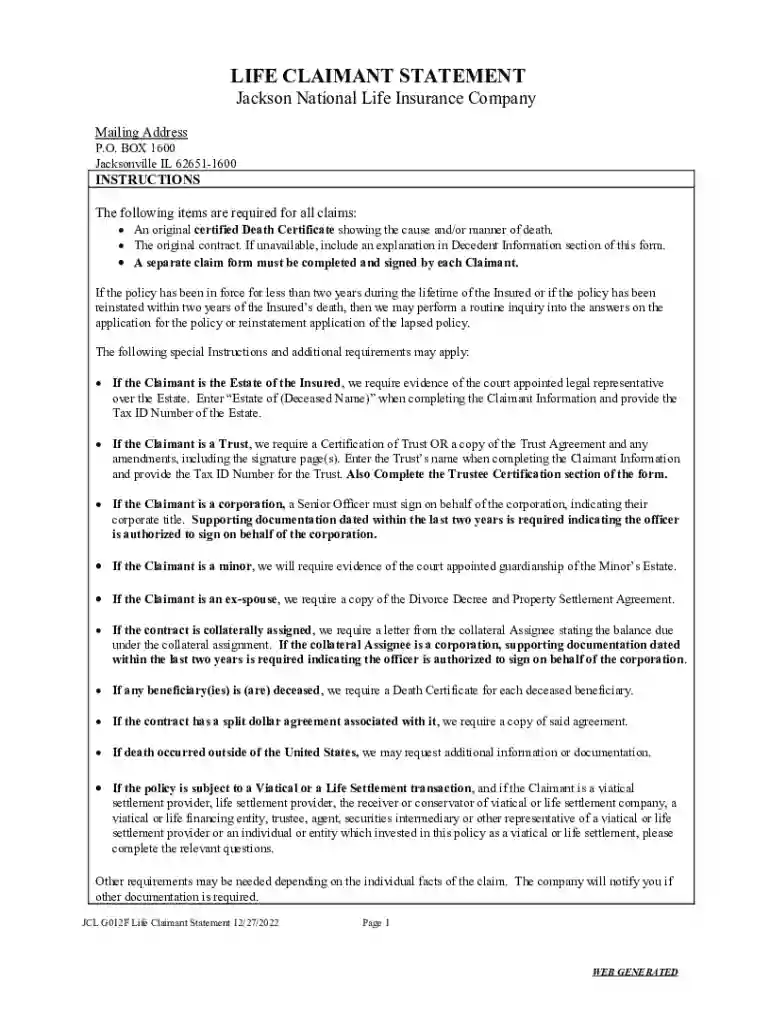
The Life Claimant Statement is a vital document used to file a life insurance claim following the death of an insured individual. It provides the insurance company with necessary details about the claimant, the deceased, and the circumstances surrounding the death. This form is crucial in ensuring that the claim process is initiated and processed efficiently, paving the way for beneficiaries to receive their entitled benefits. It often contains sections for personal information, claimant relationship to the deceased, and any additional beneficiary details, providing a comprehensive overview crucial for verifying the claim.
Acquiring a Life Claimant Statement can be straightforward. Typically, insurance companies provide this form through their official websites, allowing policyholders and claimants to download it directly. This ensures easy access and timely submission. Some companies might also offer to mail the form upon request if online access is not feasible. It's important for claimants to reach out to their respective insurance provider to ensure they have the correct and most current version of the form. This ensures compliance with the latest requirements and minimizes delays in claim processing.
Gather Required Information:
Fill Out the Deceased's Information:
Provide Claimant Details:
Attach Necessary Documents:
Review Specific Requirements:
Sign and Submit:
The Life Claimant Statement necessitates specific documentation, which may vary slightly depending on individual circumstances and state regulations:
Understanding the legal context of the Life Claimant Statement is fundamental. It is a legally binding document that asserts the claimant's right to request the payout of an insurance policy. It must comply with state and federal laws governing life insurance claims. This involves accurate disclosure of information and adherence to fraud prevention guidelines, which protect both the claimant and the insurance company. Failure to adhere to these legal criteria can result in claims being denied or delayed, highlighting the importance of thoroughness and accuracy.
Insurance claims often have state-specific regulations, including:
Timeliness is critical when submitting a Life Claimant Statement. While deadlines can vary depending on the insurance policy and state regulations, it's crucial to submit the claim promptly to avoid exceeding any statutory limitations. Most insurance companies recommend filing claims as soon as possible after the insured's death to ensure expeditious processing. Failing to adhere to these timelines might complicate the claims process, with potential delays or even forfeit of benefits in extreme cases. Always check with the insurance provider for specific deadlines relevant to your policy context.
We've got more versions of the Life Claimant Statement form. Select the right Life Claimant Statement version from the list and start editing it straight away!
At DocHub, your data security is our priority. We follow HIPAA, SOC2, GDPR, and other standards, so you can work on your documents with confidence.
PART 2 - CLAIMANTʼS STATEMENT - To be completed by the claimant or authorized representative. All questions must be fully completed. Please be sure to signRead more
Aug 2, 2026 Documents and evidence checklist ; Claimants ID proof, Aadhaar, PAN, passport, voter ID, Self-attested photocopy; any one is sufficient.Read more


